By Elizabeth Coscia ’12, Commentary Editor
“I think they should be removed completely,” remarked a Newark Academy teacher with regards to the Upper School awards. “What purpose do they serve?”
Many others at Newark Academy share this teacher’s disapproving view on the Upper School awards. Each year Mr. Austin himself asserts his confidence that every student deserves an award. However, we annually convene for a full hour in the middle of the school day to carry out the proceedings. Often, the awards exist solely as a trophy distribution, soon forgotten even by award recipients.
As Newark Academy muses over the purpose of the Upper School Awards, the international community debates the merits of such prizes as well. When controversial figures step up to receive national recognition, the function and meaning of the awards changes.
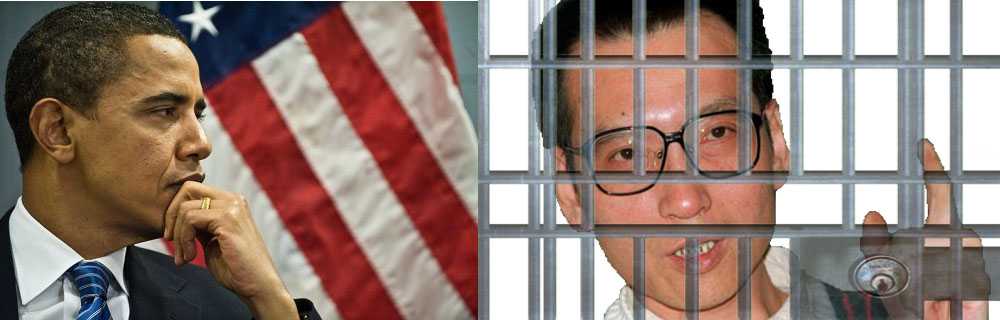
One year ago controversy arose regarding the Nobel Peace Prize. The committee awarded American President Barack Obama the prize after less than one year in office, sparking critics to argue that the international goals for which he was commended were merely campaign promises not yet enacted.
This year, the prize has brought controversy of an even greater magnitude. The Norwegian committee awarded the prize to Liu Xiaobo, a Chinese human rights activist. However, although every American with access to a computer learned instantly of his nomination, the Chinese government withheld the information from Xiaobo. Xiaobo is serving an 11-year prison sentence for subversion against communism in China, and government officials reacted to his nomination for the prize with disgust. To their disdain, Xiaobo led protests in favor of peaceful democratic reform ranging from the Tiananmen Square demonstrations to the publication of Charter 08, which called for significant changes to the Chinese government. After his nomination, the Chinese government immediately censored all websites, newspaper articles, e-mails, and even text messages that contained his name. Officials argue that the committee chose Xiaobo in order to pose their country as an object of ridicule. Furthermore, they claim that Xiaobo’s nomination stems from a Western effort to have China conform to capitalist ideals.
The controversy of the Nobel Peace Prize has long included a question of its political role in the world. Countless prizewinners, including both President Obama and Xiaobo, were contentious figures that provoked established forces in order to gain peace. However, the method of selecting an individual in order to bring about political change to inhumane situations should be maintained because the prize provides a powerful tool for reform. Xiaobo made immense leaps in the defense of human rights, which supersedes any political implications his actions entailed. China’s violations are significant because they violate human rights, not because they are inconsistent with capitalism.
In becoming a Nobel Laureate, President Obama was pressured to fulfill his promises for peace in international relations, he himself referring to the prize as his “call to arms.” After this year’s nomination, Obama publicized his support for Xiaobo and called for his immediate release from prison, an inspiring interaction between prizewinners with a common goal of peace. Under these ideal circumstances, the award serves not merely as recognition of an individual’s accomplishments but as a method to enable winners to achieve broader goals.
On the international and high school levels, recognizing individuals by awarding them prizes affects the recipients and the communities to which they belong. While awards can be used as tools for inspiring reform on the international level, they can be detrimental to the self-esteem of the young adults not recognized. On both fronts, awards need purpose, or else they become either useless or destructive.
Surely the Upper School Awards at Newark Academy leave certain students feeling confident about their achievements. However, the glaring majority of students feel discouraged by the lack of recognition they receive at the awards. The prizes cause many unrecognized high school students, young and malleable, to view themselves as unremarkable. Forced to sit through a long formal assembly, they spend the hour wondering why they just do not measure up. Therefore, by causing them to doubt their abilities, the awards hinder the progress of young individuals who have yet to recognize their potential. Newark Academy should recognize this occurrence and eliminate the awards in order to display the community’s confidence that all alums, not just the “top ten,” will impact the world.


Leave a Reply
You must be logged in to post a comment.