By Elizabeth Coscia ’12, Commentary Editor
“I love boobies.”
After leaning over to read this message on a peer’s bracelet during Physics class, I did a double take. At Newark Academy, a school that prohibits neon sneakers, I was shocked that students could get away with wearing these provocative wristbands.
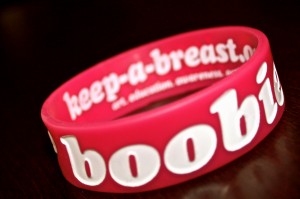
After some investigation I discovered that “Keep a Breast,” a non-profit foundation for breast cancer research, created these bracelets to raise money for research and awareness about the disease. Recently, the foundation’s rubber wristbands with the phrases “Keep a Breast” and “I love boobies” have become popular among teenagers, including those at Newark Academy.
After my initial surprise at seeing these messages on my peer’s bracelet, I was impressed at their ability to draw my attention. “Keep a Breast” evidently chose these phrases to gain attention, especially from young people. Many might argue this method to be disrespectful, as breast cancer remains a serious issue that should not be taken lightly.
In fact, numerous public schools have banned the bracelets for their use of “inappropriate” language and their potential to distract students. However, this unjust ban violates the first amendment, and students could seek to have their right to wear the bracelets upheld in the Supreme Court.
In 1969 preteens John and Mary Beth Tinker were suspended from school for wearing black wristbands with peace signs that signified their opposition to the Vietnam War. The Tinkers asserted their right to wear the bracelets in the Supreme Court and emerged victorious; the presiding judge stated that “students do not shed their constitutional rights at the schoolhouse gate.”
Not unlike the Tinkers, young people today have the constitutional right to wear the “Keep a Breast” bracelets. In fact, teenagers who wear them should be commended for their commitment to the cause as young people.
In the 1970s, young people in America actively participated in peace protests because they were immediately affected by war, violence, and civil disorder. American teenagers today typically do not experience these things firsthand. Consequently, many adolescents seem complacent and less involved in national issues. Therefore, teenagers should actively contribute to causes they find meaningful to encourage participation of other young people in current events and movements. Although its methods of attracting teenagers may seem sensational, the “Keep a Breast” foundation mobilizes young people for a worthwhile cause. And it’s not just the bracelets – “Keep a Breast” sponsors concerts, lectures, and dances where they educate students on breast cancer.
Although the words “breast” and “boobies” may seem inappropriate in a school setting, Ms Galvin, Dean of Students at Newark Academy, pointed out that “years ago people didn’t talk about breast cancer because they didn’t want to use the word breast.” The bracelets highlight the openness with which people have come to address breast cancer, a breakthrough that has paved the way to a population more educated about the disease.
Many also argue that the bracelets alienate those unable to keep their breasts as a result of the disease. However, Candace Hawk, a teenager who fought for and won the right to wear her bracelet in school, emphasizes the misunderstanding evident in this view. According to an account on the “Keep a Breast” website, Hawk “informed [the administration] that she would rather do all of her classes in the [principal’s] office than remove her bracelet and the purpose for which she wears it.” Candace wears the bracelet because her “grandma would still be alive had she been detected [with breast cancer] early enough.” Therefore, Hawk wants to spread awareness so that others will not share the same fate. Victims of the disease, their families, and those unaffected can all agree on the message – women must fight breast cancer to stay healthy.
Undoubtedly, breast cancer has changed the lives of countless families. However, before speaking with Ms Galvin, I was unaware of just how close Newark Academy holds this particular cause.
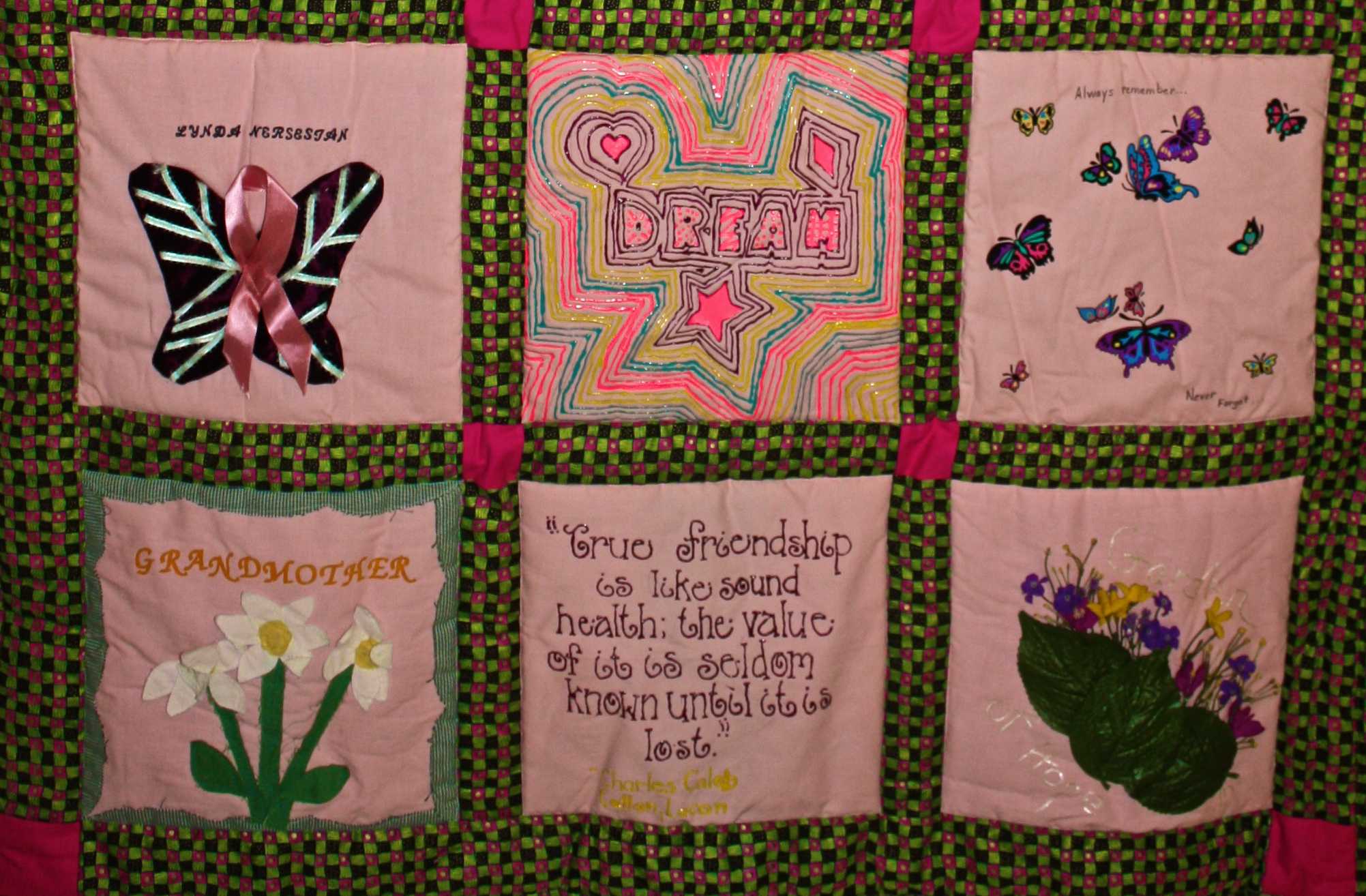
Many of us have walked the Carol Heaney Nature Trail, but few know why it carries this name. Carol Heaney was a Newark Academy science teacher who died of breast cancer. Ms Galvin explained that “after Carol’s death, the students were devastated. They wanted to have a ‘pink tie ball’ in her honor; the girls wore pink fashions and the boys pink shirts and jeans. They made beautiful pink quilts and raised thousands of dollars for breast cancer research.”
Ms Galvin later explained that although not fully on board with “Keep a Breast’s” approach, the administration discussed their bracelets and decided to allow them at Newark Academy. This conclusion hardly requires discussion in light of the school’s close connection to the disease. Evidently, our community realizes that something must be done to help breast cancer victims. The attention “Keep a Breast” has brought to the cause outweighs the potential discomfort caused by referencing female anatomy.
Mrs. Carol Heaney is certainly not the only individual within the Newark Academy community to have been affected by the disease. It affects our own mothers, daughters, sisters, grandmothers, aunts, and family friends.
“Keep a Breast” bravely and provacatively dared to bring the issue to the fore and effectively used the energy of young people to spread awareness. However, as Ms Galvin states, “if there’s all this energy in support of the cause, I’d like to see Newark Academy students who wear the bracelets come forward and do something about it! Why didn’t they prepare a presentation during breast cancer awareness month?” Young people who wear the wristbands must come forward and prove to the adult world that they truly wear the bracelets to educate others.
The bracelets are a first step, and students are justified in exercising their constitutional right to wear them as a means to spread awareness. However, that fight is only the beginning of a battle infinitely more immense – getting the cure out of the labs and into the bodies of our suffering loved ones.
Leave a Reply
You must be logged in to post a comment.