By Ashley Ulrich ’11, Editor-in-Chief, with contributions from Rachel DiChiara ’13, Staff Writer
When I first watched The Social Network, a film dramatizing the story of Facebook’s conception, I was sure of two things: the movie was very entertaining, but it was mostly very inaccurate in its depiction of relationships and events. For example, the film exaggerates Zuckerberg’s love life and casts him as very forwardly arrogant character. However, while many of the supposed facts of the movie have been manipulated, the tight, pointed dialogue keeps the audience on the edge of its chair, and the brilliant filmography is a pleasure to watch. Sure, the liberties taken to cast Zuckerberg as a venerable playboy who strikes it rich with his brilliant start-up are not accurate in Zuckerberg’s memory of the events, but the movie is not being sold as a documentary. It is of course for entertainment, even if at the cost of Zuckerberg’s reputation (For the books, he has had the same girlfriend since before he launched Facebook in 2004. Sorry, Hollywood.).
While I enjoyed the film, after leaving the theatre I continued to ponder this question of truthfulness. By editing and omitting material
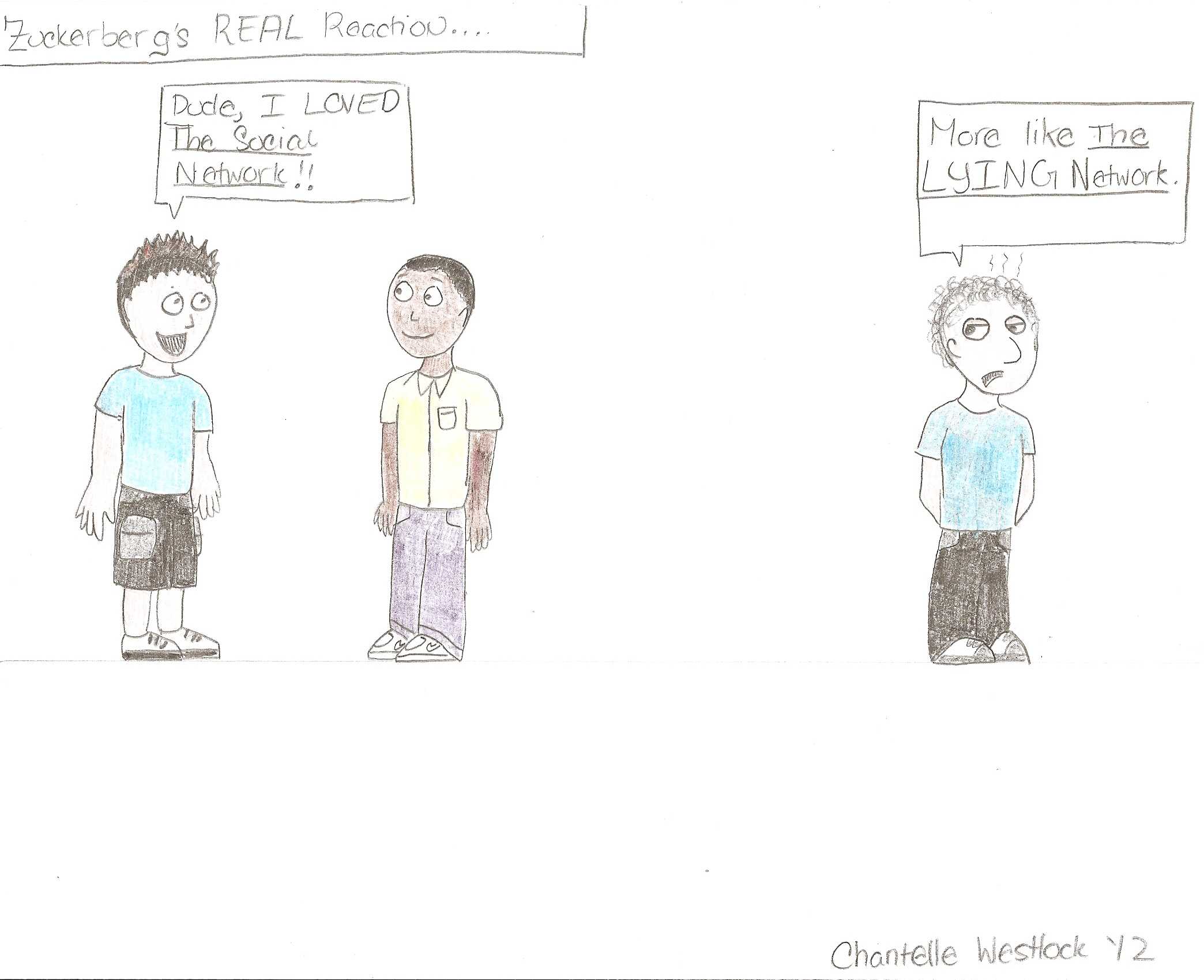
to create a more appealing, glamorous and even scandalous product, the writers and producers of The Social Network in fact reflected one of the movie’s main themes of embellishing the truth for popularity. The very product whose creation is the focus of this movie, Facebook, encourages just the same behavior.
Perhaps for many movie-goers this is simply the nature of film – dialogue and scenes are cut and edited as seen fit for production. Irrelevant or uninteresting material is scrapped all the time. However, can the same be done when the movie chronicles real, living people instead of fictional characters? Perhaps today, with the prevalence of social networking sites like Formspring, Facebook, and MySpace, there is a different societal expectation for truthfulness. According to a recent study in Britain for example, men lie between 4 and 5 times a day, and women lie between 2 and 3 times a day. A hubbub of such lies and manipulations of the truth are online dating profiles. Men and women lie about their height, weight, interests, occupations, and incomes –basically everything– in an effort to seem more appealing.
Currently it seems, in the battle between popularity and truth, popularity has prevailed. As demonstrated by behavior on social networking sites, people willingly manipulate the facts that they post about themselves, with the comforting distance of a computer screen to hide behind. Just consider the obsession with digital photography for networking sites. How is it that photography has become a focus of live social events? These photos not for the sake of capturing a special moment, but rather they are intended to increase our appearance and image in these online networking sites as fitting a specific niche, be it funny or artsy.
Perhaps this rambling strikes movie-goers and readers alike as seemingly behind the times. Our society has simply adapted to cope with these emerging social networking cites, even at the cost of sacrificing some sense of truthfulness. This theme of multiple realities and interpretations of the truth is central to The Social Network, and while it is ironically but fittingly reflected in the assemblage of the movie itself, the movie and theme are so relevant to the current developments of the technology age, the film is a must see.
Leave a Reply
You must be logged in to post a comment.