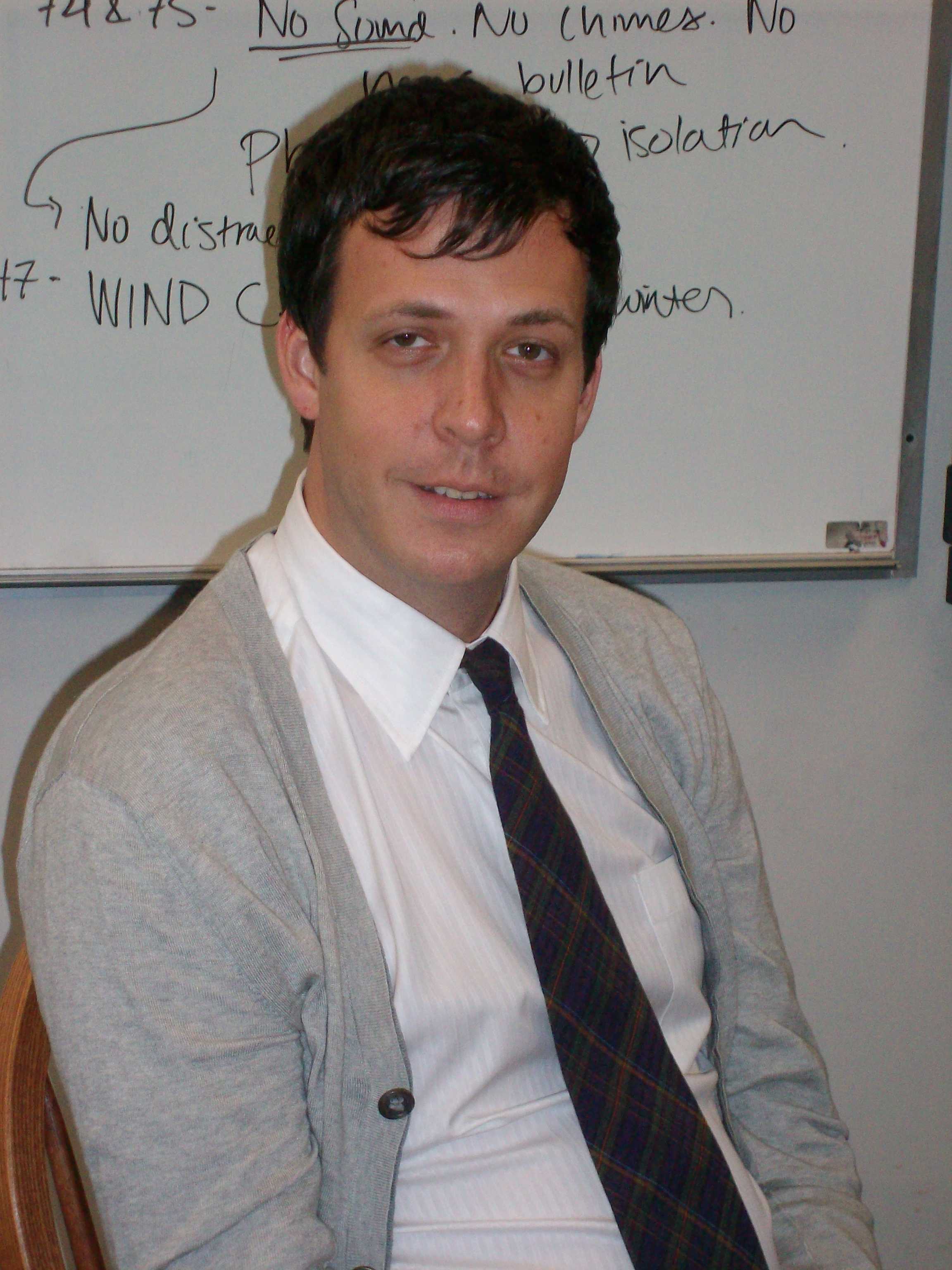
By Mr. Beckman, Special Faculty Contributor
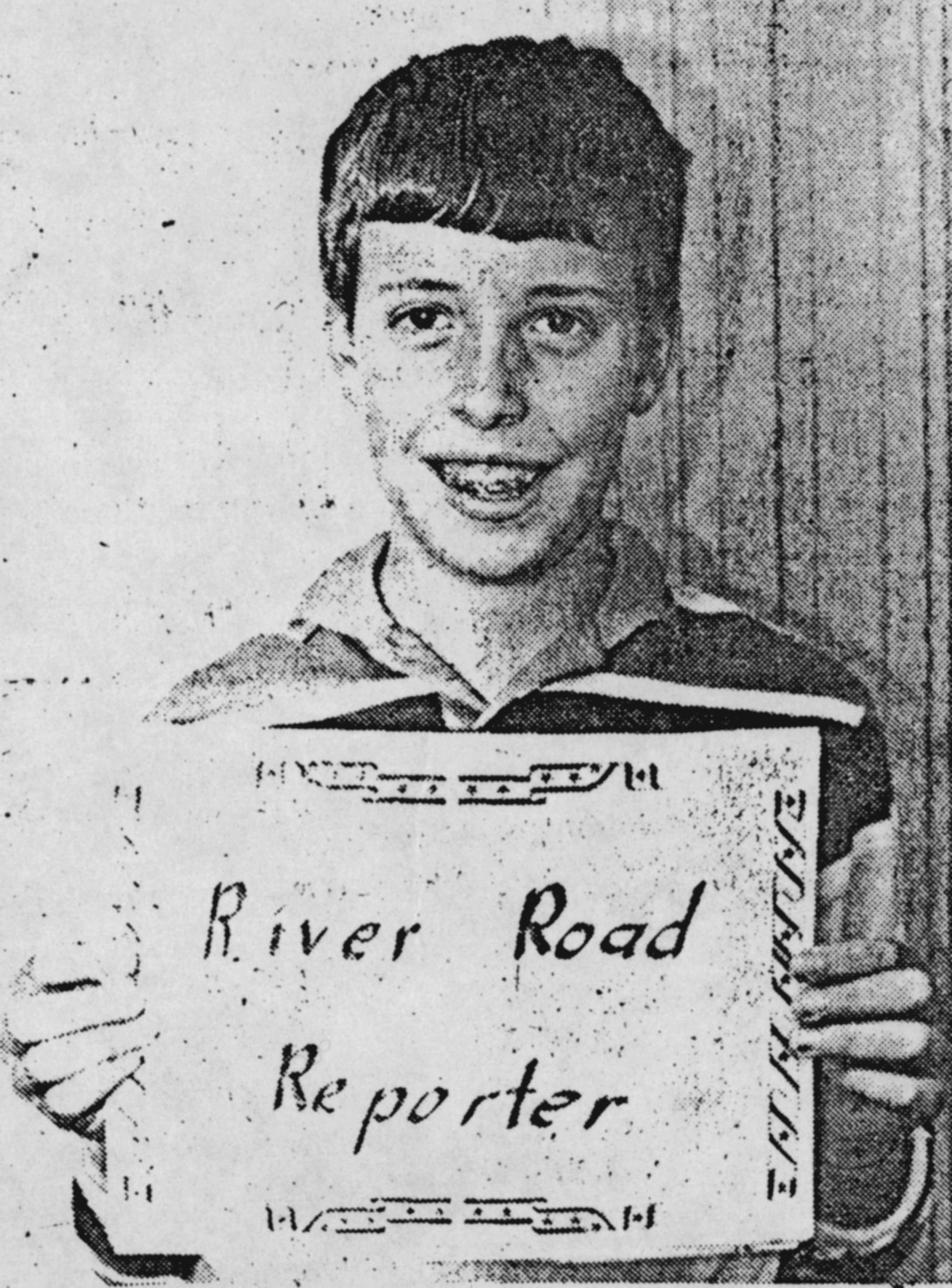
The last newspaper I wrote for was The River Road Reporter. It was 1986, and I was not only chief reporter, but also editor, calligrapher and cyclist. For two summers, I collected news, recipes, poems and classified ads from all the neighbors; my mom was the typist, and my dad made Xerox copies at work.
“The Pattersons have been keeping busy with seven food projects and a gerbil for 4-H.” “Hazel Oetzel went to Germany in July to attend the wedding of her grandson Eric Hass to a German girl named Heidi. Hazel said they didn’t really know what anyone was saying.” “David is taking care of his school’s bunny. Her name is Benny. That’s right—Benny the Bunny is a her!”
In a very rural neighborhood, with woods and cornfields separating every three or four houses, I suppose I was providing a valuable service. Certainly, I sparked a renaissance in local cuisine; the recipes for “Dump Cake” and “Hanky Panky” remained Beckman family favorites for years.
I can only imagine what today’s communication technologies would have meant for a kid like me, in the 80s and 90s. Of course, with parents like mine, it may not have mattered. Every few years, the cable company surveyed the houses on River Road to determine whether it would be worth it for them to extend the lines into our neighborhood. I was always furious with my dad for saying he would never pay for TV when he could get plenty of perfectly good programs for free with just an antenna. It wasn’t until college that I ever lived in a home with MTV—and by then I was so socially crippled there was no hope of catching up.
If the cornfields were lonely, middle school was downright oppressive. Only in the summers, when I went away to a series of ‘nerd camps,’ did I feel I could really breathe. Back at home I wrote daily letters to my new, now faraway friends. I remember calling the operator (on our rotary, party-line phone) to find out the long-distance rate to Oklahoma, so I’d know just how many minutes my allowance would cover.
I fantasized about living in New York, about what it would mean to be there when there was a place where I could really, fully be. I’ve been an opera lover ever since I saw Aida broadcast on PBS from the Metropolitan Opera in 1989. (Okay, I’ll admit the full, embarrassing truth: ever since Katarina Witt and Debi Thomas both skated to music from Carmen in the 1988 Winter Olympic finals; I was rooting for Katarina, although my mom said I shouldn’t favor an East German Communist.) I used to tape every Saturday afternoon radio broadcast from the Met, to listen again in the dark every night as I fell asleep. The final applause was my favorite moment: I could imagine picking out the sound of my hands, as the lights rose in the Met auditorium, while darkness fell in the city outside.
I don’t need to explain how all of this would be different now. This all sounds like another country, another era—and how quickly since then we have lost such intractable distinctions between there and here. No one, now, could write so chillingly as Fitzgerald did in The Great Gatsby, of “that vast obscurity beyond the city, where the dark fields of the republic rolled on under the night.” Now, in one of those dark fields on River Road, a light shines from the window of a nearby house, where some kid is on Skype to Oklahoma; or watching The Daily Show on Hulu; or looking up surreptitious cell phone video on YouTube from last night’s La Bohème; or doing all those things at once. Anything to avoid writing that English paper.
Leave a Reply
You must be logged in to post a comment.