By Alexander Serratelli ’12 and Jake Wieseneck ’14 , News Editors
In future editions of history textbooks, the death of Osama bin Laden on May 1, 2011 will surely be noted in the final chapter. The event sent diverse feelings throughout the nation running the spectrum from celebration to fear. Crowds cheered outside the White House and around Ground Zero, while others did not feel celebration was appropriate. The events also evoked distinct reactions from faculty members here at NA.
“I’m not willing to sit here and say I’m happy that someone is dead,” said Mr. Morelli of the Humanities department. Morelli, who was in high school during 2001, recalls viewing the smoke billowing from the World Trade Centers as he drove home that Tuesday. He is “torn between feeling concerned for the security of our country and [for] our armed forces in Afghanistan,…and feeling vindicated for friends…lost in 9-11.”
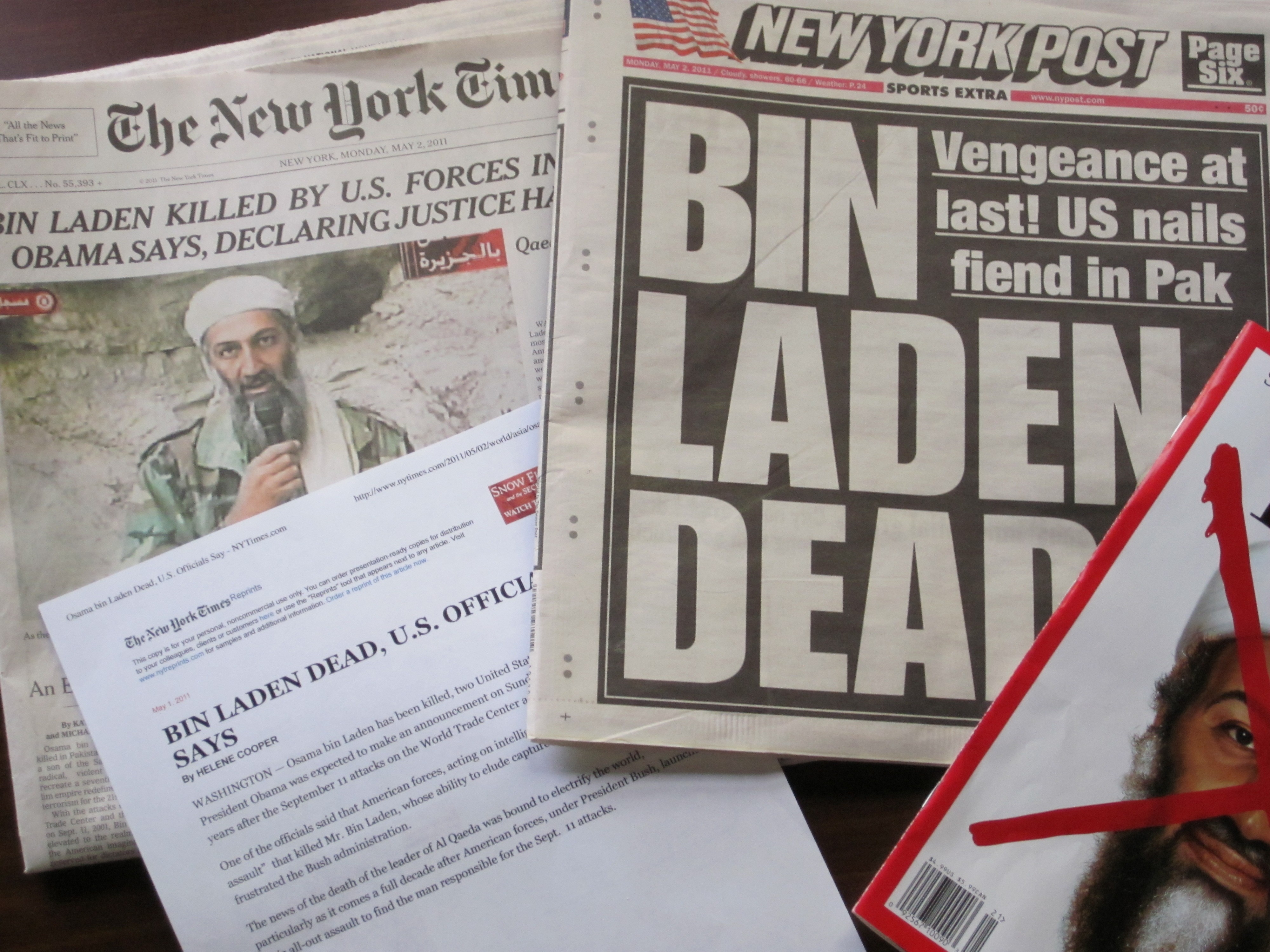
Ms. Schottland, also of the Humanities Department, believes this is an opportunity to learn more about our counterparts in the Middle East. “We still need to work hard to understand why 9-11 happened and where this movement of [Middle Eastern] anti-Americanism…came from,” she said. On the other hand she also called the events, “A just vindication for the lives lost on 9-11.”
Humanities teacher Mr. Abbey said, “It didn’t surprise me…I knew we were looking for him for years and that it would happen.” He understands that for our generation killing Bin Laden was killing the face of evil and terrorism. Mr. Abbey was asleep when the operation transpired, but his daughter woke him up with the news of Bin Laden’s death. He was surprised by Bin Laden’s chosen hiding place, a compound in close proximity to a Pakistani Military base. Mr. Abbey believes that these events will strain our relationship with Pakistan, as we entered an allied country without announcement with Pakistan’s own military not far from the hideout. Humanities teacher Mr. Ball disagrees, he feels that “the Obama Administration handled [the events] particularly well.”
Abbey was surprised by the number of celebrations in Washington, New York, and on College Campuses. He immediately drew a connection to Beirut in 2001. Notably, former Newark Academy School Council President Samuel Sherman ’10 was interviewed by reporters. Sherman was among the crowd outside the White House shortly after the news broke. He offered his reactions for a New York Times article that appeared the following morning.
English teacher Ms. Aquadro focused on the symbolism of Bin Laden’s death. She described “Public Enemy #1” as a symbol of terrorism, claiming, “Symbols are important to people. I believe that as an English teacher and as an American citizen.” Additionally, she believes that “Iconography is important. He is an icon for this age…everyone knows his face.”
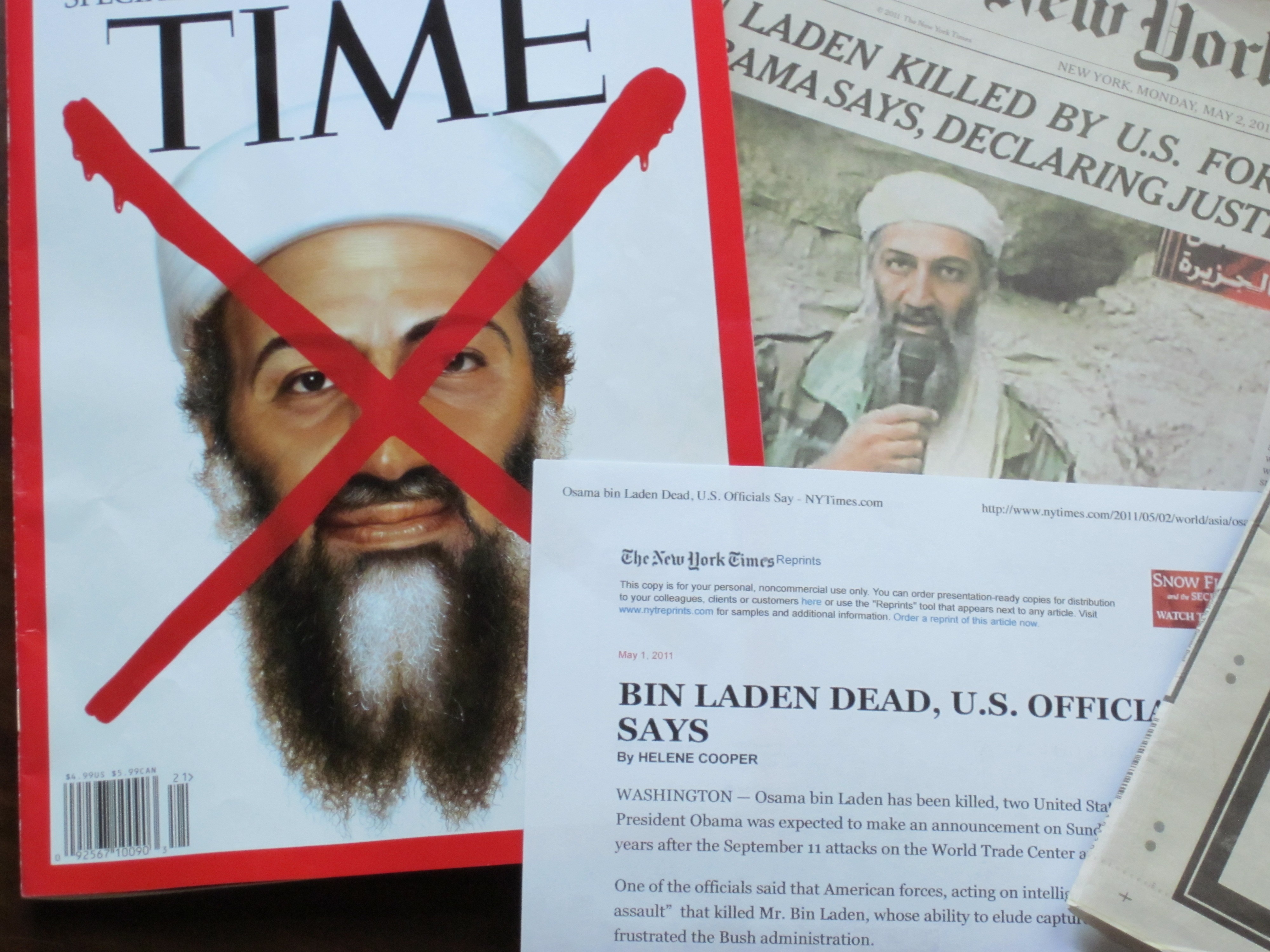
The biggest fear articulated by the Newark Academy faculty and by the entire American electorate is for the future of terrorism. Humanities teacher Mr. Caldwell feels “concerned…Whenever there is a death of a leader there is the risk that someone worse takes over.”
Though the death of Bin Laden marks a grand accomplishment in the “War on Terror,” there are still many battles yet to be fought. Yes, “justice has been done,” but there is still much justice left to do. Our deed may legitimize headlines such as that of the New York Post, “Vengeance at last!,” but the work goes on and the cause endures.
Leave a Reply
You must be logged in to post a comment.