By Varan Satchi ’12, Commentary Editor
When asked to describe the state of the Republican Party, many current Newark Academy students responded with adjectives such as extremist, xenophobic, and anti-intellectual. These are hardly the responses one would have expected concerning “The Grand Old Party” even just twenty years ago. Has the Republican party really changed that much?
On the surface there appears to be quite a disparity between the intellectual climate of today and the heyday of Republicanism. In those days the party was led by a myriad of intellectual figures, the foremost of whom was William F. Buckley Jr. Buckley, who through his writings and speeches made the GOP the party of scholarly, respectable conservatism. He garnered wide appeal because equity was an integral part of the discourse he engaged in. Buckley in particular did not hesitate to point out flaws on his own side – even being a devout Catholic, he did not hold back his criticism of the church and the Pope for their overly sympathetic view of communism. Buckley himself, was a determined anti-communist, ingraining that value into the new right wing. Still, Buckley lambasted extremist groups such as the “John Birch Society.”
Since then, conservatism has taken a much more dogmatic approach to its platform. This new approach is a perversion of the values of the past and has subsequently debased political discourse. Popular sentiments among modern “republicans” include, anti-abortion, anti-gay marriage, support of big business, lower taxes, denial of global warming, and protection of gun ownership at any cost. The right wing is now characterized by vocal groups who oppose anything ‘liberal’ and engage in purely partisan debates – which is not to say that the Democrats are not partisan themselves.
Does all this mean that the Republican Party is now at the grip of groups with extreme views, who are likely to provide the next nominee for the presidency? The evidence so far is not entirely in line with this view. All the leading candidates so far have gone
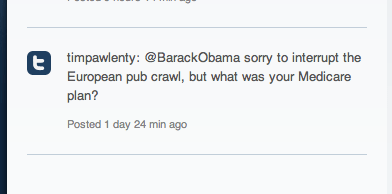
against one of more of conservative orthodoxies; for example Romney’s health care record, Pawlenty’s views on emission caps, Gingrich’s rejection of some aspects of the Republican health care proposal to name but a few.
Early favorites and obvious extremists such as Trump and Palin appear to have been sidelined. Some analysts say the Tea Party’s influence has peaked. To win the nomination, and to carry the undecided center of the country, a Republican candidate still has to appeal to less dogmatic constituents as well as to the committed supporters who put some of the more extreme views above all else. In Obama, the Republicans face a formidable campaigner and a global superstar. They need to pick someone who can appeal equally to a wide spectrum of voters.
As the ‘Economist’ commented recently, the Republican establishment’s demise [at the hand of the extreme fringes of the party] has been exaggerated. One can only hope someone will emerge soon to take the party back to the intellectual rigor of the past, and give Obama a fight worthy of the country.
Leave a Reply
You must be logged in to post a comment.