By Josh Faber ’12, Commentary Editor
The problems facing New Jersey are both dire and real. They range from the 32 billion dollar debt, to the failing public school system. In order to address the situation, New Jersey voters turned to Republican Chris Christie in the 2009 gubernatorial election – even as President Obama campaigned rigorously for the incumbent Jon Corzine.
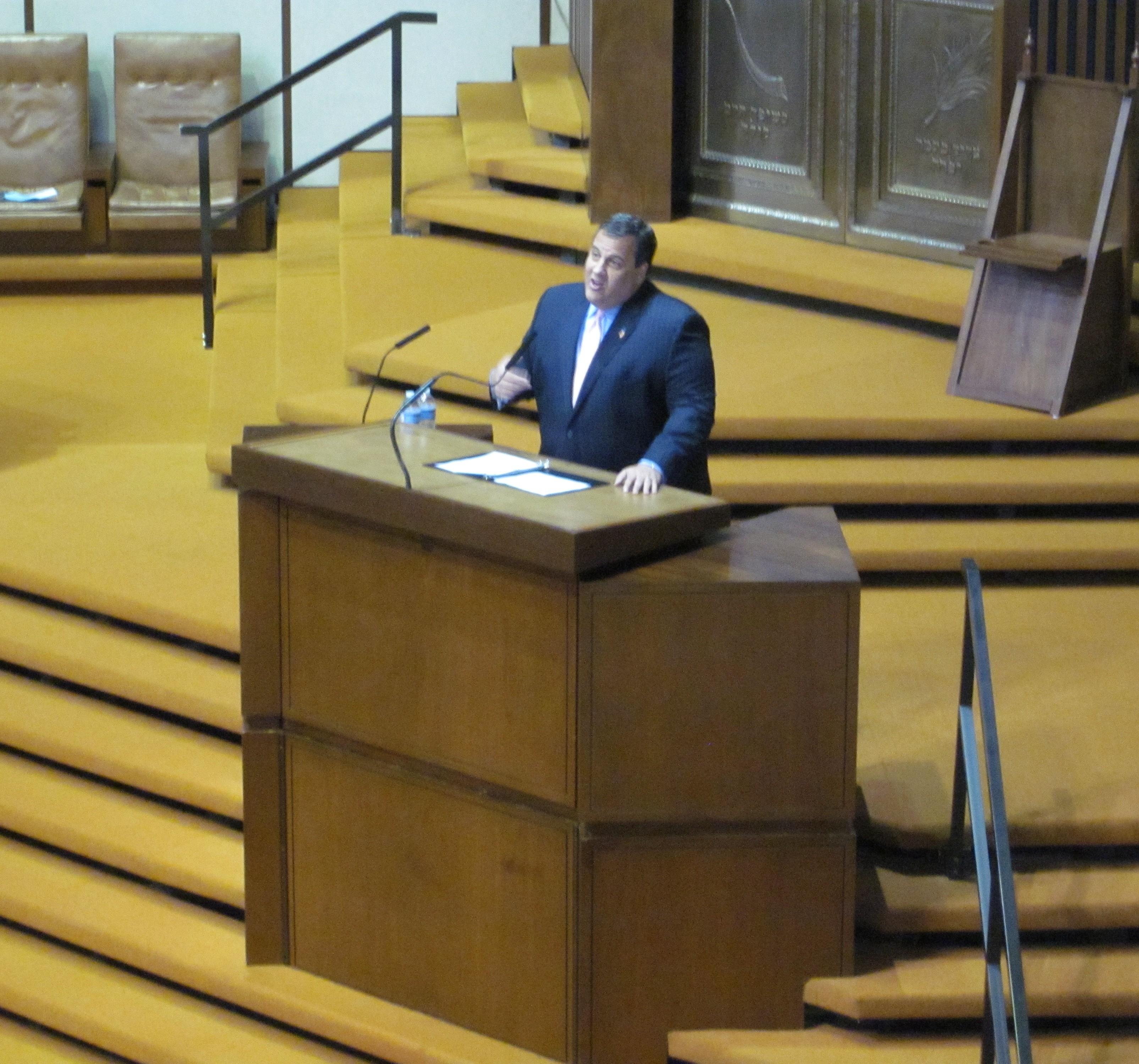
On Thursday May 26, the Governor spoke to Temple B’nai Jeshurun, a synagogue just minutes away from Newark Academy. The Governor focused on the state’s educational difficulties and his plans for a solution. In just forty minutes, the Governor made one thing clear: he is exactly the leader New Jersey needs to ameliorate the problems that have been accumulating for the past decade.
In one respect, the Governor’s clear beliefs, unyielding attitude and tenacity are essential qualities for the man who seeks to overcome years of institutional degradation. As such, New Jersey voters can assess Christie’s competence from a number of angles as opposed to the often opaque view that other politicians provide.
For example, while former Governor Corzine’s views were vaguely known as Democratic, Christie works to add more depth to such major issues as educational reform. In his speech, the Governor called urban education “unacceptable and… obscene”. These statements do not provide a solution to the problem but they certainly recognize it.
Aware that he could not carry his audience with statements of fact, the Governor continued to outline his plan for “accountability”. The plan includes crippling tenure, assessing teacher competence and forcing public employees to pay for certain benefits.
Although these pronouncements are highly controversial, Christie has not given ground in his pursuit of them and has no fear in making his actions public. Still, the Governor does not merely spout his declarations as politicians are apt to do. Rather, he dispenses logical, and often witty, reasons for his decisions. In one instance as he discussed accountability Christie joked “Where do we do this anywhere else in American life, where people are not compensated based on achievement? I know, Congress.”
While the quip filled the sanctuary with laughter and applause, the Governor does have a point. The only way education can improve is if we embrace the same meritocracy which is so present in the American mentality. Chris Christie is more than just a strong personality with a good sense of humor; he is also fixing the state in a highly justifiable manner.
It is at this point, opinions on the Governor sharply diverge. The foremost quality that makes a Governor successful is an ability to create beneficial policy; reducing tenure and teacher benefits attracts an enormous amount of criticism. Yet a glance at Christie’s politics only proves their validity.
At the moment, educators have a huge incentive to teach, but little incentive to teach well. On the one hand, a teaching position holds much appeal because the government offers highly abnormal benefits. Healthcare and a pension for a teacher working just fifteen years are worth hundreds of thousands of dollars. This colossal expense forces almost every private business in America to charge their employees at least a small sum of money to lessen the payment. Christie justifiably reasons that the government is hardly any different. It is not an institution with a limitless supply of money and, as such, it should maintain cost-limiting policies.
On Thursday when asked, “Can’t we manage pension funding without reducing benefits” the Governor responded with a resounding “No.” At its most basic level, the current system of benefits that draws so many teachers is unsustainable and, according the Governor, “promised to you by a bunch of lying politicians… to buy your votes”.
What’s more, without a measure of accountability, teachers can work diligently for three years before losing their career driven motivation. That is not to say that all teachers only work hard for a check. Newark Academy teachers (non-unionized) represent examples of the ideal educator. But the facts hold true and New Jersey school children suffer as a result of the apathy of some of their teachers.
To rescind such absolute job security from teachers may seem harsh but it is both pragmatic and realistic. Primarily, lifetime, contractual job security without any attention to productivity wastes resources. Moreover, it draws poor teachers and provides little motivation for all teachers. These two factors directly translate into a poor education.
Other Newark Academy attendees to the talk held different positions on the matter. Junior Monica Murthy suggested that, “With all the teacher layoffs, the level of education in public schools is really going down”. This opinion is widely held and should not be summarily disregarded. It should not be accepted without thought, however. If the issue of education will determine the quality of Chris Christie’s governorship, it should be thoroughly understood by New Jerseyians and NA students alike.
Governor Christie feels strongly New Jersey needs to mend a destructive situation. For the next three years, the Governor only needs to wait as the effects of his bold actions are felt by the state. If they are positive, he will be lauded as a political and economic virtuoso. If they fail, New Jersey may not again elect such powerful leadership as the state’s decline continues, unhindered.
Leave a Reply
You must be logged in to post a comment.