By Ned Harwood ’13, Staff Writer
Waddup tweeples? It was just three years ago when we were blessed with the wonderful world of Twitter, the single most effective supplier of all of our sports stalking needs. (For the few of you that are not familiar with it, Twitter.com is a global social networking site, in which users post messages in 140 characters or less.) In the first few months, it was really hard to comprehend how this new networking site functioned. I recall saying to myself multiple times, “What’s an RT?” and “Why is @Hairytweetball following me?” The early stages of this Twitter technology were all so strange and revolutionary that I nearly deleted my account within the first week. Now look at me, “RT Ima tweetin masheen. #machine @KingJames.” (Actual footage from last week’s tweet rampage). Blabbering nonsense and writing words had never been so much fun!
So I sit here not to talk to you about my personal social networking addiction, but about the accounts that actually have more meaning and risk than your average blogger. I am talking about the star accounts where one tweet that is not thought through beforehand can lead to weeks of conversation and reputation declination. These “Verified” athletes are now virtually just a click away from destroying the image that they’ve worked so hard to build. With such a devastating outcome just fingertips away, the question for athletes has to be asked: Why use Twitter?
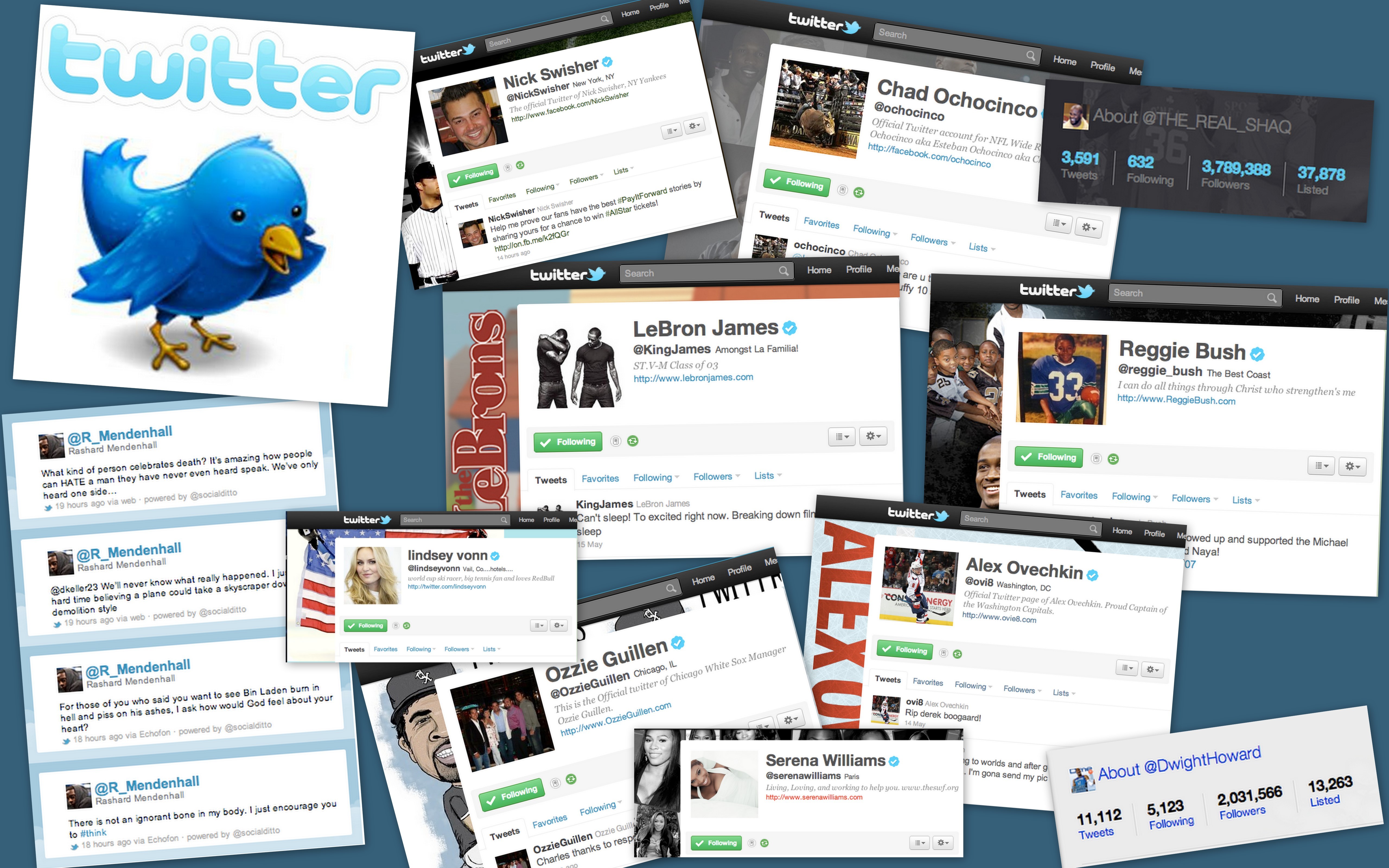
The main draw to Twitter from an athlete’s perspective is the sheer simplicity of being in contact with fans. The tweeting technology is undoubtedly the easiest fan-star communication system ever created, but what is the real point of the quick-chat service?
From a fan’s perspective, do you really need to know what Terrell Owens just had for dinner or what his bowling alley looks like? These facts are completely unnecessary for a normal human to acknowledge. Given, sometimes athletes do tweet about meaningful charity events or contests; however, sadly the majority of tweets today (78% according to Twitter.com) contain nonsense babble. Is it really worth following someone you have never met before to read about their personal brain backwash?
It is not just the fans that should be questioning their Twitter use, but also the athletes. What is the real point of having a Twitter as an athlete other than to read thousands of love letters everyday and gain some self-esteem? Athletes also are talking to complete strangers and every tiny tweet can (and will) be used against them to some degree. The fact that they are willing to risk their reputation to read a few nice comments is beyond comprehension. While athletes might say having a Twitter is the popular thing to do, does it really make that much of a difference in the ever-changing beauty contest of sports? Peyton Manning, Derek Jeter, and Lionel Messi are all absent from the Twitter world and are doing just fine with their fans.
What’s worse is that Twitter is becoming the way to communicate among athletes. Last week alone I saw 227 tweets between Kevin Durant and James Harden talking to each other about inside jokes that have no relevance to the rest of the world observing from the outside. These two ballers guard one another in practice every single day, yet they wait until supper to make little jokes about Serge Ibaka’s accent. They could not have slipped those jests in during a water break? Or at least a free-throw shot? One of the most headlined tweets of 2011 so far was Rashard Mendenhall’s controversial comments about Osama bin Laden’s death in which he openly criticized all his jubilated followers for celebrating. What happened to the good ol’ days when our deepest opinions were desperately distant from the nakedness of the worldwide web? My how times have changed.
Sports and Twitter have now officially bonded into a nationwide phenomenon and with thousands of new accounts every day, it’s hard to see this bond being broken anytime soon. Athletes put their reputations on the line, and fans throw their time out the window, yet for some reason this site is as popular as ever. Simply put, the facts just do not line up. Provided, I am a twitter fanatic, but have also come to the sad realization that this site is nothing more than just blabbering nonsense and lots and lots of words.
You don’t have to be a fanatic sports follower or famed athlete, however, to become a slave of the Twitter trend. After a late surge in mid-January, a wide portion of the sophomore grade took on the task of embracing Twitter and it has proved to be the new procrastination tool for the majority. Christian Pinto ’13, an avid user of Twitter, commented, “There are just so many things to follow and everything is constantly getting updated. It’s hard not to read.” Although I would never suggest completely disregarding the website, when you eventually do embrace Twitter, take it with a grain of salt. Maybe even a few.
Leave a Reply
You must be logged in to post a comment.