Ms. Galvin, privy to the fact that many students take the class because of its AP status, said that even “the kids [that] have had that misconception [that the class is an easy AP course to receive an “A” in] have wound up being very studious and scholarly.” She does not worry so much about why students enroll in the class, as long as they actually enjoy art.
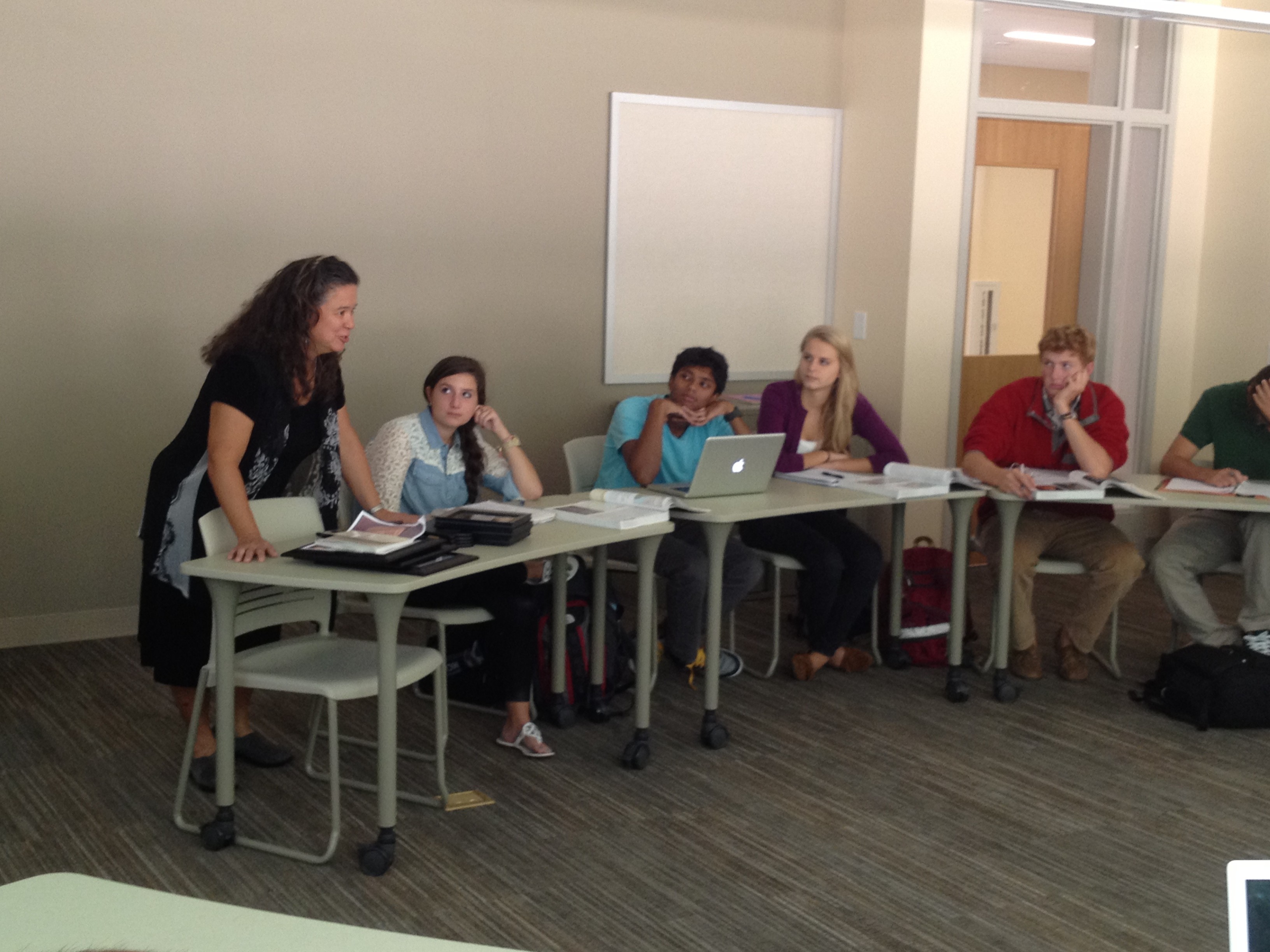
Having an interest in AP Art History is a two-way street; Ms. Galvin loves teaching students who are committed to the material as much as she is—Grace Thompson ’13, a current student of the course told me, “You can tell [Ms. Galvin] has a serious passion for art history. She loves what she’s doing.” Taking genuine interest in the topics makes the course more bearable for the students as well, as Natalie Swanson ’13 explained, “I find that when I am interested in a class, it is much easier to spend time with the material.”
Other misconceptions surrounding the course reference Ms. Galvin’s more famous role as the Dean of Students at Newark Academy. Without a doubt, some students avoid AP Art History regardless of their interest level because they fear that administrators grade harder and yell louder. Similar scenarios include having Mr. Rollenhagen for eleventh-grade World Literature and having Dr. DiBianca for Theory of Knowledge or IB Philosophy. Grace Thompson ’13 aimed to debunk this suspicion, and she explained that “some people just know [Ms. Galvin] as the woman who enforces dress code. She has a presence in the [class]room where you know you have to respect her, but it’s also very casual.”
Ms. Galvin feels the same about this year’s current group of art historians. This is, after all, a new year for her as well, so I asked about her first impressions of us. She gladly answered, “A lot of energy. A lot of intelligence. It seems like there is a genuine love of art. Even if people are there for the AP designation, they seem like they really like art. I am feeling especially affectionate because the class thinks my jokes are funny.”
As the old saying goes, “what happens in AP Art History stays in AP Art History.” What I can tell you is that the atmosphere, established by Ms. Galvin’s “adorable” (Annabel Sharahy ’13) love for art, is clearly conducive to learning the challenging yet interesting material. Ms. Galvin also keeps us awake by sprinkling personal anecdotes throughout the period. She is one of the most approachable and passionate teachers at the school, regardless of her “Dean of Students” status. But, if you do need to talk to Ms. Galvin, there is one question that is completely off limits: “What is your spirit animal?”
Leave a Reply
You must be logged in to post a comment.