By Rebecca Gorelov ’14, News Editor
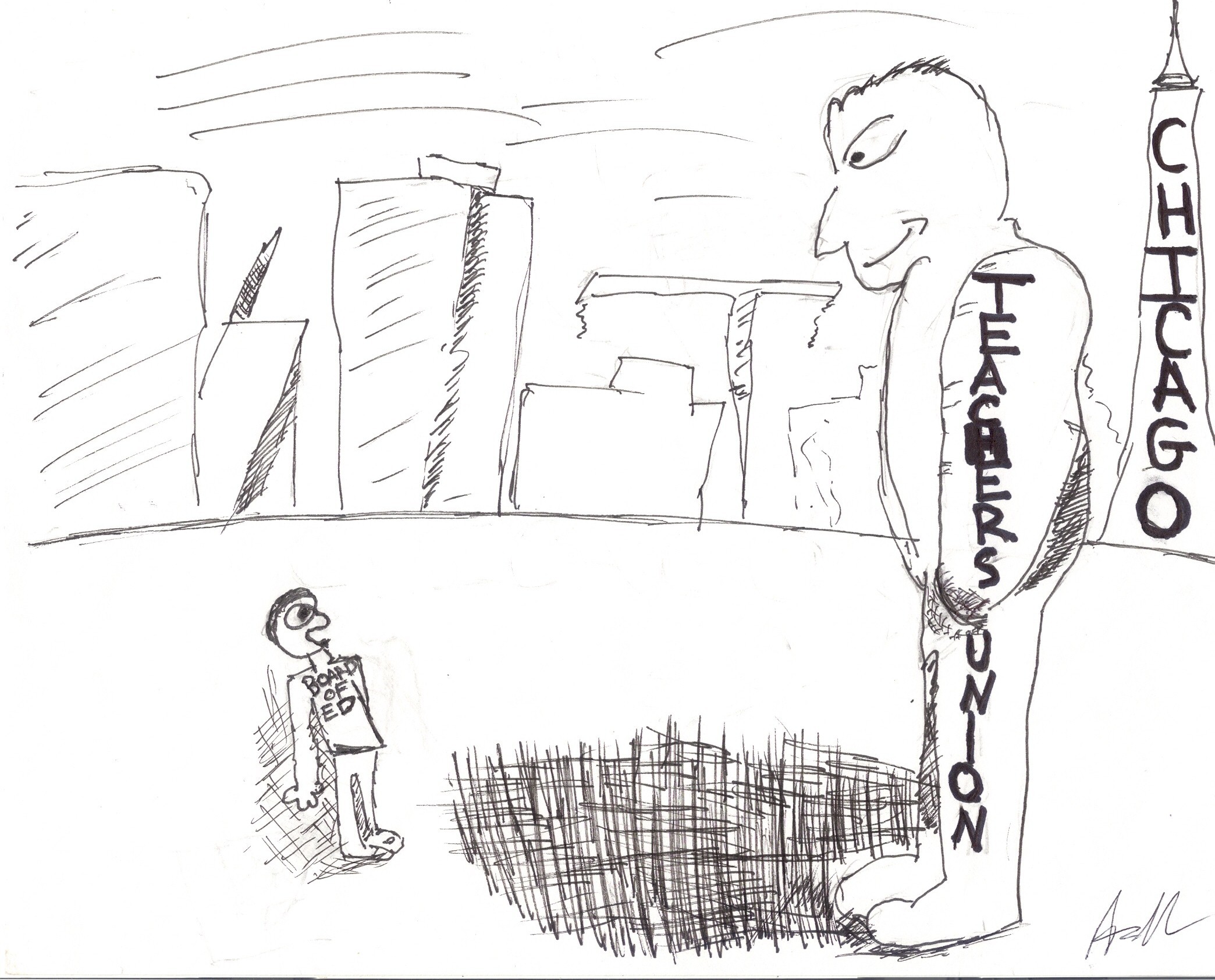
On September 19, while the Newark Academy community was in middle of its third week of school, 350,000 students in the Chicago public school system finally began their first day of school. The extended summer came as a result of the contentious Chicago Teachers Strike.
The strike was caused by teachers’ uncertainty over job security under the reformed educational movement. The movement, spearheaded by Chicago’s Mayor Rahm Emanuel and U.S. Secretary of Education Arne Duncan, calls for a number of changes, among them a newly refined focus on standardized testing. As a result, Chicago Public Schools (the organization, overseen by the Chicago Board of Education, that runs public education in the city) proposed a new evaluation process for teachers, basing their performance reviews more on the test scores of their students. Up to 6,000 teachers, many in high-risk school districts, could lose their jobs because of this new system.
Many critics of the new system point to the fact that standardized tests, while practical, cannot begin to measure the success of a teacher. The system could lead to a more uniform, less innovative method of teaching, thus stifling other more creative ways in which teachers enlighten their students. According to Mr. Rollenhagen, Newark Academy’s Dean of Faculty, “Here at NA, faculty don’t ‘teach to the test.’” This view is championed by the teachers union. Similarly, a Newark Academy faculty member that teaches both IB and AP classes, who wished to remain anonymous said, ” I don’t think it is fair to be judged on how your students perform on standardized testing because I’m not responsible for what they do when they go home. I give them the tools to perform well but after that its up to them.”
The catalyst of the strike was the CPS’s first effort at compromise, what they called a “fair and responsible deal”. The deal included a 16% average salary increase, security for laid off teachers, and paid maternity leave. However, it excluded anything about health care and new teacher evaluations, the two major areas of discontent for the teachers union. As a result, the union refused the offer. Mayor Emmanuel responded by criticizing the teachers for striking, categorizing their action as, “a delay of choice that is wrong for our children.” Emmanuel also seeked an injunction, saying the strike was illegal under state laws. (This injunction was not processed before the resolution of the strike).
On September 18th, after two weeks of negotiation, the CPS and the teachers union reached an agreement. Mayor Emmanuel called the outcome “an honest compromise”. The teachers union received a longer school day, strengthened job security, and most importantly new conditions that would make it very difficult to fire a teacher based solely off of weak standardized test scores. Although the deal finally ended the strike, many criticized Mayor Emmanuel for allowing so many concessions. Jai Ghose’14, a member of both Newark Academy’s Think Tank and Young Republican’s club said, “He [Emmanuel] seemed to concede for partisan reasons…Mayor Emmanuel should have held his ground and made teacher’s more accountable for student performance via test scores.” Yet as Mr. Rollenhagen points out, “Rahm Emmanuel was in a difficult position because in a town like Chicago, which is known for its unions, you aren’t going to win if you talk dismissively of unions.”
In the long-term the strike has had a large impact on the controversial educational system both nationally as well as locally at Newark Academy. The strike sparked discussion about standardized testing, something that has become a controversial topic on campus. Two camps have formed on the subject. One side believes test scores can’t possibly quantify the “out-of-the-box” learning that students at the Academy partake in, which tends to foster interpersonal skills and innovative problem solving. Mr. Gilbreath claims he isn’t, “a strong believer in the idea of standardized testing and its role in education.” The opposing sides see testing as a necessary evil that serves as the most efficient way of quantifying skills. Maia Yoshida ’14, who just took the PSATs, believes “standardized testing is a good and fair way to test one’s ability in a certain subject.”
So while the Chicago Teachers Strike didn’t have any direct connections to the Academy, it did spark broader debates about the hot button issue of standardized testing.
Leave a Reply
You must be logged in to post a comment.