By Will Delaney ’14, News Staff Writer
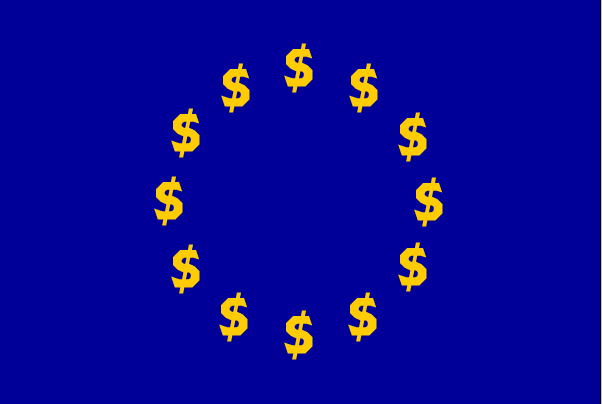
With the Presidential Election recently drawn to a close, and the potential fiscal cliff approaching, many in the United States have paid less attention to the economic crisis in Europe. However, the crisis lingers on, and may pose a greater threat to the world economy than the fiscal cliff. The European Union is at the center of the crisis, and many contend that because of its unified currency, the Euro, the crisis cannot end unless someone wields fiscal control over the system. Mrs. Lifson, the IB Economics teacher at Newark Academy said “the Greek government and people are tackling the question of whether to continue to have the Euro as their currency. By having the Euro as their currency, they gain by being part of a larger stronger economic block, but on the other hand, they lose the ability to control many of their own policies concerning money supply, government spending and taxation. Bailouts have conditions that can force them to cut spending and increase taxes while people are suffering, which can cause more suffering and rioting. But abandoning the Euro can also have dramatic consequences.” This issue obviously has its complexities. Still, countries like Greece must strongly consider abandoning the currency.
Greece continues to slip into an even larger depression as unemployment has reached an almost unimaginable 25% and their economy continues to fall. Recently, there have been decisions by Germany and the International Monetary Fund to continue Greek aid. They have agreed to a sum of 56.7 billion (US) dollars, which will keep Greece afloat with funds until the next round of parliamentary elections. Teddy Steffens ’14 believes that things won’t be getting much better, even with these new policies, especially for Greece. “To get out of a recession, two things need to happen,” he explains, “currency value needs to drop, so the monetary value of goods can go down causing exports to increase. Greece can do neither of these things, as they have nothing to export and are not in control of their own currency,”
Spain as well, is continuing to have problems, especially with its real estate market. Recently they have begun attempts to stimulate the market by making it more easily accessible and cheaper for foreigners (Non-EU-members) to purchase property in Spain. Previously, people from countries like China and Russia could get visas for only 90 days, but now because of new housing regulations, they would be able to stay for much longer. Fellow struggling countries, Ireland and Portugal, also have enacted similar policies.
There are many different ideas for what the future holds, and how both the European economy and the world economy can recover from what has gone on in the past few years. Mr. Ball, a humanities teacher at Newark Academy believes that, “No country can be allowed to go under, we are all so interconnected,” he said, “governments like Germany really need to step up, as this problem is about community.” At Newark Academy, a school which prides itself on being globally aware, we must continue to follow this issue as it is not exclusive to Europe. This issue has the potential to seriously effect the global community.
Leave a Reply
You must be logged in to post a comment.