Note: This is the first part in a five part series on Feminism and Gender Roles
By Sivi Satchi ’15, Feature Editor
Feminism is a word that usually raises both positive and negative emotional reactions. So let’s begin by looking at how the Newark Academy community views feminism. Students like Grace Alofe’14 view it as “the sexual, social, economic and political equality of women and believing that women are fundamentally equal in any way.” Physics teacher Mr. Bitler believes feminism is “treating women fairly in terms of jobs and opportunities and those sorts of things.” He goes one step further to say “in that definition I would call myself a feminist.” Although many other students and teachers agreed with these definitions, they preferred to stay anonymous given the contention around this issue. However shouldn’t the discussion of feminism – especially in a school known for its tolerance of a variety of views – be acceptable and unrestricted? Hopefully, a clarification of what feminism is will ease the self-censorship.
In practice, feminism is much older than most people realize. One of the first major milestones of the movement was Mary Wollstonecraft’s “A Vindication of the Rights of Women” written in 1792. She pleads for women’s rights to education, countering the then prevailing view that women should only receive a domestic education. The 1848 Seneca Fall Convention held in New York called for full legal equality between men and women, including full educational opportunities and equal compensation. The Women’s Suffrage movement, which campaigned for women’s right to vote, began only much later. Women finally gained the right to vote in the United Kingdom and the United States in 1918 and 1920, respectively.

Photo Courtesy of Sivi Satchi ’15
By the mid 20th century a “second wave” of feminism emerged based on the realization that the rights gained from the many battles of the past still did not work fully in many circumstances. However, it did not end there. The “third wave” of feminism of the late 20th century had much broader goals of equal rights not just for women, but also for all categories of minorities: male or female.
Gloria Steinem is one of the most famous leaders of the “second wave” American feminist movement. In the 1960’s and 1970’s, she led successful campaigns for abortion rights, better wages and working conditions for women. She is still active in the movement with recent efforts against child abuse and human trafficking. Despite having won many of her battles Steinem feels that there is more to be done. In fact she says women now suffer from ‘get out of my kitchen syndrome’ in which women feel the need to do it all – work, maintain the home and raise children. Yet men don’t feel the same anxiety, so why do women? Obviously Steinem’s goals are yet to be met in full.
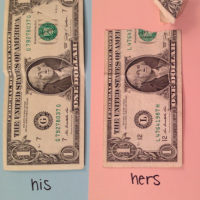
For example, it’s hard to argue that men and women are seen as political peers when the world average of women in Parliament is at 19.1%, as stated by the Inter-parliamentary Union. Furthermore, according to the US Bureau of Labor Statistics, in 2012 women made an average of 80.9 cents for every dollar that a male earned. Does this mean that women are still limited, if not stifled, by societal norms? It’s a hard question to answer, but based on current statistics, most people would agree that there is work to be done.
We at Newark Academy pride ourselves on inclusivity and in instilling a generosity of spirit in students. We should stop seeing feminism as a controversial topic, because it doesn’t mean, as Mr. Bitler stated, “men are bad or women are better”. Erin Mooney ’16 put it best when she said “I don’t know if I’d say that feminism is a ‘taboo’ topic at NA but rather I feel it’s a topic that is overlooked. NA being such an accepting and generally socially progressive school, it’s easy to think that feminism isn’t an issue we really need to address. But it is a huge misconception if people think that feminism is over because women can vote. Feminism continues to impact every single person in the United States – male or female.”
Feminism is a 250-year-old movement dedicated to giving equal rights to both women and men. Let’s stop being reticent and “shy[ing] away from [this] controversial topic… because of the arguments it creates” as Erin Viola ’16 said and start playing our part in shaping today’s debate on this age-old issue.
The Feature Section Explores Feminism and Gender Roles
Part 1: What is Feminism?
Part 3: The “Pretty Hurts” Video
Leave a Reply
You must be logged in to post a comment.