By Danny Cohen ’15, Lead Columnist
Since January 2000, 732 NFL players have been arrested and have been involved in 90 cases of domestic violence. Yet, when Broncos Tight End Dwayne Carsell pleaded guilty to battery after he picked up a woman by her neck and bit her, Titans Tackle Brad Hopkins pleaded guilty to assaulting his wife and reportedly choked her, and Dolphins Tackle Tony McDaniel was arrested for allegedly shoving his girlfriend’s head into the ground, all received one-game suspensions. These one game suspensions have always been commonplace in the NFL and rarely have players been suspended for more than two games.
Thus, on July 29, 2014, amidst public scrutiny, NFL Senior Vice President of labor policy Adolpho Birch defended the league’s decision to suspend Ravens Running Back Ray Rice two games after a video showed him dragging his unconscious fiancé out of an elevator. When asked on ESPN’s Radio’s “Mike and Mike” how the NFL reached the decision to suspend Rice for two games, Birch responded, “On balance, we reviewed all the materials, listened to the persons we listened to, took the input of the Players Association. When we looked on balance at all of that, we believe that the discipline we issued is appropriate.” Furthermore, he refused to comment when asked whether Commissioner Roger Goodell had seen any other footage of Rice in the elevator, citing the privacy of the NFL’s investigation.
The NFL, however, suddenly changed its mind about the length of the suspension on September 8th after TMZ revealed a graphic video of Rice punching his then fiancé and current wife Janay Rice. That same day, the NFL suspended Rice indefinitely and the Ravens released him.
“The fact that the NFL changed the suspension just because the video became public is ridiculous,” said football fan Mike Gibbons ’15. “ We all knew what the video would be showing. The act of domestic violence should determine the suspension and not how it graphically looks.” The NFL’s indecision demonstrates that its most recent choice to increase Rice’s suspension does not reflect its moral values but rather its fear of public disapproval. The growing prominence of social media outlets such as TMZ, Twitter, and Facebook have challenged the dignity of the NFL and threatened its popularity, forcing its hand into making a reluctant decision. In the aftermath of Goodell’s conclusion, speculation has emerged that he was untruthful during the process of the investigation. Reports have suggested that Ravens executives and Goodell had either seen the video or heard detailed reports of Rice’s incident, but the Ravens convinced Goodell to be lenient in his punishment towards their beloved Rice (h/t Bleacher Report).
Less than a week after the Ray Rice video was released, another controversy manifested itself surrounding an even bigger star: 2012 NFL MVP Running Back Adrian Peterson. Upon release of the news that Peterson was indicted for reckless or negligent injury to a child after Peterson hit his 4 year-old son with “a switch” or small tree branch, the Vikings wisely deactivated him from the active roster for the Sunday, September 14th matchup against the Patriots.
Similar to the Ray Rice incident, there was visual evidence showing the physical damage that the Running Back caused his family member. This time, pictures leaked of bruises on the 4 year-old’s leg. The following Monday, nevertheless, the Vikings announced that they expected Peterson to play in their next contest. Yet again, public pressure changed the NFL’s and the Viking’s minds. Viking’s sponsor Radisson Hotels cut ties with the Vikings while NFL sponsors Pepsi and Anheuser-Busch expressed public discontent with the league’s actions. These companies, whose contracts supply 2.3 billion and 1.2 billion dollars respectively to the NFL, scared the Vikings and the NFL into deactivating Peterson indefinitely.
“Commissioner Goodell and the NFL teams are too easily influenced by the fear of losing money and should not have made their decisions in the first place if they are not willing to stick by them,” said Scott Wright ’15. This incident followed the same disturbing pattern, as it was apparent that the league’s actions reflected its financial interests rather than its interest in justice.
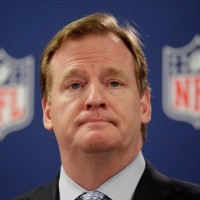
The fact that NFL and its teams so poorly mishandled two critical situations reflects a lack of education, lack of morals, and lack of leadership among the executives in the league. In Commissioner Roger Goodell’s first public address since the Rice and Peterson incidents went viral, he lamented his actions and promised changes, yet he did not directly apologize to the women and children who were injured by the NFL stars. Football needs a culture change and its Commissioner needs to atone for this debacle by leading the league in the right direction in the future. Even though many players come from violent upbringings, they must be taught to save their violence for the field and leave their families unscathed. Anything else cannot be tolerated. Clearly, money is the most important thing to the NFL and its owners, but if the violence off the field continues, sponsors will pull out, viewership will decline, and its annual revenue of 10 billion dollars will begin to decrease.

Leave a Reply
You must be logged in to post a comment.