By Jocelyn Tolpin ’17, Commentary Editor

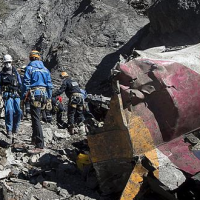
On March 24, 2015, 144 passengers and six crew members boarded flight 9525 in Barcelona, expecting to land in Düsseldorf in a little over two hours. However, their flight never arrived. At 10:29 AM, the airplane began to descend into the French Alps and at 10:40, the right wing struck a mountain. This plane crash was originally thought to be the malfunction of a machine, but it was instead made possible by a much darker problem: the inability of a system to prevent a pilot with mental issues from flying 150 people to their deaths. Among these victims were 16 students and two teachers who were coming home to their families after spending a week in Spain. There were children and families aboard this plane.
Andreas Lubitz, a man diagnosed with depression, anxiety, and psychosomatic illness was the one who flew the aircraft into the mountain. He waited for his captain to use the restroom and when his captain returned, he wouldn’t allow him back into the cockpit. The plane’s voice recorder heard the breathing of Lubitz and the captain’s banging on the door and begging to be let in. At the time, Lubitz was prescribed multiple medications and was forbidden by his doctor to work from March 16th to March 29th. However, ignoring the airline’s code of honor, Lubitz hid his condition. These notes and medications were found ripped up and hidden in his home.
Only a few years ago did airlines begin to become more lenient towards employing those with mental issues because they became aware that a lot of medication is being developed to treat these patients. They relied on an honor system; they hoped that their pilots would come forward if they had any issues and thought they were unable to fly. However, due to the recent events, this honor system is being questioned; not only did Lubitz not come forward with his psychosomatic illness, he did everything he could to hide it.
The world is ablaze with discussions to prevent anything like this from happening again. Many are advocating for the creation of a law in Europe that is already present in the United States: there must be at least two people in the cockpit at all times. Many have raised the question of whether or not it is safe to have a pilot with any mental illnesses, treated or untreated, flying a plane. In addition to this, it is often that the honor system ought to be replaced with one that has more definite results.
Many of the students and faculty at Newark Academy love to travel, so this flight could have easily contained some of our very own. The discussion topics that were raised by this tragedy are ones that are sensitive to the NA community: mental illnesses and their implications and limitations. This tragedy impacted the whole world greatly and will no doubt impact the future of travel.
Leave a Reply
You must be logged in to post a comment.