College Athletes Should Be Paid
By Young Se Choi ’18, Staff Writer
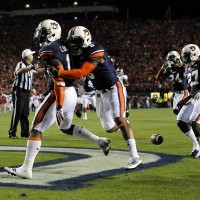
It is the fourth quarter of the nail-biting 2013 Iron Bowl final. Auburn and Alabama are tied at 28. College football fans across the country are on the edge of their seats. Adam Griffith, a freshmen kicker for Alabama, steps up to take the field goal, as the faith of this enthralling finale lies in his foot. On the receiving end is Auburn’s Chris Davis, picking up Griffith’s field goal, which falls short. Without hesitation, Davis bolts across the sideline of the field out of reach of the Alabama defense and returns the kick for a 109-yard touchdown, handing the trophy to Auburn in epic fashion. But while Auburn celebrates an Iron Bowl championship, the real winners of this game are the corporate sponsors, the carriers of the game, and ultimately, the NCAA itself.

The NCAA currently produces 11 billion dollars in annual revenue through players’ jerseys, ticket sales, televised broadcasting, and more. To put that in perspective, that is twice as much as what the NBA and NHL, both professional sports leagues, make in revenue each year. Although the NCAA has proven to be one of the largest sports organizations in the nation, the college athletes themselves do not see any of this money, even while they risk career-ending injuries. Since many athletes must attend college in order to play professionally, this step is unavoidable and, for many, is simply part of a larger process in the sport. For this reason, it is absurd to consider college athletes only as amateurs; a college athlete’s hard work, which generates an exorbitant amount of revenue for both the NCAA and sponsors, deserves compensation. It is time to realize that these student-athletes are more athletes than they are students.

Furthermore, contrary to what many opponents believe, being a college athlete is a full-time job. The typical Division I student-athlete devotes 43.3 hours per week to their sport including practices, games, workouts, and scrimmages. Shockingly, they devote to their team approximately 3.3 more hours than the typical American does to their job. However, while the average American makes approximately 850.12 dollars for their hours of work, student-athletes are not paid at all. Additionally, they’re not allowed to make any money outside of their sport, despite the immense amount of revenue they create for the NCAA.
On the other hand, some people, such as Newark Academy Athletic Director, Mr. Gilbreath, believe that this compensation should not come directly from the NCAA, but instead feel that college athletes deserve compensation for purchases of their own merchandise: “If the university is making money from selling a Johnny Manziel football jersey while Johnny Manziel is a quarterback, then I think he should receive some type of compensation. People are buying the jersey not because they love Texas A&M or because they love the jersey; rather for their love of Johnny Manziel. I think that is the type of compensation that the NCAA should apply for college athletes.”

NCAA sports are popular nationwide, and are considered to be one of the top channels of entertainment in every sport. Therefore, these student-athletes should to be paid for the revenue they create for the NCAA and the work they put in on the court or field. For this reason, it is profoundly unfair of the NCAA to restrict athletes from receiving monetary compensation, even outside of NCAA activity, while everyone else profits from the situation.
Vs.
Remembering the ‘Student’ in ‘Student-Athlete’
By Anish Nuni ’19, Staff Writer
College sports, more and more, are becoming just as competitive as the professional sports world. College stadiums and gyms often cost millions of dollars and the athletes play in front of tens of thousands of people, with millions more watching at home. While sports in college have reached heights close to those of professional sports, college athletes still do not need to be paid.
Although college athletes don’t receive monetary contracts, they are adequately compensated in other ways. Athletes often receive full scholarships, and greater exposure to scouts in professional sports, which allows for an easier transition into the highest level. College athletes also receive so many other benefits through their dedication to the sport that they do need pay as well.

Scholarships are the first of many advantages college athletes have. For example, at University of Arizona, the 85 football players and 13 basketball players on full-ride scholarships receive approximately $150,000 each towards tuition.[1] A non-athlete would have to borrow that money, and after they worked hard to receive an education, they would graduate with five to six figures of student debt. To suggest that someone having the privilege of playing the sport they love at the college level, and receiving an average of $150,000 (for the best athletes), should be compensated with more is outrageous.
College athletes seeking to play professionally also get exposure to scouts from the professional level of their sport, and are rewarded with a greater chance of having a successful athletic career at this level. Football and basketball college athletes are significantly more likely to be drafted than those who did not play in college, as the connections college sports gives you is invaluable.

College athletes are given the opportunity to improve at their sport, and improve themselves through their place as a college athlete. One must remember that these are student-athletes, the student part coming first, a fact which is often forgotten. Colleges give their athletes the chance to do what they love, to play in fantastic facilities, and to train with high-level coaches and players. First and foremost, however, before the athletic aspect, these athletes are given the opportunity to pursue a higher education, with the sport as a secondary extracurricular. Newark Academy’s own Josh Karp ’16, a Division I lacrosse player committed to Colgate, added, “we often forget that college athletes are students first; we must remember that for many of them, there won’t be a professional athletic future. We call them student-athletes because for the majority of them, the sport is secondary, as graduating with a degree and getting a job remains the most important thing.”

Through college sports, student-athletes receive scholarships, which present them with an academic opportunity many dream of, and the exposure and training necessary to make it at the next level. Yes, college athletes are hard workers, but they are adequately compensated. Students of any college also work hard, and aren’t compensated like a student-athlete. Although college athletes do draw in revenue for their schools and the NCAA, they do so under the pretense of “student-athletes,” and we must recognize that the student part is primary and the sport secondary. For this reason, college athletes should not be paid. To question whether college athletes should be paid, one must first re-examine the idea behind student-athletes.
[1] Terrones, Jessica. “UA Shouldn’t Pay Athletes.” Arizona Daily Wildcat. 9 Mar. 2015. Web. 24 Oct. 2015.
Leave a Reply
You must be logged in to post a comment.