By Dalton DeStefano ’16, Arts and Entertainment Editor
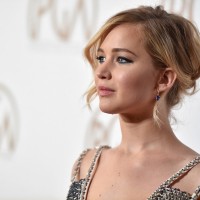
Over the past couple of years, Jennifer Lawrence has gone from a relative unknown, working on small independent movies, to one of the most lauded actresses today. Aside from her magnetic screen presence, it is her charming girl-next-door personality that has turned her into one of the most influential pop culture figures of the decade. Recently, Lawrence made headlines for writing a short essay in Lena Dunham’s online newsletter “Lenny” on female pay discrimination in Hollywood. In this essay, she spoke on the fact that she is consistently paid less than her male costars for her movies and that she is called “spoiled” and “bratty” when she attempts to negotiate her salaries. This comes in the wake of last year’s Sony hack, in which it was revealed that for 2013’s smash hit film, American Hustle, both Lawrence and Amy Adams made just 7% of the film’s profits, where male co-stars Bradley Cooper and Christian Bale made a significantly larger 9%. In this essay, Lawrence rejects her famously quirky persona, saying that she is tired of having to come across as agreeable and timid. Lawrence’s writing garnered national attention, with just about every single news outlet reporting on her condemnation of sexism in Hollywood.

Interestingly, Lawrence’s appeal to America doesn’t actually say anything new or substantial about the feminist movement. A quick browse through a bookstore or on the Internet will display wealth of detailed information about the intricacies of the wage gap. It is, quite frankly, a rather watered-down message. However, the real power of Lawrence’s essay is the fact that it is written by Jennifer Lawrence. Though in a perfect world everybody would engage with feminism and read up on the horrific inequalities present in our world today, many people know virtually nothing about the wage gap. Because Jennifer Lawrence wrote this essay, it appeared in headlines on millions of people’s computers. At the very least, this essay provided something invaluable to the women’s rights movement: visibility. The mere fact that the message has Jennifer Lawrence’s named associated with it means that millions more people will see this message than if it were written by anyone else. Publicizing women’s issues and putting them at the forefront of America’s news is imperative, and actresses are accomplishing this more and more every year. Earlier this year, Patricia Arquette made waves with her Oscar acceptance speech, in which she called for America to act and fight the wage gap. Last year, Emma Watson made headlines by endorsing the UN “HeForShe” program, which promotes widespread action against institutionalized sexism. Many figures in the entertainment business are now using their platforms to advocate for women’s rights, and feminism is more prevalent in media than ever before. With new media being increasingly more receptive to feminism, women in film are doing better then ever before. That being said, stark inequalities—such as the wage gap— still exist. Thus, while Lawrence’s essay provided the public with yet another chance to learn about issues of sexism in Hollywood today, actresses will have to continue to incite a cultural shift until these efforts actually create tangible change.
Leave a Reply
You must be logged in to post a comment.