By Alena Zhang ’18, News Editor
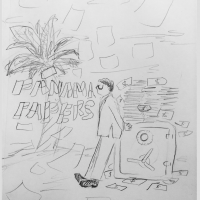
The Panama Papers: over 11.5 million documents, 2.6 terabytes of data, and 214,000 companies involved. Discovered by German newspaper Süddeutsche Zeitung, the Panama Papers recently revealed the secret financial dealings of some of the world’s most famous people. The emails and files show how a Panamanian law firm, Mossack Fonseca, has helped set up offshore companies to hide monetary assets and skirt taxation.
Although offshore companies are legal, they are usually registered in tax havens in which tax rates are levied at a low rate or not at all. As a result, the wealthy can store their assets in these offshore jurisdictions to facilitate bribery, arms deals, tax evasion, financial fraud and drug trafficking. Some allegations center on the creation of shell companies. On the surface these appear to be legitimate businesses, but they are actually empty shells that manage money and hide an owner’s identity.
The Panama Papers files raise fundamental questions about the ethics of offshore dealings; critics say the system can be easily abused. History and Economics teacher Mr. Hawk suggests, “Instead of talking about ethics, we should talk about tax code reform. Our tax code is significantly out of date – the nature of businesses has so changed that we are in need of a revision. That is a more meaningful project than attempting to judge what has already happened.” In addition, Mark Dempsey ‘16 believes that “personal incarceration (for a sensible time to be decided in court) is far more effective than monetary fines when it comes to keeping these things from happening again. [Incarceration is] not necessarily more just, and who to punish specifically is a tricky subject for the courts, but I think it would help decrease future incidents.”
370 journalists from one hundred media organizations – members of the International Consortium of Investigative Journalists – reviewed the files for an entire year before revealing any information to the public. The documents reference twelve current and former world leaders, along with 128 other politicians.
A network of loans worth two billion dollars led reporters on a trail to investigate Russian President Vladimir Putin, although his name was never explicitly mentioned in the files. His best friend – a cellist named Sergei Roldugin – was tied to an incident of Russian state bank money being hidden offshore. Some of this money ended up in a ski resort where Putin’s daughter got married in 2013. In response, Putin acknowledged the claims to be true but claimed that the files did not personally link to him. He asserted that the Panama Papers were part of a western plot to smear Russia, despite the diverse range of politicians involved in the leak.

Other national leaders with offshore wealth include Nawaz Sharif, Pakistan’s prime minister; Ayad Allawi, former vice-president of Iraq; Petro Poroshenko, president of Ukraine; Alaa Mubarak, son of Egypt’s former president; and the prime minister of Iceland, Sigmundur Davíð Gunnlaugsson. Gunnlaugson stepped down from his role shortly after the documents revealed undisclosed money between him and his wife. Accusations concerning relatives of Chinese President Xi Jinping have led to increased censorship in Chinese media regarding the Panama Papers. Moreover, signatures from FIFA President Gianni Infantino link the Uefa (the European governing body of soccer) to the 2015 World Cup corruption scandal.
It is fairly easy to form secretive shell companies in the US, which may explain why the initial leaks did not include many Americans. Mossack Fonseca even owned a subsidiary to create American offshore corporations in Nevada; many believe we should be worried about the corporate tax illegalities within our own borders. Vicki Li ‘18 believes that “Upper-class business interests are being hypocritical: a lot of these people say that their companies work for the people’s interests, but in private they’re avoiding regulation and paying far fewer taxes than they should be.” Mr. Hawk adds, “For example, Apple hides huge quantities of money abroad. What’s important is that there’s nothing wrong with that, but we need to come up with a way of measuring how much is fair for them to be paying.”
Leave a Reply
You must be logged in to post a comment.