By Carolyn Schachtel ’18, Staff Writer
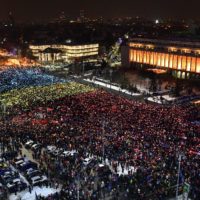
Following NA’s own Protest Day, it is important to reflect on the significance of protesting in communities around the world. Through protest, individuals have the opportunity to defend their beliefs, ignite change, and encourage others to speak up against injustice. In recent news, the people of Romania have taken advantage of the power of protest by objecting to a recent government decree. On January 31st, Prime Minister Sorin Grindeanu passed an executive order to decriminalize certain forms of corruption, perpetuating a tolerance for exploitation that poisons the Romanian workplace. Although the decree was quickly overturned, over 500,000 Romanian citizens continue to protest in order to take a stand against Grindeanu’s actions.

In recent years, Romania has attempted to eradicate corruption on local as well as national levels. Romania’s National Anticorruption Directorate has worked tirelessly to convict approximately 2,000 felons in the last three years. 1 prime minister, 5 ministers, 16 parliamentarians, and 5 senators have all been tried for “abuse of power.” Despite these efforts, many remain unsatisfied with the corruption that continues to plague Romanian communities. According to Romanian citizens, bribery has become a social norm in school districts, hospitals, and offices. As one citizen explains, “Generally you have to give bribes to get anything done. That’s how it was in the [Nicolae] Ceaușescu times, and that’s how it has remained until today.” Ceaușescu was the country’s second and last Communist leader from 1965 to 1989. Even more, doctors refuse to treat patients, electricians deny their services, and teachers distort grading systems on the basis of bribery and corruption.
Romania is not unfamiliar with large demonstrations or mass protests. In November 2015, a fire at a Bucharest nightclub claimed the lives of 64 people. The fire was blamed on Victor Ponta, the prime minister at the time, and his corrupted administration. Several days’ worth of protest eventually culminated in Ponta’s resignation.
However, recent protests seem to have greater significance than past movements. New forms of democracy are beginning to control Eastern Europe, which has concerned many Romanians. Large centralized governments are replacing more and more liberalized democracies across the continent, such as in Hungary, Poland, Slovakia, and the Czech Republic. For many Romanians, protests have come to symbolize a stand for general democracy, liberty, and justice. The success of their efforts emphasize the importance of taking a stand in the face of injustice. Ben Kany ‘18 shared, “The protests are significant not only because they were successful in Romania, but because they exemplify the importance of defending your beliefs, wherever you may be.”
A specific issue regarding the decree concerns Liviu Dragnea, leader of Romania’s Social Democratic Party. Dragnea was unable to assume the position as Prime Minister because of a conviction for electoral fraud, as well as abuse of power charges that could lead to jail time. However, if the recent executive order had been implemented, charges against Dragnea would have been removed, and he may have been allowed to take office. Undoubtedly, this was one reason for the substantial public outrage following the government’s decree. The international community also recognized the decree as shocking and concerning. The E.U. commission, along with Germany, Belgium, the Netherlands, the U.S., and Canada, released statements that criticized and condemned the order.
Regarding the protests, Tess Ostroff ‘18 stated: “The protests in Romania are especially inspiring at a time where so many protests are happening here in America, such as the Women’s March or the March for Life.” Within our own politically active community at Newark Academy, it is especially important to acknowledge the power of peaceful protest.
Leave a Reply
You must be logged in to post a comment.