By Jake McEvoy ’18, Arts and Entertainment Editor
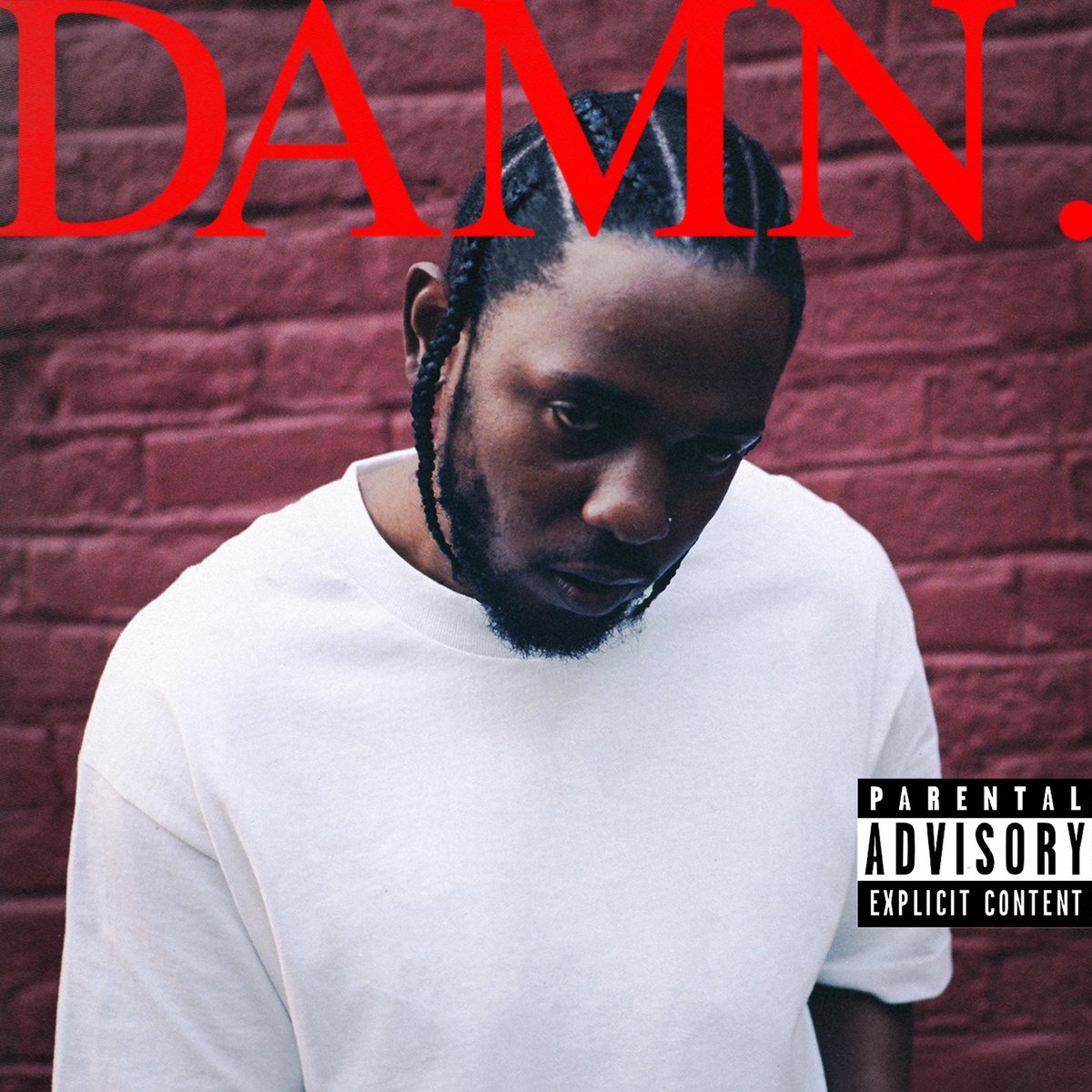
Kendrick Lamar is back with his sixth studio album, DAMN. DAMN. exposes a side of Lamar that we haven’t seen since his 2012 album Good Kid M.A.A.D.
A possibly more people-pleasing side, using more trap and underground beats by Sounwave and Mike WiLL Made-It, it strays from Kendrick’s last few jazz and funk influenced projects To Pimp A Butterfly and Untitled Unmastered. While Kendrick may not have reached his past levels of brilliance, he adds a fine addition to his discography with the energized, dynamic and engrossing DAMN.
Tracks like “DNA.,” “LOYALTY.,” and “HUMBLE.,” display the most evidence of the instrumental change in Kendrick. All three, including a few more, use a hard, bass driven beat with electronic trap sounds. The question is – does this artistic shift work better for Lamar? The fluctuation of quality when applying this shift makes it a tough question to answer; while “DNA.” and “HUMBLE.” are arguably the strongest songs on the album, “LOYALTY.” may be the weakest. The glitchy synth Mike WiLL Made it-produced beat is comparatively dull and it has a relatively unimaginative hook in “Loyalty, loyalty, loyalty.” Rihanna and Kendrick’s lyrics additionally are (uncharacteristically) pretty all over the place, and only really get to the “point” of the song (who are you loyal to?) in the fourth verse. However, lyricism is rarely Kendrick’s problem, so it is fair to overlook this performance, even if it’s a little unexpected.
But while Kendrick underperforms on “LOYALTY.,” he cleans up his act with his signature storytelling and dynamism on the rest of the album. He displays his social conscience on songs like “XXX” – even if it features a hilariously out of place U2. He combines an eloquent self-reflection with expertly crafted beats and dynamic flow on “YAH.” and “FEEL,” and calls out self-proclaimed “top 5 rapper” Big Sean on “ELEMENT.” by flipping the rapper’s own catchphrases back at him. Perhaps one of my favorite tracks on the album, “FEAR.,” uses anaphora (shoutout Ms. Graham) on multiple phrases, most noticeably “I’ll probably die…” This literary technique makes his final remark on life in Compton all the more potent: “I’ll probably die because that’s what you do when you’re 17.”
But, as usual with Lamar, the cohesion is what really brings this album together. The album begins with a spiritual tone on “BLOOD.,” featuring a haunting Greek choir, asking, “Is it wickedness, is it weakness?” and “Are we gonna live or die?” And that seems to be a defining point of this album – fate. After the choir fades away, Lamar tells a story of him helping a blind woman on the street who seems to have lost something. The woman tells Kendrick that he has lost something: his life. We hear a gunshot, and Kendrick “dies.” I, along with many others, believe that every song in between “BLOOD” and “DUCKWORTH,” the final track on the album, represents the musical equivalent of Kendrick’s life, flashing before his eyes. But this album exists for “DUCKWORTH”; Kendrick reveals the unexpected and possibly divine connection that his father and his manager share – a chance meeting at a chicken restaurant where Anthony “Top Dawg” spared Kendrick’s father’s life. Lamar soberly acknowledges: “Because if Anthony killed Ducky / Top Dawg would be serving life / While I grew up without a father / And die in a gunfight.” A gunshot is heard once again and we hear the whole album rewinding to the start of “BLOOD”: “So I was taking a walk the other day…”
If I’ve learned anything from Mr. Reed, it’s that presuppositions are sometimes hard to overcome. As scholars, we have to strive to read sources from a neutral standpoint and suppress the internal voice barking at us to form a visceral opinion based on the author’s beliefs or legacy. Through artists like Kendrick Lamar, I learned this concept is not exclusive to history class. As fans, we cannot dive into an artist’s new project with the mentality that it is going to be a masterpiece, based his/her previous ones.
However, ironically, Lamar’s incredible critical commercial success with his past albums might serve to detract from “DAMN.” Lamar has arguably redefined perfection multiple times to his fans and even to the rap community as a whole. The problem with artistic brilliance, however, is that it can only be achieved so many times. Even though “DAMN.” is a beautiful, nuanced, dynamic project, it will unfortunately always be remembered by fans as “the one after To Pimp a Butterfly.” My final rating: 8/10.
Leave a Reply
You must be logged in to post a comment.