
By Alena Zhang ‘18, Commentary Editor
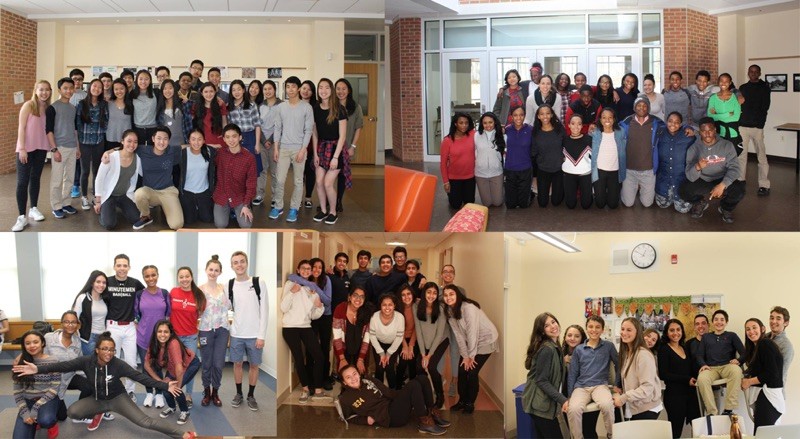
NA prides itself on diversity. Conversations about social consciousness are omnipresent, from clubs to afterschool discussions and lunch debates. We approach race as a topic that deserves discussion. Cultural clubs such as Asian Diversity Club, Mi Casa Club, Umojaa Club, Jewish Club, and Indian Club are integral in raising understanding and building solidarity. But after hearing about a lawsuit, initially filed in 2014, that accused Harvard University of capping Asian-American admissions in favor of African-Americans and Hispanics, I wanted to explore the identity of NA’s Asian population. The way that our school talks about race often contrasts with how we actually act.
Mrs. Winiarski, Director of College Counseling, commented that a “holistic admissions” policy is usually used “to allow colleges to meet their institutional goals.” In other words, “the term gives them free rein”: if they want a student body that reflects the US population, then their class might only be 5% Asian. But other schools want student bodies with diverse cultural and ethnic identities. Asians have comprised about 20% of top universities for the past twenty years, while the U.S. Asian population has doubled.
Out of curiosity, I calculated each grade’s Asian population from the senior class down: 26.7%, 22.4%, 34.6%, and 30.7% (these percentages do not include multi-ethnic students). Of course, there’s much to be said about other student demographics, but these statistics were very revealing in themselves. Although we have a higher percent of Asians than most universities, that may be due to New Jersey’s large Asian population.
NA encourages its students to pursue self-awareness with the end goal of empathy. For instance, the Equity and Inclusion Team constantly keeps social awareness on our minds. Yet, examining the social landscape of my grade, I struggle to reconcile the idealized values of an integrated community with our rough-edged reality. The senior class is starkly divided. Ezra Lebovitz ‘18, a member of EIT, voiced, “There’s a serious disparity in the racial (and gender) composition of friend groups, to the point where alumni have commented about it. I’ve seen people treat people in different friend groups as interchangeable — mixing up names when they’ve known them for years — or give people flack when they stray outside their ‘racial group’ (whatever that means). I can’t tell you how many other white people make weird comments to me about the fact that a lot of my friends are Asian-American.”
What led to this segregation? On the surface, there’s no open animosity. Perhaps the admissions process plays a role in determining our social dynamics. Mr. Taylor, Director of Admissions at NA, said that “race doesn’t play any role… but we strive to create a diverse community,” in which students seek different perspectives and ideas. Abbey Zhu ‘18 thinks “it had to do with an influx of Asian students joining the grade in freshman year and how quickly people bonded.” To be fair, the common ground is simply broader for people from similar backgrounds. The differences in our individual experiences precipitate different obstacles in our lives, and as humans, we gravitate towards those we relate to most. Mr. Taylor added that “it’s an unfortunate truth no matter what race or culture: birds of a feather flock together… it’s a safety net and it gives a sense of security.”
However, Abbey adds, “There’s definitely this internal bias that I have and others have — that Asians aren’t ‘cool,’ or are too ‘nerdy’ just because some of us value academics a lot. The divide in our grade exists because both sides contribute to it. We never tried to fix it because it felt natural — which speaks to how these microaggressions are ingrained in all of us.” Mr. Taylor posited that “everyone does things to make others feel intimidated, when they try to break into a group that is not theirs culturally or ethnically.”
NA faces a troubling disparity — abstract discussions of diversity and race don’t always converge with the student body’s interactions. For me, questions about Asians in affirmative action point to larger questions of the Asian identity at NA. EIT member Jada Smith ‘18 commented, “Having diversity isn’t the same as embracing it. As a community we need to work towards being eager and interested in discussing diversity (of thought, race, religion, etc.) to be able to connect more in NA’s social landscape.” Beyond race, NA seeks students who are simply good people and a community that is “diverse and accepting”. Conversations are just the first step towards understanding our place in society, as individuals and as a community. But we should be willing to push ourselves further, to actively embody — instead of just talk about — the ideals that we see fit.
Leave a Reply
You must be logged in to post a comment.