by Magnolia Wang ’19, Staff Writer
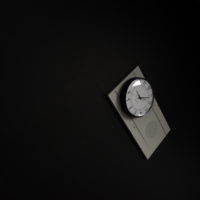
As the clocks are turned back an hour every November, most of us are happy to gain an extra hour of sleep. But have you ever wondered why and how Daylight Savings takes place?
To get things straight, Daylight Savings Time isn’t a natural phenomenon; instead, it is a change in the civil time, or the time measurements that our world has established. In fact, Daylight Savings Time got its start when William Willett, a British builder, published “The Waste of Daylight” in 1907. Willett noticed that the sun was more noticeable during the waking hours of the spring and summer, and that there was more darkness during the fall and winter. Additionally, he wanted to increase our enjoyment of sunlight. Willett tirelessly advocated for Daylight Savings, lobbying Parliament for such legislation.
The first U.S. law on Daylight Savings Time went into effect on March 19, 1918 for two reasons: to save fuel during World War I, and to increase shopping in the evening when Americans came home from work while it was still light out. Proponents appreciated the legislation because it provided more sport and recreation time, allowing for improved ticket sales. But the policy also had its opponents, including the movie industry, who argued that people would be less likely to see movies if it was brighter outside. Chaos ensued, as different areas in the country started to keep track of time differently. But by 1966, the Uniform Time Act was enacted, declaring that the United States’s policy would be to observe six months of Daylight Savings Time and six months of Standard Time. This policy changed over time, and ever since 2005, the U.S. has been observing eight months of Daylight Savings Time.
So how does Daylight Savings Time actually work? In the fall, we set our clocks back an hour, so it may seem like the day becomes 25 hours long. But what really happens is that this hour repeats as the local time transitions from Daylight Savings Time to Standard Time. For example, if the clocks fall back from 2 o’clock to 1 o’clock, the transition only happens when we switch from Daylight Savings Time to Standard Time. When the time reaches 2:00 am, the clock automatically jumps back to 1:00 am and progresses to 2:00 am again. After the repeat, the clock continues onward normally. In the spring, we set our clocks forward an hour, leaving the day with 23 hours, and unfortunately, leaving us with one less hour to sleep. When the time on the clock reaches 2:00 am, the time skips the hour and reads 3:00 am, and then continues normally.
But don’t be fooled: Daylight Savings Time doesn’t actually make our evenings longer. It only affects our civil time, and doesn’t change the sun’s course, the sunrise and sunset times, or the length of days. Even though days are longer in the summer, that does not mean that we do things at a later time – it’s just the numbers on the clock that have changed.
Like myself, many of my peers enjoy Daylight Savings Time. Newark Academy student Michaela Wang ‘21 was elated when I asked her about Daylight Savings Time, exclaiming, “I really do appreciate Daylight Savings Time – I need that extra hour of sleep.” Veronica Zhang ‘19 commented, “Daylight Savings Time lets me get out more to enjoy an active lifestyle. I think it’s what nature intended for us to do.”
Leave a Reply
You must be logged in to post a comment.