by Zachary Burd ’19, News Editor
Ever since George W. Bush was politically crucified for his sluggish response to Hurricane Katrina in 2005, presidents have been painstaking in their efforts to send aid quickly to impacted areas.
In the weeks and months after the Katrina disaster, many argued that the Bush administration’s response was slow and ineffectual. The President at the time was on vacation in Texas and did not return to Washington D.C. for several days after the hurricane had hit. Vice President Dick Cheney ordered the diversion of electrical crews away from repairing the power at local hospitals in order to fix an oil pipeline supplying diesel fuel to the Northeast.
Later, Bush made hurricane recovery a minor topic in his 2006 State of the Union Address, only a few months after the disaster, instead choosing to focus on the War on Terror in Iraq. He failed to discuss the human suffering endured in the storm or acknowledge any inadequacies in his response to it, even as Gulf Coast residents still struggled to recover in light of scarce FEMA supplies. Bush’s response to Katrina would become one of the defining points of his presidency.
Presidents Clinton and Obama would go on to face, respectively, a string of deadly tornadoes in Oklahoma and the devastating Superstorm Sandy in the Northeast. Both took extreme measures to provide adequate funding for recovery efforts and acknowledge the toll these disasters took on millions of people’s lives.
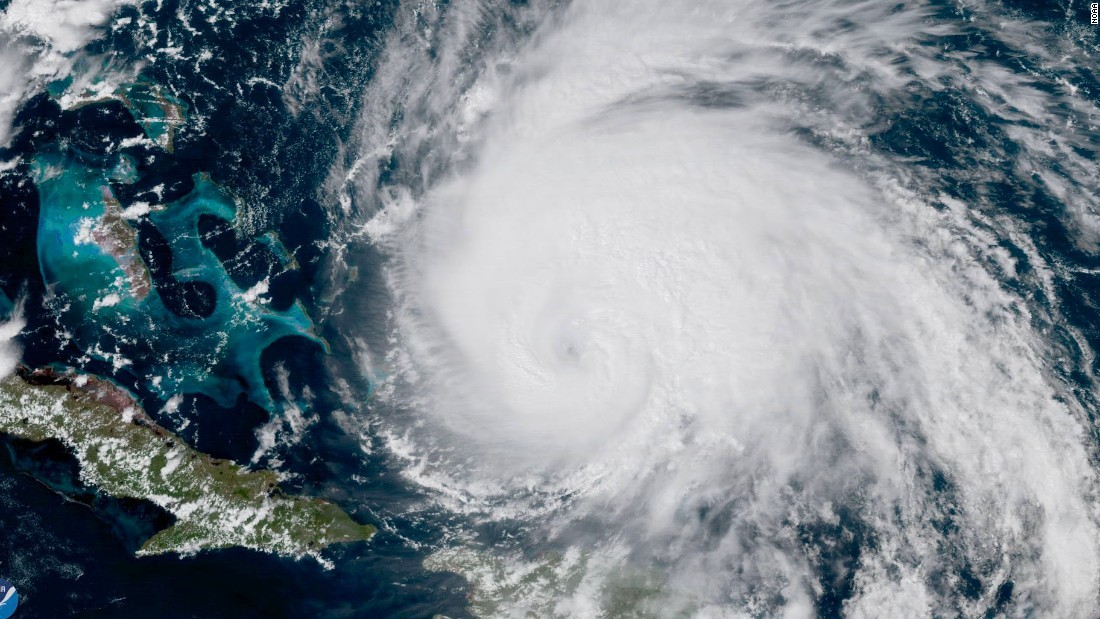
Trump has now had to face three destructive hurricanes early in his term: Harvey in Texas, Irma in Florida, and Maria in Puerto Rico.
With Harvey, which made landfall on August 25, Trump’s response was fast and furious. Embracing the role of responder-in-chief, he donated $1 million of his own money and visited Texas only 4 days after the storm struck.
The White House was quickly able to obtain more funding and emergency personnel than were estimated to be needed. Trump tied hurricane relief funding to a bill to raise the debt ceiling for 3 months. His ability to secure Democratic support for this initiative was an uncharacteristic reach across the aisle that earned general praise.
Although no presidential action is ever universally supported, especially in the current polarizing administration, Trump came as close as he ever has to universal support in his response to Harvey.
With Irma, which made landfall on September 10, Trump had a similar response: immediate and forceful. This time, he visited the impacted area only 3 days after the storm struck. The tone of his response was once again positive.
TEXAS: We are with you today, we are with you tomorrow, and we will be with you EVERY SINGLE DAY AFTER, to restore, recover, and REBUILD! pic.twitter.com/p1Fh8jmmFA
— Donald J. Trump (@realDonaldTrump) September 2, 2017
With Maria, which made landfall on September 20, his response was widely criticized. Detractors cite the long time before aid was received and Trump visited the island as well as the small number of emergency personnel (relative to Harvey and Irma). Summer Peace ’19 notes, “These are US citizens who are in need, and President Trump is doing nothing to call attention to that fact.”
Trump supporters on this issue point out that the lower number of personnel is proportional to the size and population of the island relative to Florida and Texas. Additionally, they quote White House statements that say that Trump approved federal aid for each disaster on the very day each storm made landfall—instead, Alex Chen ’20 asserts, Puerto Rico’s isolation from the “American . . . mainland [made] supply shipments more difficult.”
The media has been ruthless in its condemnation of Trump’s response to Maria, sometime fairly, other times not. They love to quote Trump saying, “I hate to tell you, Puerto Rico, but you have thrown our budget a little out of whack because we spent a lot of money on [you].” These comments have sparked intense criticism by leading Democrats and some Republicans. Yet, the media has consistently left out the next line in Trump’s tweet, “That’s fine because we have saved a lot of lives.”
On its own, the first line to some extent indicates a lack of compassion for an island of 3.4 million American citizens without reliable sources of power, communication, food, or clean drinking water. Yet it is tempered by the second line, which acknowledges the human costs of the storm and the obligation of the US government to address them.
Other tweets have been similar, while others focus on the decrepit condition of Puerto Rico’s infrastructure and its massive debt before the hurricane (implying that these factors are at least partially to blame for any delay in receiving funds and supplies as well as the island’s suffering in the aftermath of Maria).
Overall, the tweets indicate a lesser presidential commitment to Puerto Rican aid than to Florida or Texas, but reveal that the media’s characterization of Trump in this situation is extremely misleading.
Yet it is important to note that the backlash against Bush’s response to Katrina is still painfully relevant in politics today. Trump said, “Everybody watching can really be very proud of what is taking place in Puerto Rico . . . [Hurricane Maria] was not a real catastrophe like Katrina.” The storm’s legacy lives on, a perpetual guillotine casting ominous signs over the presidency.
Leave a Reply
You must be logged in to post a comment.