by Kira Lu ’20 and Sophia Chen ’20, Staff Writers
Out of over forty clubs at Newark Academy, five are cultural clubs, safe spaces for minority students. These unique clubs focus on cultural issues and generally attract students of the ethnicities they represent, though they are open to everyone. Because of this cultural unity, cultural clubs provide a safe haven for those looking to hang out, have fun, or discuss issues with other peers who hold similar beliefs and share similar life experiences. While cultural clubs mostly focus on celebrating together and having fun, they also dedicate a lot of time to discussing issues that relate to the cultures they pertain to. Typically, each club shares their culture with the school through morning meeting presentations that inform the school community and create awareness about the culture, whether the presentations focus on cultural issues or cultural celebrations.
For instance, Mi Casa Club’s purpose is to communicate to the school about Hispanic heritage and legacy in America. Mi Casa participates in the international dinner, gave a presentation about hurricane relief effort (or lack thereof) in Puerto Rico, and hosts a plethora of other cultural events, providing a platform for the club to share Hispanic culture with the Newark Academy community. Julie Marcano ‘20 said, “One thing I love about going to Mi Casa is that it allows me to join with people who share a similar interest in food, and it’s nice that I can relate with them on this level. We do a lot of things like cooking together, and it is a very homey environment.” Because of members’ shared experiences and similar cultural backgrounds, Mi Casa is a safe haven for Hispanic students to celebrate their cultures and partake in events, such as cooking, that make them feel like they have a second family at Newark Academy.
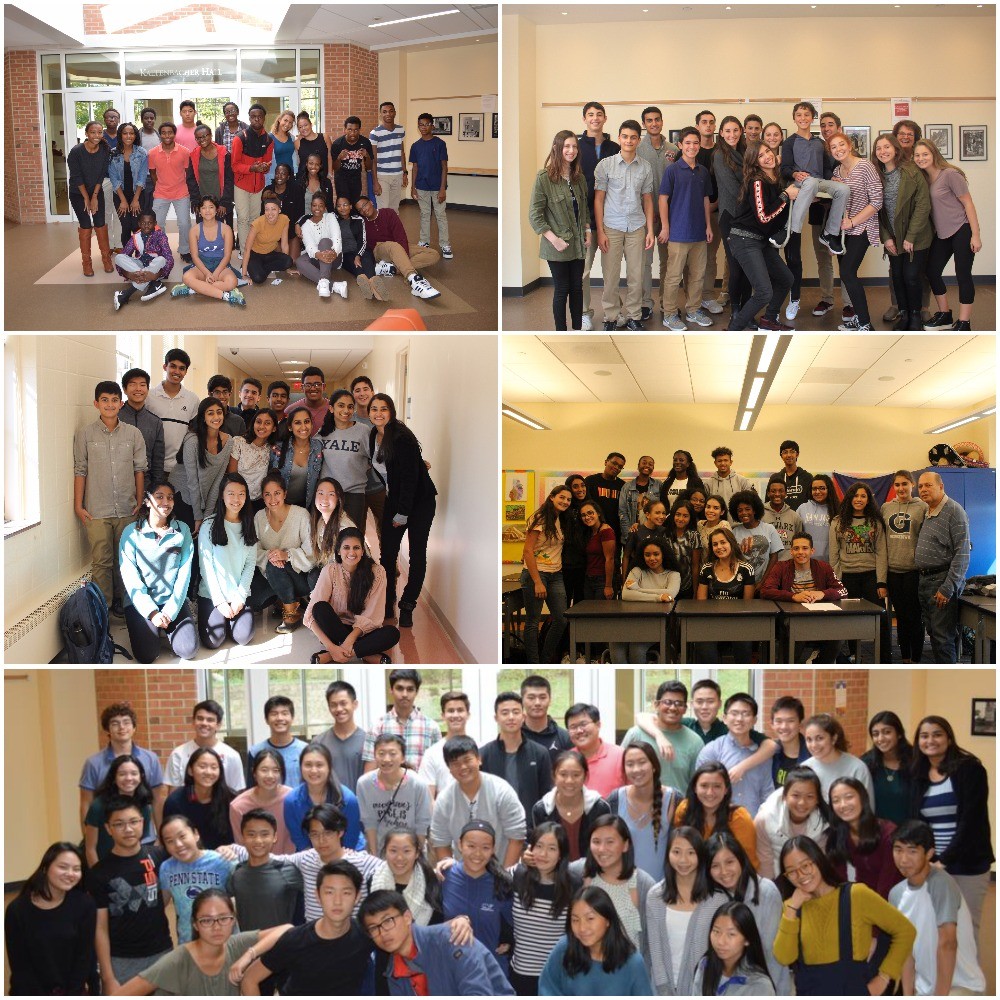
Being part of a cultural club where everyone shares a similar worldview allows students to develop their own identity without being marginalized by stereotypes. For example, Indian Club president Ryan Gajarawala ‘18 said, “It’s relaxing to talk with people about things relative to our culture like food, music, events, and festivals.” Similarly, Indian Club member Neha Maddali ‘19 said that she thinks cultural clubs are important because they “give you a sense of belonging, and you can find people with similar cultures to you and share your experiences.” Cultural clubs like Indian Club allow members to be comfortable talking about their experiences and feel safe about being who they are. By encouraging open discussion about issues relevant to the specific culture they represent, cultural clubs link together people of similar backgrounds, but also create a stronger sense of community throughout Newark Academy through awareness and education.
Diversity is central to Newark Academy’s mission, allowing people with a multitude of opinions and viewpoints to come together and share their ideas. Caroline Tam ‘20 said, “I go to Asian Diversity Club because I like to talk about Asian-American issues with peers that may have had similar experiences and can easily relate to my experiences. While Asian Diversity takes these topics seriously, we also have a lot of fun hanging out.” For Caroline, Asian Diversity Club is a safe space for talking about issues that affect the Asian community specifically and ultimately affect the Newark Academy community as a whole.
Similarly, Newark Academy’s Jewish Club is a safe space for many members of the Jewish community. Amanda Cohen ‘18, one of the presidents of Jewish Club, said, “I like going to Jewish Club because it’s a place where I’m able to talk openly about my Judaism and share my beliefs with other people while getting to hear stories about their religious experiences.”
Umojaa emphasizes unity, as the club name translates to “unity” in Swahili. As a club, they seek to create a safe place for African American students (and by extension, all students), and to unite everyone by learning about African-American culture. For Adebisi Adetoye ’18, a member of the Umojaa executive board, Umojaa is important because “it’s not just for African Americans; it’s for POC [people of color] in general. We try to create a space where people can say whatever they want without feeling like they have to censor themselves. I like the fact that I can destress there without having to keep up a facade, and I’m surrounded by people who look like me and might experience some of the same things as me. Representation really matters and Umojaa makes me feel like I am represented, even if it’s just in my peers.”
Overall, cultural clubs have a huge impact on our school that extends beyond having some of the coolest morning meeting presentations. With some of the highest memberships of any clubs, cultural clubs are essential safe spaces for students, necessary to the harmony of the Newark Academy community. Their commitment to spreading awareness, spotlighting controversial issues, and sharing diverse cultures, in addition to providing a place for safe discussion and complete acceptance, make them truly special places.
Leave a Reply
You must be logged in to post a comment.