by Zachary Burd ’19, News Editor
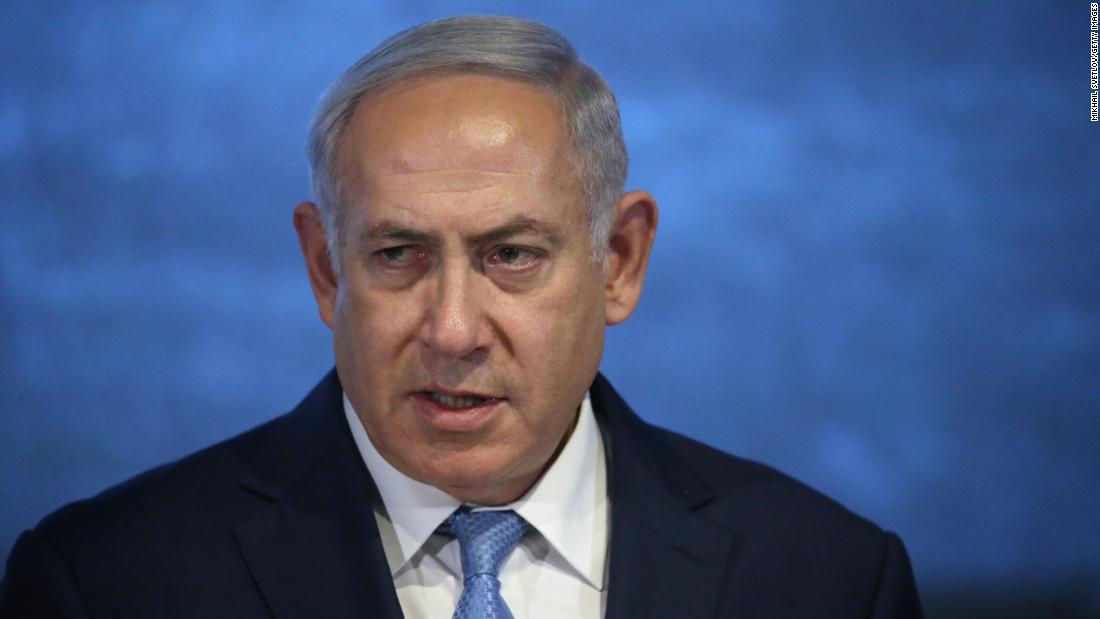
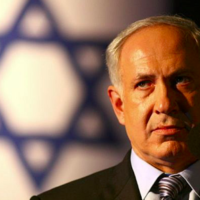
Israeli Prime Minister Benjamin “Bibi” Netanyahu’s record fourth term is facing some difficult times ahead.
Police on January 14th said they had gathered enough evidence in corruption investigations to recommend charging him with bribery, and many prominent politicians and other public figures came out in favor of his resignation as thousands of citizens poured into the streets with similar demands.
Netanyahu and his associates face 4 main allegations, dubbed Case 1000, 2000, 3000, and 4000 respectively by the media. The first charge is that he accepted gifts worth hundreds of thousands of dollars from influential businessmen in return for political favors.
These accusations include Netanyahu allegedly lobbying then-Secretary of State John Kerry to grant Israeli billionaire and Hollywood film producer Arnon Milchan a 10-year American visa in exchange for an extravagant number of cigars. A similar charge is that he pressured the former Israeli finance minister Yair Lapid to enact a policy granting expatriate businessmen living in Israel a tax holiday, on behalf of Australian media mogul James Packer, in exchange for crates of expensive champagne.
Netanyahu acknowledges that he received these gifts, which are allowed by Israeli law. However, all parties to the accusations deny that they were intended as bribes, or that they received any favors in return.
Bibi’s supporters, mostly within the dominant right-wing Likud Party, point out Mr. Lapid (a key witness in the police investigation) was and is the leader of the opposition Yesh Atid Party, currently Netanyahu’s most prominent rival.
The second case alleges Netanyahu tried to garner more favorable coverage from Israel’s second-largest newspaper, Yedioth Ahronoth, by promoting legislation that would increase the cost of a rival publication, Israel Hayom.
Yedioth Ahronoth publisher Arnon Mozes reportedly offered to censor any anti-Bibi articles and even to let Netanyahu choose which journalists would be hired.
Hayom is owned by American casino magnate Sheldon Adelson, who claimed that last year the prime minister asked him to abandon expansion plans for the paper.
In response, Netanyahu claimed he never genuinely considered making such a deal with Mozes, and denied having the conversation with Adelson.
Netanyahu was not directly named as a suspect by the police in cases 3000 and 4000, but to his detractors these cases reflect the endemic corruption of his administration, not just limited to one man. They insist a new leader would be best suited to dealing with these many accusations of bribery and political impropriety.
In case 3000, Netanyahu’s cousin and personal lawyer David Shimron and former bureau chief David Sharan supposedly facilitated bribes to Israeli defense officials so that they would spend 2 billion dollars on submarines from a specific German manufacturer.
Netanyahu fired the defense minister, Moshe Yaalon, after he claimed that the prime minister had aided the conspiracy by advocating for the termination of a previous deal with a different contractor.
Netanyahu has denied any involvement in the scandal.
In case 4000, the communications minister Shlomo Filber (a close associate of Netanyahu) purportedly gave Bezeq, the state-owned telecommunications company, confidential documents that could give them an advantage over their competitors. Filber replaced Avi Berger as director of the ministry, who had promoted broadband reforms that would have crippled some of Bezeq’s most lucrative enterprises.
Additionally, Netanyahu is being investigated for perjury after he gave conflicting statements in court about his friendship with Bezeq’s controlling shareholder.
Even outside of government, Bibi has been accused of corruption. He allegedly allowed his wife Sara to use hundreds of thousands of dollars of public funds for private expenses, such as hiring chefs at family events, interior decorators for their vacation home, and a private duty nurse to take care of her father.
“I liked Netanyahu when he was elected—before I heard about these allegations,” says Alex Leaf ’19.
The investigations are far from certain in their conclusions, though. After the police recommended charges, Netanyahu noted in a press conference that he has faced 15 official investigations in his time as prime minister, none of which materialized into wrongdoing on his behalf. He predicted that the latest allegations would similarly come to nothing.
It could take months for the attorney general to decide whether or not to indict, and the only hard proof the prosecution has found so far is recordings of phone calls between Netanyahu and Mozes that do not definitively prove either of their complicity.
“Let’s let the justice system do what it does best,” Humanities teacher Ms. Schottland argues. “[Netanyahu]’s been in power too long anyway. This administration has no commitment to peace. It’s time for change.”
Bibi will not prove any easy target to take down, though. He has dominated Israeli politics over the last decade, and opposition parties as of yet have not been able to produce one electrifying candidate that could disrupt his grip on power.
In fact, a poll run a few days after the police recommended charges showed that over half of Israelis still support him remaining in office.
This unprecedented level of support for such an embattled public figure is partially because of the geopolitical situation Israel finds itself in. Netanyahu has successfully guided the country through the disintegration of its neighbor Syria, the encroachment of Iranian proxies on its borders, and the constant possibility of violence breaking out in the beleaguered Gaza Strip run by the Palestinian group Hamas. Meanwhile, he has led Israel during a huge economic boom following his free-market reforms.
As former Likud defense and foreign minister Moshe Arens noted, “Everyone thought their son or grandson wouldn’t have to go in the army. Now it seems like my great-grandson or daughter will have to go in the army. This is the reason why so many people are supportive of Netanyahu. They think he’s doing a good job on security, which most people in Israel worry about. Everything else is secondary.”
If Netanyahu remains in office until 2019, he will become the longest-tenured leader in the country’s history. The likelihood of this happening is not certain. Legally, he is not required to step down from office unless he is convicted in court, and leading members of his right-wing governing coalition have indicated that they will continue to support him at least until the attorney general releases his decision of whether to indict. But there is a precedent of prime ministers resigning when merely under investigation that includes Yitzhak Rabin in 1977 and Ehud Olmert in 2008.
Whatever the case, Netanyahu faces a difficult time ahead in the next few months, with his every move analyzed in the context of the looming investigation. Tens of thousands of anti-corruption demonstrators have marched through the streets of Tel Aviv every Saturday night, and show no sign of stopping. Meanwhile, his political opponents will try their utmost to paint him as a criminal with the clock ticking before the start of his sentence, while his supporters portray him as a victim of a left-wing conspiracy.
In the face of prolonged criticism, Netanyahu has moved to a narrative that should sound familiar to most Americans. He told a rally of supporters in Tel Aviv that “the left and the fake-news media” were committed to “an obsessive, unprecedented witch hunt against me and my family.” Similarly to Trump’s allegations of bias within the FBI, Netanyahu has railed against perceived impropriety from within the police and other investigatory bodies.
But the evidence is mounting, despite Netanyahu’s claims that he had no knowledge of his subordinates’ actions. Summing up the political situation perfectly is a recording that emerged of his son, Yair, talking at a Tel Aviv strip club in 2015 to his friend, the son of a prominent natural gas tycoon who stood to gain from recently-passed legislation.
Yair, when asking for a loan from his friend, quipped, “Bro, my dad just got you a 20 billion dollar deal and you can’t spot me 400 shekels?”
Leave a Reply
You must be logged in to post a comment.