by Joyce Wang ’20, Staff Writer
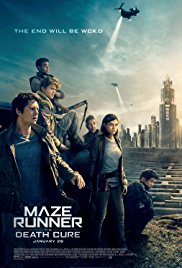
Having already watched the previous two movies of the popular movie franchise The Maze Runner, the audience of The Death Cure was already familiar with faces like Dylan O’Brien, who starred as Thomas, the protagonist, and had already developed strong attachments to some of the characters. The movie, which served as the finale of the trilogy, concluded the characters’ journey in fighting a man-made disease called The Flare. The pandemic’s effects have followed them from when they were trapped in a synthetic maze made by the corrupted corporation of WCKED, to the legendary Last City, a controlled labyrinth that may have been even more dangerous. The revelation of the ‘death’ cure, or the cure to The Flare, brought excitement and tears at the end of such an emotional journey.
Movie director Wes Ball’s inspiration for the film comes from Lord of the Flies: “We’ve gone for this very raw, very real, very edgy kind of movie.” Along with Ball’s expertise in graphic design and visual effect, the movie is down-to-earth in portraying the maze and the city as realistically as possible. Ball’s casting call for Thomas was for someone who comes in as a boy and leaves as a man. Due to Dylan O’Brien’s history on Teen Wolf where he starred as a a rebel action star, he actually wasn’t the top choice for the role. However, Dylan’s acting in The Internship, where he portrayed a sweet vulnerable boy, fit the character Thomas perfectly; luckily, the timing worked just right for Dylan to be cast.
In the movie, the most striking elements were the intensely shot action scenes. Ranging from a wide variety of birds-eye shots to close-up frames, the camera captured the characters’ expressions subtly but effectively. The dialogue in the film was kept minimal. If used, it was concise and indicated an important moment where character relations were built. This technique was shown especially in the scene where Thomas talked to Ava, the highest ranking official of WCKD. The alternating shoulder shots and portrait shots of the two characters highlighted their conversation as a turning point in the plot that united previously opposing sides into one to find the cure for the disease together. The somber colors of the movie cast a dark mood and tense tone which alluded to the director’s mysterious style.
The movie’s main weakness was the poor originality in transferring the content from the novel to script. The plot wasn’t able to delve into certain themes like persistence, friendship, and romance as well as the audience may have hoped for. Scenes like Newt being found in a mental hospital and Thomas and Brenda’s developing romantic relationship were both taken out of from the film. Apart from the occasional emotion-triggering scenes like one character’s being crushed by a burning building, the plot wasn’t focused thematically and was built on the basis of pure action and heroism.
Overall, the movie would be a seven out of ten, mostly because the physical viewing experience of watching modern, raw action scenes was great. However, the lack of content from the book would leave confusion on what actually the movie was trying to convey. The Death Cure is suitable for good entertainment but nothing more.
Leave a Reply
You must be logged in to post a comment.