by Zachary Burd ’19, News Editor
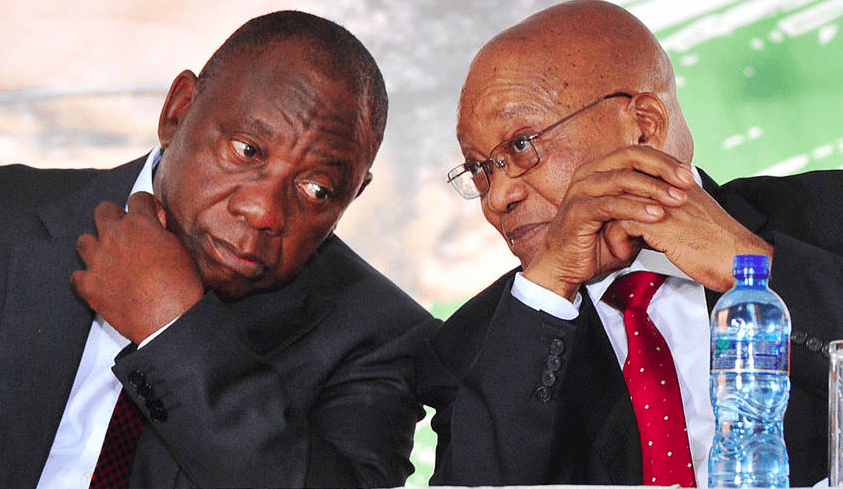
On December 18, Cyril Ramaphosa replaced the scandal-plagued incumbent president of South Africa, Jacob Zuma, as the leader of the dominant African National Congress party.
Ramaphosa, who had served as deputy president since 2012, triumphed on a platform of anti-corruption and economic revitalization in an election the Economist called “the most visible battle in the world between good and bad government.”(1) He beat out Zuma’s ex-wife to win the position, a clear rebuke to the former president, who suffered constant accusations of corruption, sexual assault, and embezzlement of government funds during his several terms, and who survived no less than eight no-confidence votes in Parliament. “Corruption is endemic to most of Africa, but South Africa is reaching a new level of evil if they are considering replacing their leader,” says David Afolabi ’20.
Ramaphosa first emerged as a public figure in South Africa as a prominent anti-apartheid student activist in the 1970s. He later co-founded the National Union of Mineworkers, which he led to become one of South Africa’s largest black unions, in one of its most important economic sectors. His success there led him to be picked to lead negotiations with the white government in the 1993 talks, which ended apartheid and ushered in the first elections with universal suffrage in 1994.
Ramaphosa was selected by the legendary activist and first black president of South Africa, Nelson Mandela, to be his successor in the late 1990s. But conservative factions within the ANC thought him too radical and picked Mandela’s deputy, Thabo Mbeki, instead.
Zuma took power in 2008 after Mbeki, his predecessor, banned HIV/AIDS drugs from public hospitals, causing hundreds of thousands of avoidable deaths. To many South Africans, what came next was far worse.
Zuma built up a massive patronage network in coordination with influential members of the private sector, most notably the Indian-born Gupta family, who were revealed in a set of emails—known as GuptaLeaks—to have used a top-secret military facility as their private landing strip for a wedding, given a multi-million dollar home to one of Zuma’s wives for free, and offered government cabinet positions to their favorite public servants. When the Finance Minister cried foul, the Guptas succeeded in having him sacked. Zuma himself was proven to have embezzled hundreds of millions of dollars in government funds, declared several times that the ANC will rule South Africa “until Jesus comes back,” and was acquitted in a rape trial after he blamed his accuser for wearing a short skirt.
His anachronistic and uncouth comments as well as myriad scandals help explain why the ANC lost control of the country’s three major cities in the 2016 elections and saw its national vote drop down to 53.9%, setting up the possibility of needing to form a coalition with another party in order to remain in power after the next election in 2019.
Many party officials are optimistic that Ramaphosa’s ascendance marks a return to better times, though. As Humanities teacher Ms. Fischer notes, “Generally, whenever taking someone who is known for corruption out of office it will be better for the people, the ANC, and South Africa as a whole in the long run. This is particularly true as there is no tradition of corruption in the ANC.”
But Ramaphosa’s ability to govern may be impaired by some of the dire conditions of the country as he comes into office. Unemployment has soared to a 14-year high of 28%, with black South Africans five times more likely to be without a job than white South Africans. Nearly 15% of the population is afflicted with HIV/AIDS, and 10% of the people control 90% of the national wealth. Meanwhile, the government is planning to push ahead with a plan to provide free college education for children from poor families.
And while Ramaphosa is now the leader of the ANC, he does not have complete control over the organization. Zuma will fight to remain in office for the rest of his tenure, lasting about one year, and his allies will certainly contest Ramaphosa’s nomination in the 2019 presidential elections. His power to oppose Zuma and reform government before that time will be severely limited.
Ramaphosa is not without criticism, though. In 2012, as a member of the board of directors of a platinum company, he asked the government to intervene to end a miners’ strike, resulting in the police killing 34 of the protestors. Zuma supporters called him the candidate of “white monopoly capital” during the party elections due to his business ties, although contrarily he has endorsed massive “redistribution of land without compensation” from white to black citizens.
Either way, the ‘rainbow nation’ has clearly lost its way, and is a long way away from returning to normalcy.
(1) https://www.economist.com/news/leaders/21732114-avoid-dire-two-decade-dynasty-dysfunction-south-africas-ruling-anc-should-ditch
Leave a Reply
You must be logged in to post a comment.