by Lauren Dougherty ’19, Staff Writer
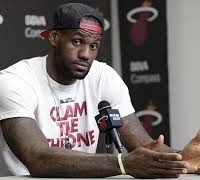
The recent school shooting in Parkland, Florida has struck a chord with many, including prominent athletes and coaches. LeBron James, just one of many athletes who has voiced their opinion in the wake of the Parkland shooting, spoke about his own frustration regarding the lack of gun control at a press meeting during the 2018 NBA All Star weekend, saying “We’ve seen these tragedies in America… and there’s been no change to gun control.” Fox News’s Laura Ingraham criticized James for speaking out on political issues, saying he should stick to playing basketball, and “shut up and dribble.”
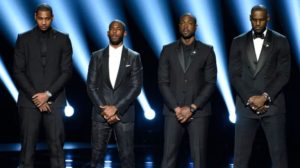
Lebron responded that “We will certainly not shut up and dribble… I mean too much too society, I mean too much to the youth…” This is not the first time Lebron has taken the initiative to speak out on political issues—he called for more gun control back in 2015, and, along with fellow NBA players, Dwayne Wade, Carmelo Anthony, and Chris Paul, he spoke out about racism at the 2016 EPSY awards. Lebron is just one of the many athletes who has spoken out lately—Spurs’ coach Gregg Popovich is always talking about the latest political issues, and Colin Kapernick ignited a whole movement in protest of the national anthem last year.
Athletes are some of the most well-known and influential people in our society and have an undeniable ability to enact change. In our day and age, where political tensions run high and celebrities seem to have more influence than ever, more and more athletes and coaches are using their platform to speak about issues they are passionate about. However, they are constantly put under harsh criticism for how they use this influence: when athletes use their platform to speak about social issues, they are criticized and when they don’t, they are equally criticized. In particular, the NBA has many players and coaches that have continuously spoken out on political issues, specifically gun control, yet given their financial capital, could do much more than just spread awareness during post-game interviews.
However, this is nothing we have not seen before. Athletes in the 60’s and 70’s, such as Muhammed Ali, Billie Jean King, and Bill Russell, are famous for voicing their opinions on a range of issues, such as race and gender. There are undoubtedly many similarities between the athletes who spoke out about social issues then, and these athletes today.
Many people praise athletes for using their platform to spread awareness. When asked about athletes speaking out on social issues, Samarth Desu ’19 described, “I think it’s really important that these athletes voice their opinions. Having such a wide appeal they have the ability to reach out to a younger and more diverse community, unlike other celebrities. I just think it’s important they should feel comfortable with the backlash that it may incite.”
While many agree that athletes are role models with such wide-ranging platforms, it is important to remember they are not political experts. Zach Kessel ’19, emphasizes “In the United States of America, everyone has the right to voice their opinion about whatever they so choose. I understand that many athletes feel as though their platform gives them the responsibility to speak out about certain issues, but it concerns me that so many people heed what they say as if they are experts on these issues.”
In general, sports have the ability to transcend a variety of societal differences. Just like sports teams at Newark Academy, athletics are a place where different people can come together and work as one. It is only natural that athletes use this unifying power to bring attention to a range of social issues.
Leave a Reply
You must be logged in to post a comment.