By Joyce Wang ’20, Arts and Entertainment Editor
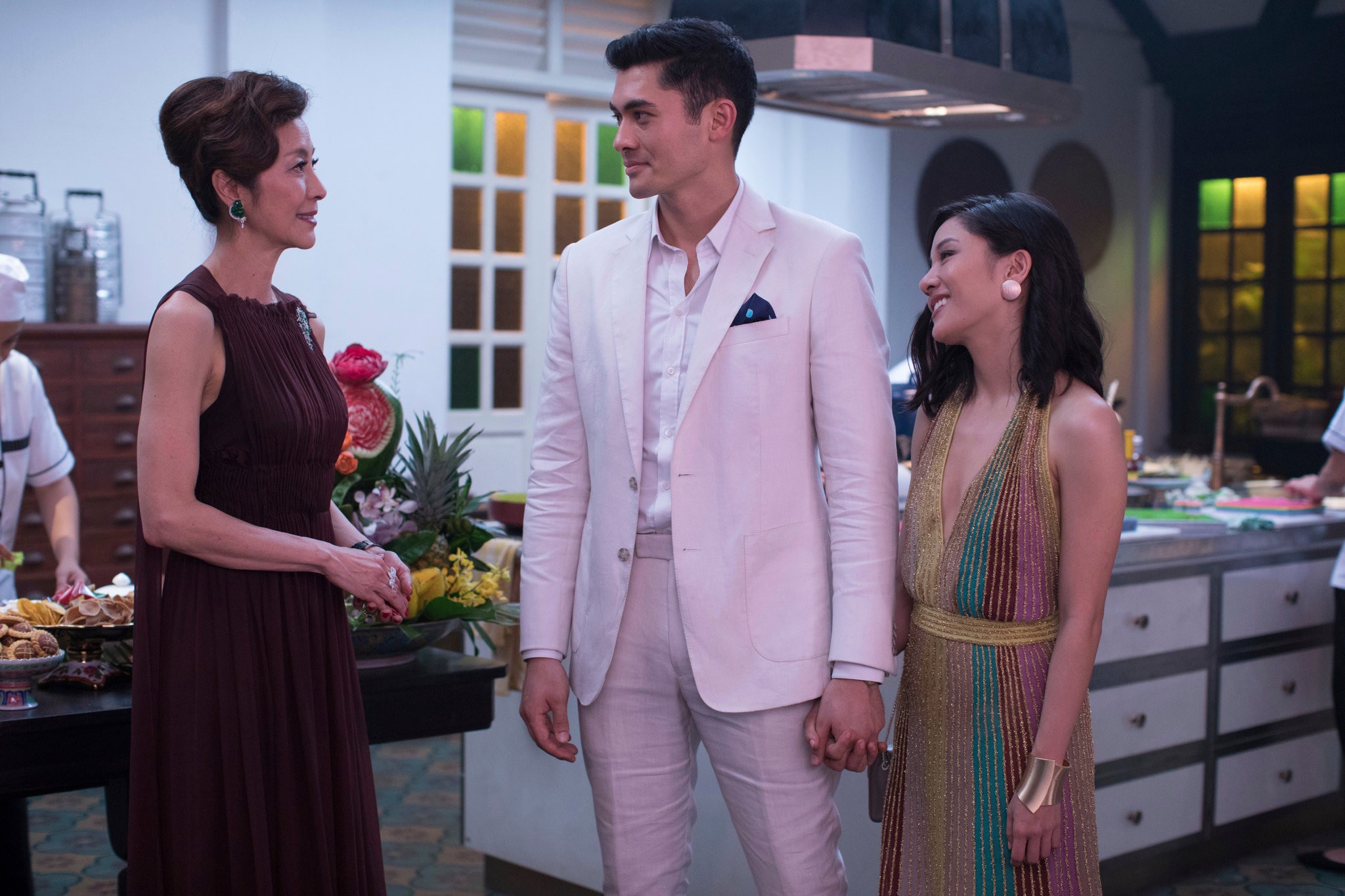
Did you know that according to the New York Times, 64% of television series in the 2015-2016 season didn’t have an Asian American regular? The premiere of “Crazy Rich Asians” this summer not only broke this streak but showcased a full Asian cast. This hasn’t happened in the past 25 years since the 1993 Hollywood adaptation of the novel “Joy Luck Club” by Amy Tan. The movie is not only an adaption from Kevin Khan’s best selling novel “Crazy Rich Asians,” but is an important feat of Asian representation in the media. On the surface, the movie may seem like an Asian remake of the “The Great Gatsby,” with its lavish parties and expensive clothing. However, developed themes such as family and responsibility show that the movie was more than a love story–it was also a search for one’s cultural identity.
This romantic comedy begins in New York, where Rachel Chu (Constance Wu) and Nick Young (Henry Golding) first meet. The story unfolds in Singapore, where Rachel, an average girl in Gap clothing, meets Nick’s family, who are the richest real estate owners in Singapore. As Rachel struggles to seek the approval of Nick’s family, the story utilizes this personal conflict to relate to the experiences an Asian-American can face in a traditional Asian cultural setting. Pitting Asian against Asian, the movie is able to show the feeling of disconnect Asian-Americans can feel with their origins.
“Crazy Rich Asians” is director Jon M Chu’s first project to hold personal resonance. As Chu usually directed franchises from series, such as “Step Up 3D” and “Now You See Me 2,” “Crazy Rich Asians” allowed Chu to express his artistic individuality and incorporate parts of his culture into one project. One of the major goals for this movie, Chu explains, is getting more Asian exposure on-screen. Declining Netflix’s offer to buy “Crazy Rich Asians”, Chu decided to sell to Warner Brothers instead so that “Asian families could head to the movies together on a Friday night,” (Vanity Fair), “I guarantee you if we were on Netflix, we wouldn’t have been on the covers of things,” Chu continued to explain.
In the movie, Rachel not only finds love, but undergoes greater character development via her shifting cultural identity. In the beginning, Rachel is polarized by Nick’s mother, Eleanor Young (Michelle Yeoh), for being too “American” or too independent as she expresses passion for her individual success. This is different from the values of Asian culture, such as “the importance of family, respect for one’s roots and culture, parents making sacrifices for their children, reverence for tradition and the elderly, and, perhaps most importantly, how matriarchs ground their families.” Michelle Yeoh (Eleanor Young) breaks down Eleanor’s thought process for penalizing Rachel: she genuinely cares for her son, saying, “Nick, you need someone who will put you first.” (Bazaar Interview). Through a series of twists and turns (watch the movie to find out!), in the climatic mahjong scene, where Rachel and Eleanor are literally sitting at the West and East sides of the table, we see Rachel realize the importance of self-sacrifice in addition to individual pursuit when she chooses to leave Nick so she won’t break up his family. In this moment, Eleanor recognizes, “Okay, maybe I see myself in this young lady.” (Bazaar Interview). Through Rachel’s own cultural journey, we see the film’s attempt to bridge the gap between Asian Americans and Asian tradition by teaching them a valuable lesson on the importance of family loyalty in Asian culture. The movie itself brought together many Asian families, providing the material for parents and children to have a genuine conversation about their origins and traditions.
“Crazy Rich Asians” accomplished its goal for exposure of the Asian-American community, earning a total of $117 million from screening (Box Office Mojo). While at some points, the Asian culture seems rather dramatized, using Asian stereotypes such as flaunting wealth and gossipping tendencies, the film showcases more positively crafted aspects of Asian culture as well. This movie is recommended for anyone interested in Asian culture or a lighthearted romantic-comedy. Beyond its underlying message, it is an entertaining watch with friends and family.
Leave a Reply
You must be logged in to post a comment.