By Vikram Bala ‘20, News Editor
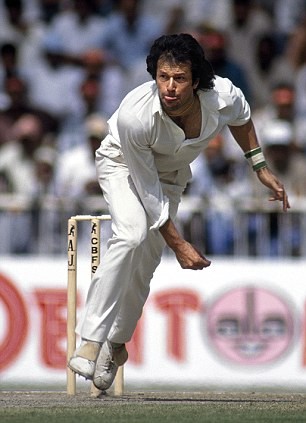
Cricket players are akin not only to celebrities in South Asia, but are often elevated to the level of worship only given to God. Imran Khan exemplifies such worship. Elected Prime Minister of Pakistan in August of this past summer, he has generated much controversy and debate over his suitability for office. Khan was a former cricket player and star bowler for the Pakistani national team, retiring from his professional career in 1992. A well-known philanthropist in Pakistan, he has set up multiple cancer hospitals in Pakistan in memory of his mother and used his own foundation to help the impoverished.
Khan further added to his resume when he founded the Pakistan Movement for Justice (PTI) in 1996, a centrist political party of which he served as parliamentary leader from 2013 to 2018. Khan hopes to steer clear of the corruption that has marred previous prime ministers. For instance, Nawaz Sharif, Prime Minister from 2013-2017, was removed from office for corruption after disclosures from the Panama Papers revealed he had concealed numerous assets. Many Pakistanis hope that Khan’s pre-existing wealth will prevent him from using his office for monetary gain. However, scandals and conspiracies emerged even before Khan’s tenure could begin.
Conspiracies and allegations of misconduct emerged from the moment Khan was elected. For example, Khan is accused of used the Khalai makhlooq to rig the elections. Khalai makhlooq (meaning “extraterrestrials” in the language Urdu) refers to the Pakistani army and associated spy agencies, which have in the past been accused of abducting opposition journalists and imprisoning citizens on accounts of terrorism. Many critics of Khan cite allegations that he committed domestic abuse against his wife and that he sent indecent texts to a female lawmaker. Most worrying to the left is Khan’s nationalistic and religious policy; it appeases terror groups in the nation does not support criminalizing domestic violence. Religious hardliners in Pakistan – who have faced criticism from the western media for not advocating gender equality – have taken a liking to Khan. In addition, Khan’s position as an anti-American and nationalist worries many in the U.S. Congress, especially since Pakistan has the 6th largest supply of nuclear weapons, and is not a signatory of the Treaty on the non-Proliferation of Nuclear Weapons (NPT). It may appear that Khan is a radical forged from the rarest of circumstances, though that isn’t the case.
The parallels between Donald Trump and Imran Khan are striking. Both men were celebrities turned politicians who encountered much controversy over the legitimacy of their elections. Trump and Khan both obtained the highest office of their respective countries with barely any political experience. The two avoid caring about political correctness, and by doing so have gained a passionate group of followers. Imran Khan’s election may mark a contrast between the leaders of the past and of today. His victory suggests that Trump is no longer a “rare occurrence,” and foreshadows what leaders of the future may be. In addition, political candidates/groups such as Marine Le Pen in France, and the Alternative for Germany party, have shown that nationalistic policies are becoming more popular around the world. What was considered “extremist” in the past may be normal in the future.
Despite the similarities, many Pakistanis argue that comparing Trump to Khan is preposterous, as Khan’s philanthropic work and establishing of educational institutions displays a care for all people that Trump lacks (Indian Express). Haniya Cheema ’21, of Pakistani descent and co-president of NA’s Middle Eastern club, explains, “I think it’s clear from the vote that Pakistan is ready for a change. Corruption has always been present in the government so I think the focus on accountability is bringing a lot of hope to the citizens. However, while we should celebrate, it’s important to be wary.”
The people of Pakistan have been longing for a leader who is devoted to the citizens and less invested in their own finances and personal gain. To many in Pakistan, Khan could be the end to the turmoil and fear caused by not only terrorist groups, but the government too. Khan may be worrisome due to his seemingly unique and radical policies, but he is merely another name added to a growing list of people that are changing what the “normal” is.
Leave a Reply
You must be logged in to post a comment.