By Joyce Wang ’20, Arts and Entertainment Editor
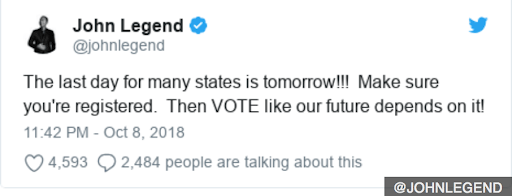
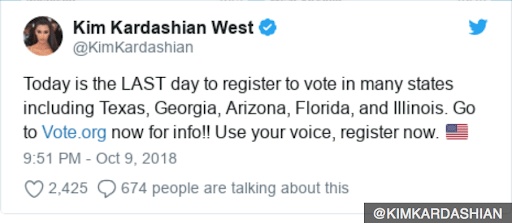
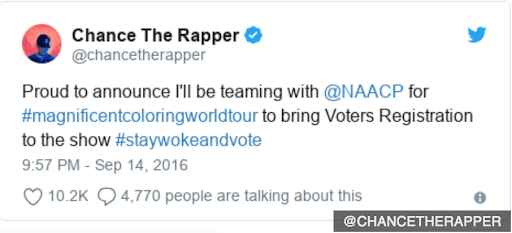
In the past weeks, a wave of celebrities such as Taylor Swift, Rihanna, Chance the Rapper and John Legend broke political silence by posting about the upcoming midterm election of President Trump’s first presidential term. Briefing their millions of followers on their social media platforms such as Instagram and Twitter, the celebrities voiced their political opinions but most importantly encouraged followers to register to vote. Posts informing followers on the last day to register to vote for every state filled the feeds of followers with motivational quotes and phrases from the artists to their fans.
Via Rihanna’s Post: “I don’t care what responsibilities you have today, there’s no greater responsibility than being in control of your future and the future starts now!”
Snippet from Taylor Swift’s Instagram Post: “So many intelligent, thoughtful, self-possessed people have turned 18 in the past two years and now have the right and privilege to make their vote count.”
The effects of these posts were felt right away, where “thousands of people between the age of 18 and 29 registered to vote” (vote.org). While if these votes were cast in favor of the artists’ opinion, the celebrities succeeded in generating awareness of interest in an election. Veteran Democratic strategist Joe Trippi says: “It’s not so much about changing minds as getting people who aren’t paying attention.” While these celebrity posts may not determine the outcome of the election, it has generated publicity and knowledge of the event.
“What was great about Taylor Swift’s message is that it was truly from the heart and ultimately had a very universal call for participation.” (CNBC) Many celebrities followed suit, and with more endorsements comes more publicity and increases the chance of people becoming informed of the election and voting.
Some people have raised the possibility of celebrity engagement being counterproductive in that it could possibly alienate a part of the public to vote against the candidate suggested by the artist. In other cases, celebrity engagement is simply an expression of self and does not have a profound effect on voters. In NA, most seniors, who are turning 18 soon, said they were already planning on voting despite the information provided by the posts. As Sophie Licostie ‘19 says: “What’s even better than encouraging people to vote would be for the celebrities to encourage people to learn about the election so they can be educated about both the issues and the candidates.”
Spreading awareness, which these posts do, is important because the leading cause of lack of registration of voters stems from the reason of ignorance on the election and the lack of prompting to register to vote (pewtrusts.org). With these encouragements, celebrities reach out to this large percentage of people who do not vote.
Therefore while celebrity endorsements cannot skew political turnouts and guarantee an increased voter turnout, it increases the chance for the public to be informed about their civic duties and electoral participation.
Leave a Reply
You must be logged in to post a comment.