By Vikram Bala ‘20, News Editor
**The purpose of the News section is to provoke thought and discussion among the school community about current events and topics in the world. All opinions in this article are either those of interviewed students, or intended to give voice to both sides of the topic. The News Section aims to provide articles that give readers a rounded and holistic view of topics, and does not try to impose any opinion or belief.
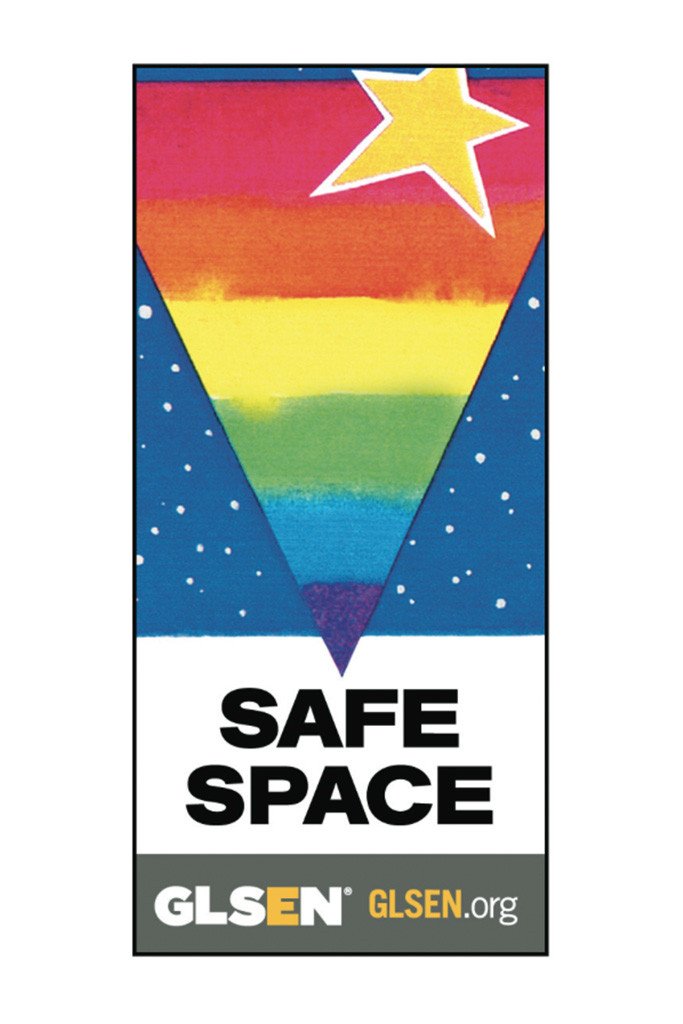
“Safe spaces” are commonplace in universities and high schools today, and while they may seem like a product of the progressive movement in the last decade, the term “safe space” was popularized in the 60’s. Malcolm Harris (Splinter News) writes, “The term ‘safe space’ [was] first used consistently in the 60s and 70s women’s movement, where safety began to mean distance from men and patriarchal thought.” The safe space was a way for women to create their community and form a space free from the oppression faced in the outside world. Safe spaces allowed women to experience the world they were trying to create, and freed them from the intellectual, social, and physical confines induced by men. Yet, by excluding men, were women just excluding aspects of society and ideas that they did not like, or were they trying to eliminate legitimate threats? Newark Academy introduced the concept of safe spaces to the school 3-4 years ago, and gave teachers stickers to put on their classrooms, indicating that the classroom was a safe space (not with the intent to say that places without stickers aren’t safe). Safe spaces are defined differently by everyone, but it is most commonly defined as “a place intended to be free of bias, conflict, criticism, or potentially threatening actions, ideas, or conversations” (Merriam-Webster). Safe spaces are often a place where marginalized groups seek shelter from bias or discrimination (often LGBT, ethnic, or racial minorities). However, is isolating ourselves [from the problem] the answer to our problems? A safe space can be to serve as a place to get help in times of distress, and can also help offer comfort and respect that is not found in other places on a campus, office, or school. It’s important to note that there are also a few safe spaces classified as academic safe spaces, in which people have “the freedom to make others uncomfortable through intellectual debate” (Harvard Politics). With the discussion of intent vs. impact on the minds of many at Newark Academy, maybe the intent vs. impact of safe spaces should be questioned. In fact, some universities are already asking the same question.
In late of August of this past summer, John Ellison, the Dean of Students at UChicago, sent a letter to the incoming students which explained that UChicago does not condone the idea of “safe spaces” and “trigger-warnings,” as this causes others to retreat from perspectives and ideas that differ from their own. In addition, Ellison explained that speakers who were controversial would not be canceled due to opposing opinions, and that canceling such speakers would be a constraint of intellectual and academic freedom (Washington Post). Ellison’s letter poses an important question to the academic community: are safe spaces unintentionally inhibiting the development of well-rounded perspectives and sheltering students from “the real world?” If so, this would be a grave problem, considering that safe spaces have been heavily integrated in schools and universities around the country. In addition, Yale administrator Erika Christakis sparked outrage from some students after sending an email to students explaining that she believes American colleges should have more trust in students to think for themselves. She writes, “American universities were once a safe space not only for maturation but also for a certain regressive, or even transgressive, experience; increasingly, it seems, they have become places of censure and prohibition” (The Atlantic).
After questioning many NA students, it appears that opinions are mixed. Aidan Orr, Class of ‘20, explained that, “These safe spaces effectively just set students up for failure in the future, as these safe spaces do not exist within real life. ‘Threatening ideas,’ often times, unfortunately means ideas that do not fit in with the PC (political correctness) culture of most schools.” Controversial speakers such as Ben Shapiro and Milo Yiannopoulos often face protests when coming to speak at universities (eg. a riot team being employed to contain the massive protests when Shapiro came spoke at UC Berkeley in September 2017), mainly due to their differing political opinions that are considered offensive.
To counter the argument that safe spaces prevent students from experiencing “the real world,” many say that safe spaces are necessary for the individual development of teens and young adults. Peter Swope ‘20 explains, “Arguing that safe spaces don’t prepare you for the real world suggests that your opinions are in some way weak or invalid. Everyone deserves a place where they can feel accepted for who they are and what they believe, and safe spaces can provide just that.” Without these safe spaces, which are free from discrimination and conflict, young adults may not develop their confidence and voice. Yet are safe spaces safe for everyone?
Many conservative voices do not feel welcome in designated safe spaces, a feeling exemplified in part due to protests that have arisen when conservative speakers were invited to college campuses. The example many conservatives will point to is that of Ben Shapiro at UC Berkeley (see Ben Shapiro at Berkeley, September 2017). Some conservatives may argue that safe spaces cater only to leftist perspectives, and are an attempt to filter out the minority conservative voices on campuses. Others may respond by explaining that those who discriminate and make others feel uncomfortable are banned from safe spaces, and it so happens that some of those who are banned are politically conservative. Are safe spaces a much-needed refuge from the political toxicity and strife? If so, the liberal dominance in safe spaces would make sense, as it is hard to eliminate political conflict when two opposing sides are equally present in a space.
Some argue that safe spaces are a prohibition of free speech, yet has speech ever been free at private schools and universities? Speech certainly isn’t free at school, and nor is it free at home. There are always constraints on speech, it’s just a matter of what constraints exist. Still, in the era of trigger warnings and heightened awareness about microaggressions, are safe spaces just an exaggeration of constraints of speech (e.g. no microaggressions or hate speech) that were once reasonable?
Whatever your opinion on safe spaces is, it’s important to understand both sides of the argument. In reality, the “solution” to the conflict always lies somewhere in between. Safe spaces can indeed provide a good environment for personal development, but too many safe spaces can be unintendedly discriminatory, as they can filter out opposing opinions and voices. Some fear that safe spaces are alienating their voices, while others fear that without safe spaces, discrimination will be unavoidable. It’s up to the NA community as a whole, students, faculty, and staff, to choose how a positive learning environment can be promoted, while still giving students the skills and preparation for their independence in society.
Sources:
- https://splinternews.com/what-s-a-safe-space-a-look-at-the-phrases-50-year-hi-1793852786
- https://www.washingtonpost.com/news/answer-sheet/wp/2016/08/30/so-you-like-the-university-of-chicagos-rejection-of-safe-spaces-for-students-consider-this/?noredirect=on&utm_term=.d12323c6ff86
- https://www.merriam-webster.com/dictionary/safe%20space
- http://harvardpolitics.com/harvard/what-is-a-safe-space/
- https://www.theatlantic.com/politics/archive/2015/11/the-new-intolerance-of-student-activism-at-yale/414810/
- https://www.cnn.com/2017/09/14/us/berkeley-ben-shapiro-speech/index.html
- https://shop.glsen.org/products/glsen-safe-space-stickers (image)
Leave a Reply
You must be logged in to post a comment.