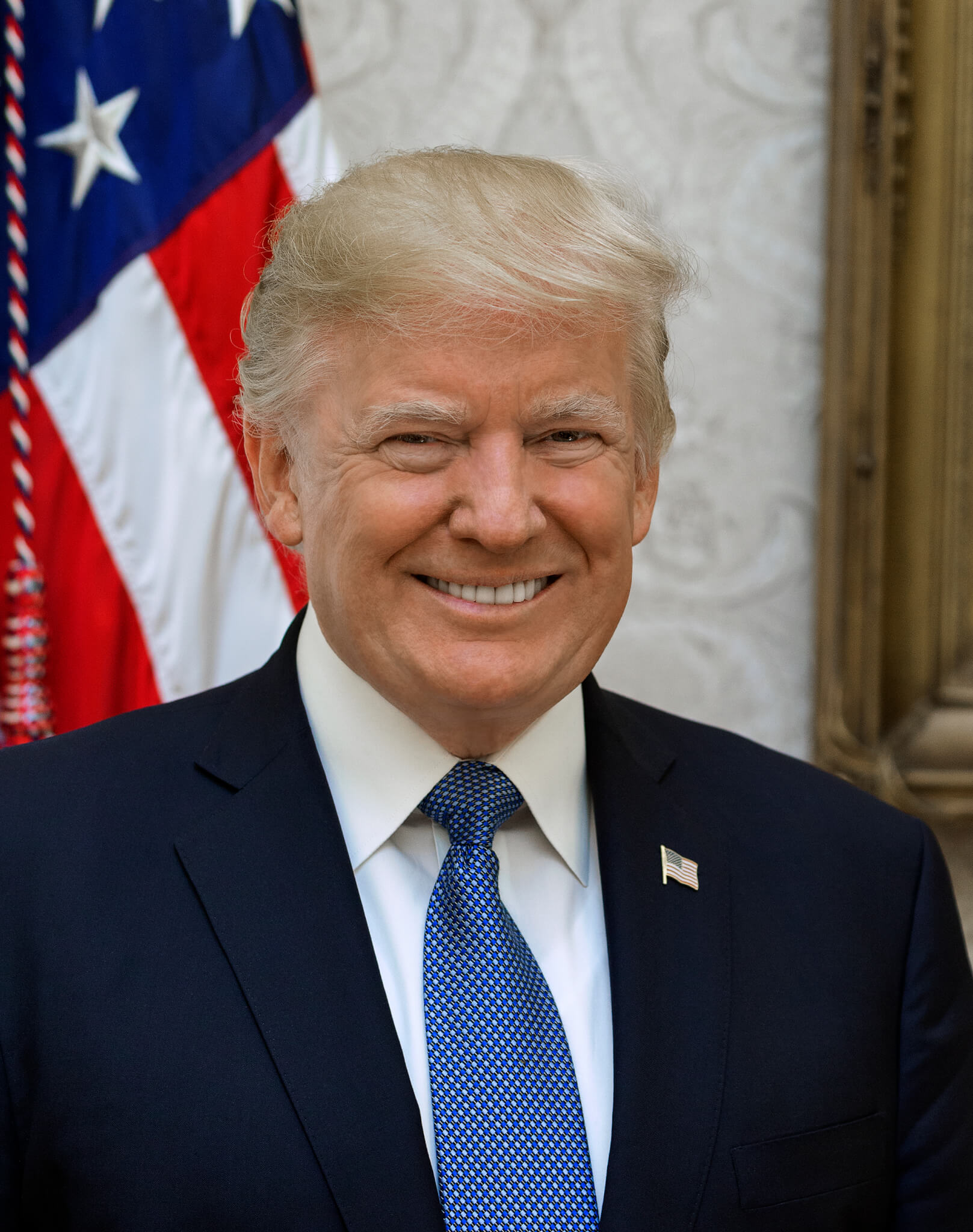
By Roman Wright ’19, Staff Writer
*This article, along with an article by Sophia Ludtke ‘20 Commentary Editor, was inspired by an IB Philosophy assignment. The assignment was to analyze the recent increase in hate crimes in the US through a philosophical lens.
The New York Times recently released an article written by Eyal Press, entitled This Week’s Mail Bombs Are No Surprise, saying President Trump’s aggressive rhetoric against the press and illegal immigrants, along with alleged anti-Semitic dog whistles, was a cause of the attack on the Jewish synagogue in Pittsburgh. I thought it would be instructive to examine the underlying moral philosophy of this argument, and then offer a counter-argument. Essentially, Mr. Press and the New York Times endorse a utilitarian philosophy, which emphasizes the consequence of actions. I believe that the alternate philosophy of deontological ethics is more applicable in this situation. In this article, both paradigms will be further explained.
According to the New York Times, the consequences of an action assign values of goodness to said action. The consequences are not limited to those inflicted on the individual, but upon the body politic. They wish that Trump would act with happiness in its most general sense as the goal, including the happiness of others;in the words of the philosopher John Stuart Mill, to aim for “the great happiness principle.” Given the assertion that the attempted pipe-bombings and synagogue shooting were caused by Trump’s inflammatory rhetoric against journalists, immigrants, and other political opponents, it would be impossible to say that his words have led to greater happiness. Within this mode of understanding, their is logic to the claims of the New York Times accusing Trump of low morals.
Alternatively, deontological ethics stands in opposition to the claims made by Mr. Press regarding the president’s moral responsibility for terroristic acts. This approach relies upon what Immanuel Kant called the categorical imperative to determine morality, which is, in Kant’s own words, “I ought never to act in such a way that I couldn’t also will that the maxim on which I act should be a universal law.” This idea is very similar to that of the Golden Rule with which we are all so familiar, and is opposed to the general happiness principle espoused by the op-ed piece in the Times. In this mode of thought, morality resides entirely with the individual, and therefore responsibility to act morally lies entirely within the individual. While Robert Bowers and Cesar Sayoc, the two perpetrators of the recent hateful crimes undoubtedly acted immorally, deontological ethics ends the discussion there, without adding any responsibility to the President, regardless of whether one asserts their actions are directly resultant from his words.
In this case, the latter philosophy is more correct because it focuses on action itself rather than the possible consequences of that action, and, when thinking morally, this approach is more often superior. This superiority is easily seen when one considers unintended consequences. It is beyond question that Donald Trump’s public statements did not bring violence upon American Jews, and that, if we accept the assertion that this shooting is a consequence of his words, it was surely an unintended one. The Kantian ethicist says that, rather than blame Trump for actions which he has no control over, and did not foresee, he is responsible for the moral worth of his own words only. Messrs. Bowers and Sayoc are responsible for their actions only, and the question of whether Mr. Trump caused either or both of them to engage in their actions is irrelevant. Thus, an unintended consequence does not degrade the moral worth of an action.
This mode of judgement is obviously far fairer to the actor or speaker, as the responsibility of actions over which he has no control do not stick with him. Even in the case of those with mental illness–which presumably both of these men suffered from–it would be ridiculous to ascribe responsibility to President Trump over their actions, as he did not know either of these men and could not have restrained them in any way. However, it would be a misrepresentation of deontological thought to say one finds Mr. Trump’s rhetoric to be of moral worth solely because one does not judge Mr. Trump to be a man of low morals using the logic of the New York Times. This discussion is an entirely different subject of debate.
It is only by judging President Trump’s words on their own that we may accurately judge their moral worth, as to do otherwise is to descend into a rabbit hole of asserting that one person is responsible for the actions and words of others. This assertion is self-evidently wrong, as it assigns blame to someone without giving them any ability to change that for which they are being punished, which is obviously very unfair.
Leave a Reply
You must be logged in to post a comment.