By Justine Seo ‘19, Feature Editor
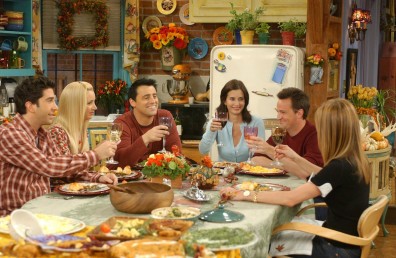
Image courtesy of Friends.
Friendsgiving has become a widely recognized event across America, almost enough to parallel the celebration of Thanksgiving itself. The rules of this holiday are very loose; it can be in any location, with any type of food, as long as it occurs somewhere around the third week of November and entails a gathering of friends to enjoy a meal together. Sometimes Friendsgiving can be a welcome respite from the traditional Thanksgiving feast, offering anything from a hotpot to a huge, communal bowl of pasta. In other cases, it may be a method to eat even more of this traditional Thanksgiving meal, with some Friendsgivings entailing a turkey and all the sides as well. Due to the flexibility of the term, the possibilities of a Friendsgiving feast are quite endless and thus can result in some of the most exciting food combinations and celebrations under the sun.
Some may argue that Friendsgiving invites an excess of Thanksgiving-related activities because of the pre-existing whole day of Thursday that is typically dedicated to making the namesake dinner. Additionally, the festivities are continued through the Black Friday sales that span over the entire weekend (and now Monday as well, through Cyber Monday). However, the anticipation for holiday affairs well before and after the specific day on which it occurs is a common practice for many other celebrations too. For instance, it oftentimes seems as though the entire month of October is dedicated to Halloween. On any given October night, you can find houses adorned in fake cobwebs or protected by an alarmingly realistic Frankenstein figure in the front yard. Friendsgiving oftentimes works in the same way–to extend the festivities. However, its origins indicate that the original purpose of Friendsgiving was to act as a replacement for Thanksgiving itself.
According to Bustle.com, the term Friendsgiving was coined around 2008, around the same time as the economy was crashing and America entered a financial crisis. With many unable to find jobs, it was difficult to be able to afford a plane ticket home to celebrate Thanksgiving with one’s family. As a result, many started gathering with their friends to still be able to share a meal with people who are important in their lives. The sentiment of this origin still holds true today; whether we may be unable to visit home for Thanksgiving due to financial or physical factors, or we may simply not feel welcome at home, Friendsgiving allows us to still spend time with those we love. As Melisa Yaman ‘19, a three-year Friendsgiving participant notes, “Of course the food is nice, but it’s more about being with people I’m close to. I love spending time with my buddies. Plus it’s always a good time poking fun at everybody’s cooking skills.”
From the beginning of the term’s usage in 2008, the event has grown into a well-recognized tradition for many. Whether it is an addition or a substitute to a traditional Thanksgiving dinner with family, Friendsgiving has become a tradition itself for many, and allows us to continue Thanksgiving festivities no matter where we are and who we’re with.
Leave a Reply
You must be logged in to post a comment.