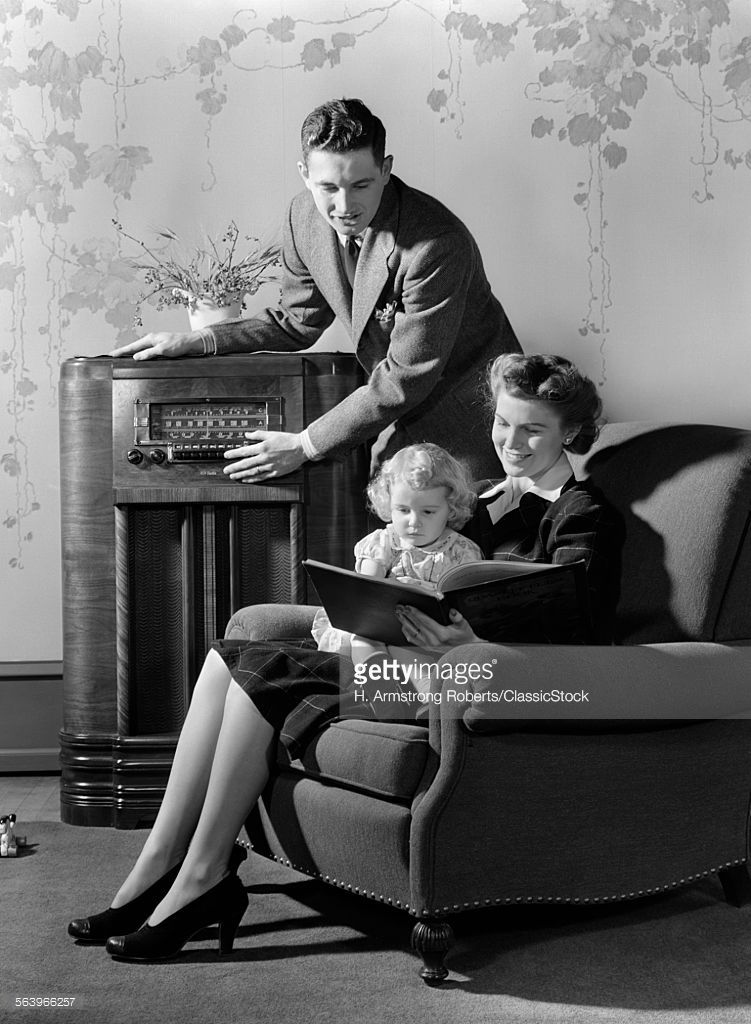
Picture of 1930’s radio courtesy of H. Armstrong Roberts
By Madeleine Levinsohn ’19, Staff Writer
My family is obsessed with the radio. We’ve all got the WNYC app on our phones, have NPR blasting through our speakers in our house and the FM radio is always playing in our car. We even leave it on for my dog if she is home alone for a few hours. But recently I have noticed a trend in radio listeners. It’s that odd phenomenon when a passionate and concerned listener feels the impulse to talk (or scream) back to the voices coming through our device’s speakers. I will admit, I am a total sucker for the radio, especially if the program is about politics, and am all about a good call to action, but after watching multiple friends and family try to engage a non-listening radio host in conversation, I couldn’t help but wonder: is the radio somehow contributing to the decline in regular political involvement?
Let’s take a trip down memory lane and look at the popularization of the radio in the 1930s. While radio technology had been available for decades prior, the radio as we know it didn’t become a widespread form of entertainment until its Golden Age in the 1930s. With advertisers finally interested in using the platform and with the cost of radios reduced, 60% of households had radios and one and a half million cars had them installed by 1934. This pinnacle in technology interestingly enough arrived at the end of one of the most prolific periods of political activism: the Suffragette Movement. By no means am I suggesting that the movement came to a halt due to the radio’s rise, but looking back on the history of political activism, it is interesting to note that such an effective act of protest has not taken place since this movement without the direct involvement of this technology (ie. the Civil Rights Movement).
The Suffragette Movement has largely been defined by the massive number of women who took to the streets in events such as the 1912 Suffragette Parade to protest for their right to vote. As we all know, this culminated in the ratification of the 19th Amendment in 1920. Since then we have certainly seen noteworthy periods of political activism. However, not all of them are characterized by the same political involvement and success that the Suffragette Movement saw. We can take the recent Women’s March in 2017 as an example. Plenty of Americans had issue with the march and while we saw the largest turnout for a single day protest in American history, many have asked the question: what was this march for? Though some finally felt involved in the political scene, very little came out of the march except a feeling of togetherness. I understand that this disorganization and lack of purpose cannot be blamed on the radio, but it is interesting to consider the relative lack of successful protest since the 20’s. The Second Wave Feminist movement is another example of a total flop of political involvement. What came out of that besides a failed Equal Rights Amendment? I mean, really, why beyond some major social issues do we see a lack of successful political involvement?
Since the 2016 election, there’s been a lot of concern about social media and its involvement in politics, but perhaps the issue lies beyond Facebook. We all know that one person who shares article after article, and many of us politic geeks might even claim to hate them. Why is it so infuriating? Well, in addition to the issue of biased sources and the issue of being stuck in a bubble with friends who share your political beliefs, it is pretty clear that the platform gives people a false sense of participation in our political scene. This has, without a doubt, contributed to a lack of involvement. However, my observation is that we are now running into the same issue with the radio. The way we consume the news now is problematic because t we think that merely sharing posts is an acceptable amount of political involvement. Just like Facebook, catchy headlines and radio jingles suck us into the hottest stories of the day and falsely provide us with a feeling of participation in the current happenings in Washington. My question is: how come no one else has noticed this trap?
There are lots of reasons that involvement has changed and whether it is social media, being tired of getting involved, or simply a lack of knowledge, many of us are done with politics. But it’s time to get involved again. This phenomenon goes beyond the responsibility listeners have. Why are radio stations asking us solely for donations? If they are truly worried about the cuts to government funding, maybe they should ask for more than money. Where is the call to get involved in our political scene? There have been times when the radio has done this successfully as seen in the Children’s March during the Civil Rights Movement. So why aren’t we regularly hearing encouragement? We are at a point in time where understanding the everyday chaos of the Trump White House is just a small fraction of the participation we need. I am sick of the sensationalism that is rampant amongst our most popular radio stations. If you are a radio listener like me, I urge you not to end your activism when you press the mute button in your car.
Leave a Reply
You must be logged in to post a comment.