By Simon Gorbaty ‘19, News Editor
Ultima Thule Fly-By
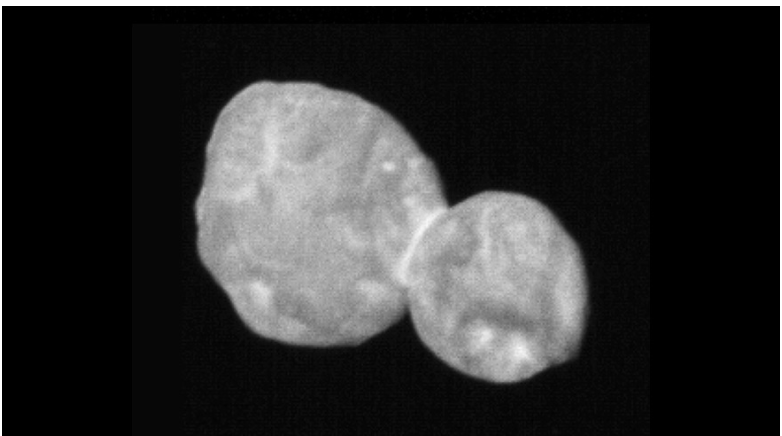
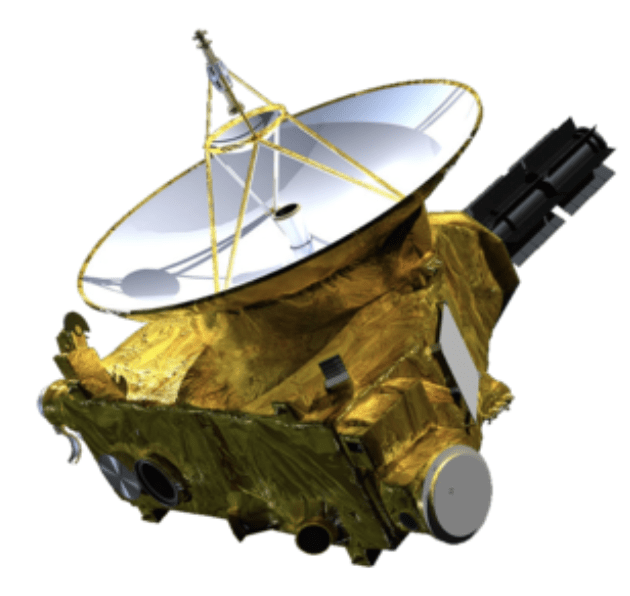
2019 began with one of the most daring scientific feats attempted by astrophysicists and engineers. On January 1st, the New Horizons Space Probe, best known for visiting Pluto in the summer of 2015, captured images of the Kuiper Belt Object Ultima Thule. The observed bowling-pin like structure of Ultima Thule is what scientists dub a “contact binary,” in which two separate objects likely collided at low speeds and are just touching each other. The larger lobe, “Ultima,” is about 12 miles across, and the smaller one, “Thule,” is about 9 miles across.
The first signal from New Horizons, which takes 6 hours from the probe’s current location to reach Earth, was received by the mission headquarters at Johns Hopkins University Applied Physics Laboratory in Laurel Maryland at 10:30 EST on New Year’s Day. Alan Stern, director of the New Horizons mission, stated, “Just like with Pluto, we could not be happier.” Indeed, it was no simple endeavor to obtain images of an object as small as Ultima Thule, considering that the spacecraft was whizzing by at an extraordinary 32,000 miles per hour. It is the most distant as well as possibly the most ancient object ever explored, and further analysis can shed light on current theories regarding the solar system’s formation.
Super Blood Wolf Moon
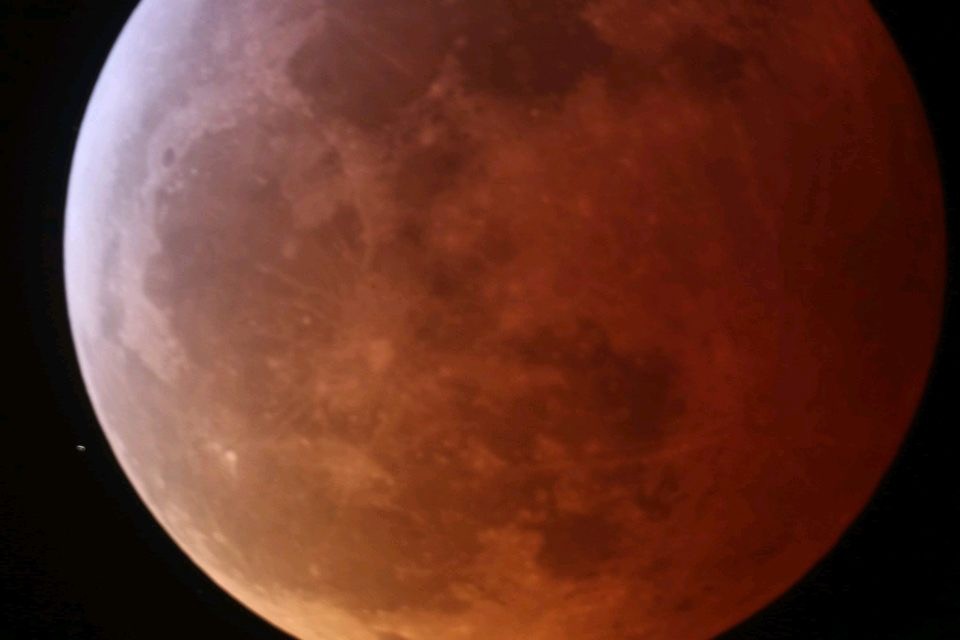
On January 20th, many across the world, but particularly in the Americas, had the opportunity to witness, and taking amazing photos of, the rare Super Blood Moon. The moon was in a total lunar eclipse, meaning it was entirely in Earth’s shadow (a rare occurrence due to the fact that the sun, Earth, and moon are not in the same plane). In such an event, only the longer wavelengths of light from the sun are not scattered and refracted through Earth’s atmosphere onto the moon, giving it its reddish hue. There will not be another total lunar eclipse until 2021.
The “super” comes from the fact that the moon is at its closest point on its elliptical orbit around Earth, making it appear slightly larger in the sky and thus offering opportunities for amazing images. For more effect, many have included the “wolf” in the characterization of this moon phase, which simply refers to the January full moon. The term probably originated with Native Americans or European colonists who associated the full moon in January with increased wolf-howling activity.
Leave a Reply
You must be logged in to post a comment.