
By Kira Lu ’20, Feature Editor
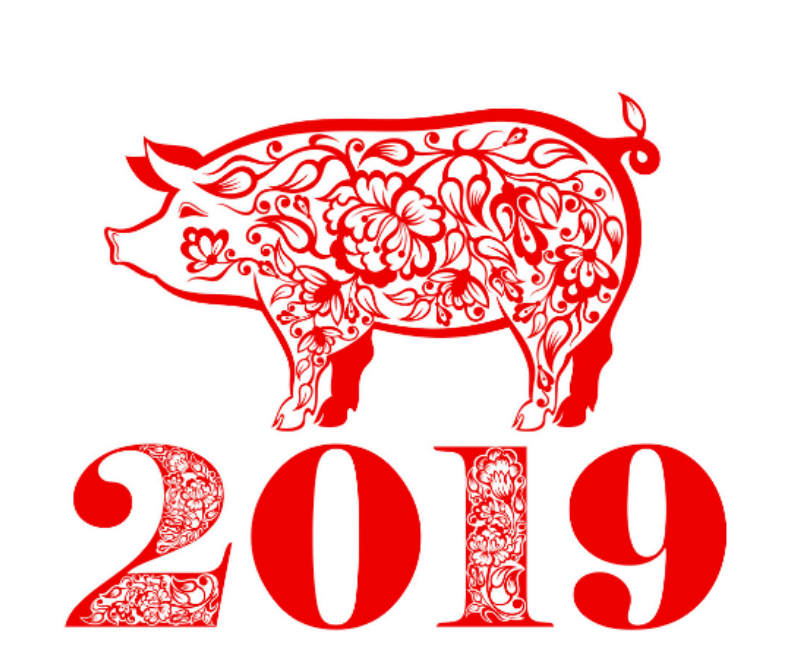
With the holiday season and the Gregorian calendar New Year behind us, the festivities have mostly come to a close. But the year is full of fresh starts, and another one presents itself to those who celebrate on February fifth this year– the Lunar New Year. Millions of families from China, Korea, Vietnam, Laos, Singapore, and other Asian countries will gather to welcome the Year of the Pig by spending time together and eating traditional food with friends. Many websites try to predict what will happen this year, most of which announce that because of the wealth, prosperity and laziness the Pig is associated with in Chinese astrology, this year will yield tons of new opportunities–as long as you are ready to act on them.
Last year, Asian Diversity Club’s morning meeting video presentation highlighted the ways people at Newark Academy celebrate the Lunar New Year, such as spending time with family and friends or eating a variety of special delicacies. ADC executive board member Melisa Yaman ‘19 shared her own experience with festivities on the Calendar New Year compared to those associated with Lunar New Year: “I don’t really celebrate New Year’s Eve. Sometimes I watch the ball drop on TV. For Lunar New Year, my family celebrates the entire weekend. One day we’ll go to the city for dim sum and the parade in Chinatown, and then another day we have hot pot, and on another day we go to a Lunar New Year party with some of my classmates. I would say that the Lunar New Year is a bigger holiday for me because I never really celebrate the actual New Year unless someone else invites me to do something.” Each family and individual has their own distinct way of interpreting what “celebrating the new year” entails, and part of the most fascinating part of New Year celebrations is how they are adapted to so many cultures, yet still share those few similar themes.
In addition to these two New Year celebrations, countless other cultures hold their own New Year celebrations, including Rosh Hashanah (the Jewish New Year) and Diwali, the festival of lights that coincides with the Hindu New Year. Though each have unique traditions, welcoming change and opportunity and celebrating new beginnings are significant themes in many New Year celebrations. Inspiring New Year’s Resolutions for all kinds of goals on the calendar new year, red envelopes given from generation to generation on Lunar New Year, and lights that decorate the home in Diwali are all symbolic of good luck and prosperity the New Year may bring. Because so many of these New Year holidays are celebrated by many families at Newark Academy, two years ago, a voice proposal for no assessments the day of Lunar New Year (since the celebration traditionally begins on Lunar New Year’s Eve) and the day after Diwali (since the celebration traditionally begins the night of the first day) was presented by Lori Sun ‘20 and Vikram Bala ‘20 and passed. Vikram commented: “Lori and I decided to first take up this voice proposal as Diwali and Lunar New Year meant a lot to us respectively. The concept of a ‘New Year’ is man made, meaning that the New Year can be whatever one decides it to be. For those celebrating Lunar New Year, the holiday may be as important to them as the calendar New Year, if not even more important. In the pursuit of being a more diverse community that ‘breaks the bubble,’ it seemed obvious that students should have the ability to celebrate traditions and holidays that were important to their culture.”
Though each of these New Year holidays may just be arbitrary days in the year, it is the value each individual places on growth that makes these celebrations so special. As David Afolabi ‘20 said for his post-winter break, freshman year ancient world epiphany, “New Year’s Day is really just a normal day that everyone decides is going to change everything–people just made up time and it completely changed the perspective we approach each year with.” Although there is nothing inherently significant about the days these New Year holidays are planted on, each of these holidays offer the unique opportunity to change our perspective for the better.
Leave a Reply
You must be logged in to post a comment.