By Alex Chen ‘20, Commentary Writer
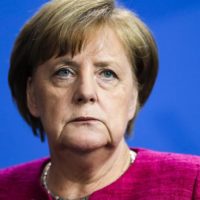
Germany has only been a unified country for less than 150 years, and yet it has faced many radical changes within its borders. From monarchism under the German Empire, to fascism under the Nazis and Communism under East Germany, Germany’s people have faced many challenges and difficulties under each government system. Today, however, marks the biggest challenge since reunification in 1990. Chancellor Merkel is planning on stepping down as chancellor and retiring by 2021.
This marks a big shift in German politics of recent years, as Merkel has been the chancellor of Germany since 2005, when she was first elected to the position. Before assuming chancellorship, she had an active political career. She has held leadership in her center right CDU party as well as in the coalition between the CDU/CSU. However, she isn’t just an important figure within German politics. She has been a central figure in European Union politics, as well as the G8. With all of these combined, it’s no wonder she was named Time Magazine’s Person of the Year for 2015, as well as regarded as the most powerful woman in the world.
With all these titles one must imagine that she must have had a profound impact on Germany, the E.U., and the world alike, and she has. She was a central figure in negotiating the Treaty of Lisbon, which formalized the E.U.’s structure and reorganized it to become more efficient. She has also been a prominent figure in healthcare reform within the E.U, as well as clean energy development, promoting E.U. cooperation and more recently the migrant crisis gripping the world. However, most notable was her main role in tackling the 2008 financial crisis which crippled economies worldwide.
Now that Merkel is departing, one can only wonder who may fill her place. Within the waning years of her chancellorship, a strong opposition has formed against her and her party. One manifestation of this is the AfD party, which stands for Alternativ für Deutschland or Alternative for Germany in English, a far right party that is anti-E.U, anti-immigration, and nationalistic by nature. It is the exact antithesis to her policies, and in turn those of the rest of the European Union. Similar parties such as the Rassemblement National in France, the Nordic Resistance Movement in Scandinavia, the U.K. Independence Party, and the Visegrad group consisting of Czechia, Slovakia, Hungary, and Poland have all expressed ideas akin to those of the AfD.
These groups, while still a minority, do show a trend within European politics. The trend is that most governments are going harder right than before; they are fed up with the globalist narrative to which current European politicians align. The most prominent of these trends is the Gilet Jaune movement in France against Macron. And it’s not just in Europe either. Across the world more and more countries have turned to right wing authoritarianism. Look at the U.S.A with Trump, China with Xi, Japan with Abe, as well as more extreme examples such as Orban in Hungary, Duterte in the Philippines, and more recently Bolsonaro in Brazil.
While recent trends have been tending more right wing, Germany will not be affected by the changing climate. Germany, as the centerpiece of the E.U., benefits the most from the unity provided by it. As much as the memes about Greece, Italy, and Spain begging for money from Germany are true, the economic unity provided by the Euro as well as other factors drastically outweigh the negatives. As such you can expect most government officials in Germany to be pushing for someone to follow this dogma. Of course, there is a possibility that the populists would be able to take over, albeit most Germans are generally happy with the current government, with the only exception being those in the state of Sachsen and the rest of the former East Germany, due to them being consistently poorer than their western counterparts throughout much of the 21st century.
Merkel’s successor will have a lot with which to deal. Considering Germany’s position on the world stage, her successor will have to deal with the ongoing refugee crisis, the deals with the E.U, Russia, and so much more. Merkel has taken a strong position with globalism and openness, and it’d be in Germany’s best interest to continue this path considering the progress that has been made. Germany has been experiencing high GDP growth and has also maintained a very high standard of living according to the HDI index. Germany is also a manufacturing powerhouse, with companies such as BMW, Bayer, and Lufthansa coming under high regard. German is also the second largest destination for immigrants, which shows how many people view Germany in high regard.
There are those who are willing to point out the failures of the German system, that being the debt crisis in Greece and Italy and the government’s Keynesian involvement in the economy. As Chris Lightcap ‘20 put it, “Government largesse has been central to the Merkel presidency, reflexively burdening the economy under a 78% debt to gdp ratio, rising utility costs, a national minimum wage, and the like,” which is true considering the high tax rates and bureaucracy set forth by the current administration. These policies do take a toll on innovation within Germany and the E.U, as well as placing burdens on companies that are trying to invest in capital goods.
But taking into account the German mindset is the important part of this. We can look at the situation through our Americanized viewpoint however much we want, but it is ultimately the German people’s choice, not ours. Germany is a country that emphasizes a much more collective means of society, where equality is seen as a priority over profits. You can see this trend within the strength of labor unions in the country, and most interestingly within its association football, where it is mandated that the people own roughly half of the club.
Most have been well off under the chancellorship of Merkel and the strength of her coalition government reflects that. But as time moves on the narrative may change. If the migrant crisis continues to ramp up and E.U. politics begin to take a turn for the worse, the people may turn away from Merkel’s party and engage in more conservative politics.
Leave a Reply
You must be logged in to post a comment.