
By Michaela Wang ’21, Feature Writer
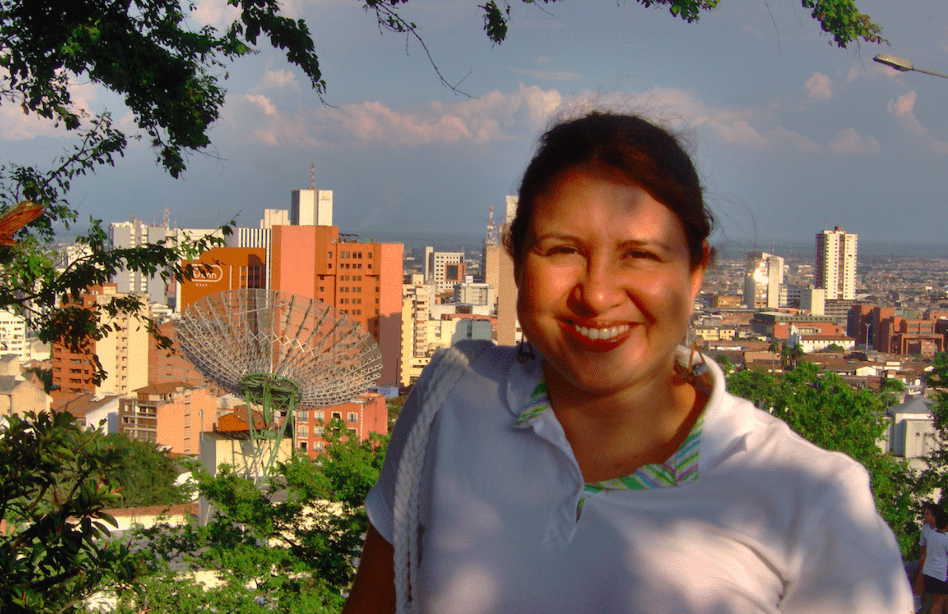
You may have followed the kitten-heel clicks and purple rolling backpack through the hallways. She stops once at Profe’s room to remind him it’s Fro-Yo day, and pivots to the Octagon to greet one of her students, always starting with “cómo estás?”, or “how are you?” Realizing her student is in no mood to speak Spanish, she delays the conversation to class and continues towards the Language Office. Her warm comfort radiates through the room, and soon enough, satiates the hands of her coworkers in the form of fresh Rosa de Reyes from Rico Pan, her favorite New Jersey panadería in Morristown. Uneven tears of Spanish pastry are enjoyed around the room; their fulfillment brings her fulfillment. She arrives at Room 120, passing the iconic Shakira stock photo, knowing her Spanish writing tips don’t lie. Profesora Pascal’s nourishment seems effortless.
We think we know our teachers, as the sacrifices they make for us constitute their benevolent roles in the classroom. Beyond the dust of chalkboards, they are humans too, shaped by stories and sensations of their past.
During mid-December, Profesora could see a lack of motivation in her Slot H Spanish 3 Honors class. She planned a relaxing hour where they wrote cards in Spanish to detained illegal immigrants. While the assignment abandoned the Preterite vs. Imperfect lesson plan, Profesora taught her students a more important one: knowledge is purposeless unless you use it to help others. When she later exposed that she too was an immigrant finding new life in America, I knew I could not let her story sit on the ostensibility of Powerpoint presentations.
Q: What type of environment did you grow up in?
A: I am from Colombia. I grew up in a warm family with a mother, a father, and a younger brother. Colombia is a beautiful country, multiethnic and culturally diverse, but was very challenging and extremely dangerous. I grew up during the time when the narcotraffic and guerrillas were diminishing the country with violence and drugs, causing few opportunities for young people to access education and employment. Despite all these challenges, my parents always emphasized education and gave the best they could afford. They sent me to a private Catholic school from kindergarten to the end of high school. Their protective bubble allowed me to grow up safe, happy, healthy, optimistic of my future, and facing the challenges with a big and genuine smile.
Q: What did you study in University? Why did you choose to become a teacher?
A: I was always the best student of my class which gave me the opportunity to win scholarships for high school, college, and graduate studies. Since I was a child, my dream career was to become a teacher. I always wanted to be in the classroom learning from teachers, mentors, and also from students. In Colombia, I obtained a degree in Psychology and worked as a Faculty member for an undergraduate Psychology program at the college level. Later on, I went to Mexico to obtain a Master’s from the National Autonomous University of Mexico which is considered one of the best Universities in Latin America. I attended a doctoral program at the same University and will defend my dissertation on Mayan culture and colonial manuscripts later this year.
Q: Why did you immigrate to the US?
A: I ended up in the United States as part of my studies. I attended the ESL program at Seton Hall University. This was an academic strategy for improving my English skills and being able to participate more actively in the international academic discussions in my field. I never imagined that I was going to get married and stay in this country. I have been a United States citizen since 2017.
Q: Was adapting to American culture challenging? How do you remain in contact your family in Colombia?
A: The difficult part for my immigration experience is the speed of life in which I have to process the acquisition of the second language, the cosmopolitanism of the area, the values, the politics, as well as balancing out my relationship with myself, spouse, and friends. I am keeping in daily contact with my beloved parents, working and enjoying my teaching career at NA, and facing the challenges of new learning opportunities, along with reaching the best of my skills.
Q: Why is the Latin American identity important in shaping America?
A: Being a Colombian and part of the Hispanic community is a great opportunity to demonstrate important values of Latin American people, such as hard work, being family-oriented, having creativity, a sense of humor, and the most significant values for Colombians like me who are aware of the frightening decay of violence and underappreciation of life: integrity and resilience.
Q: Favorite Colombian food?
A: My favorite Colombian food is chicken breast with mushroom sauce. Its ingredients are butter, lots of mushrooms, chicken breast very thinly cut, chicken broth, onion, garlic, black pepper, flour, heavy cream, and cilantro, served over rice or mashed potatoes. Colombian cuisine is a result of different geographical region and microclimates, linked together through common ingredients including maize, cassava, plantains, and legumes.
Profesora Pascal is glad to be working at NA with bright and passionate leaders, who she hopes can help flourish this multicultural world.
Leave a Reply
You must be logged in to post a comment.