By Sophia Ludtke ‘20, Commentary Editor
“Like the Sea Level, We Rise” read one sign. “Your apathy towards my future scares me” read another. “COP24 Failed Us” read yet another. On March 15th, according to an article published in The Guardian, 1.4 million students from around the world went on strike from school, demanding that their respective governments take action to reduce carbon emissions — all because of the heroic action of 16-year old Swedish climate activist Greta Thunberg.
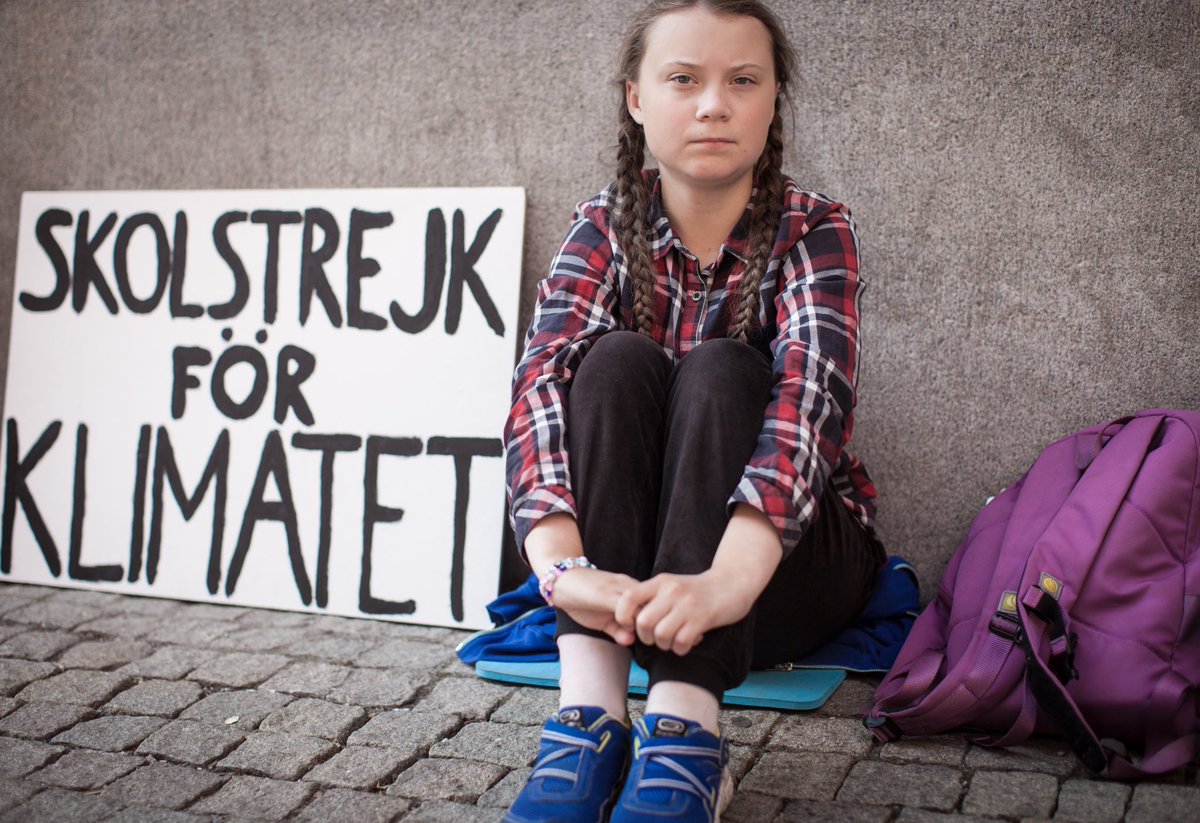
In August of this past year, inspired by the students who organized March for Our Lives, Greta decided to skip school and sit outside the Swedish Parliament, demanding that the government reduce carbon emissions in accordance with the Paris Climate Accords. Little did she know that her individual action would spark an international movement that would transform the global conversation about climate change.
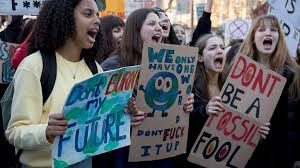
As Ms. Duszak explains, “seeing that [the strikes have] become an internationally coordinated effort has given me so much hope that you will be the generation to make real lasting change as far as policy goes. The time for relying on change coming from small local efforts has passed and worldwide change in legislature and policy is the only thing that is going to change the trajectory towards utter devastation that we’re currently on.”
The US Youth Climate Strike’s official platform supports the Green New Deal and urges government leaders to declare a national emergency on climate change, base all government decisions on the most current and widely-accepted scientific research, and mandate compulsory education on climate change for students in grade K-8.
The specific type of protest — strikes from school– has generated some controversy, with school administrators raising concerns about school absences. However, the element of disobedience is what has allowed these strikes to generate considerable media attention, and it is this media attention that has helped generate a significant increase in conversation about climate change in recent months.
Despite being a barely talked about issue during the 2016 presidential debates, given the release of multiple science-backed climate reports this past year, climate change is emerging as one of the key issues for candidates in the 2020 presidential elections. Already, Democratic candidates from Kamala Harris, to Kirsten Gillibrand, to Bernie Sanders, to Cory Booker have voiced their support for the Green New Deal.
Indeed, there are numerous unanswered questions that remain about the Green New Deal. Implementing any one of the climate change solutions described would require significant overhauls to our transportation and energy systems and would cost billions of dollars, and some of the details for how these overhauls would unfold remain unclear. However, many have defended the steep costs, describing them as upfront payments that could preclude several billions of dollars in damage down the road (from climate change effects such as a sea-level rise or increasingly prevalent natural disasters). Not only could the consequences of our inaction result in economically catastrophic damage, but the consequences could also worsen already existing social inequities.
I personally had the opportunity to attend and speak at a local climate strike in Morristown on March 15th, and this close relationship between environmental and social justice issues was a significant topic of discussion both at the Morristown strike and at strikes worldwide.
The following is a story I shared at the Morristown climate strike pertaining to the overlap between climate and social justice:
This past year, I had the opportunity to travel to California and found myself visiting a beautiful organic farm and spiritual center called Green Gulch right on the Pacific Coast. The whole scene was incredibly quiet and peaceful, unlike anything I had ever experienced before, and yet, something felt very wrong. The air that we were breathing in, air that should have been among the cleanest and most pure in the country, was filled with smoke as we all walked around with ventilation masks covering our mouths. The California wildfires, fueled by climate change, were tearing through the state, leaving behind massive amounts of destruction, filling the air with smoke, and uprooting the lives of thousands of people.
Previously I had a similar experience halfway around the world while in India for my immersion. I remember visiting the Gandhi Museum in New Delhi when we were told to put on ventilation masks since air quality levels in the city had reached dangerous levels. Few people around us were wearing masks.
I couldn’t help but notice that this poor air quality was nearly identical to what I had experienced in California. However, in California, this poor air quality was making news headlines and was cited as evidence of the extreme consequences of climate change if we fail to take immediate action while the poor air quality in India has become the accepted status quo in the country — a status quo that isn’t making news headlines.
To me, this gets at the heart of why it is so fundamentally important, now more than ever before, that we take bold and significant environmental action. Environmental issues are no longer just environmental issues but instead they are deeply entangled with other complex issues related to social justice and privilege. It is the countries with the resources and the technology, the countries with the greatest ability to make significant changes to our energy and transportation systems, that have the greatest responsibility to do so.
Given the magnitude of the environmental crises we are currently facing, it should come as no surprise that bold, dramatic measures such as the Green New Deal are being proposed. Now it is up to our country to decide whether we have the political will to make this change a reality.
To quote Greta Thunberg, the hero behind the March 15th climate strikes: “We’ve had 30 years of pep-talking and selling positive ideas. And I’m sorry, but it doesn’t work. Because if it would have, the emissions would have gone down by now. They haven’t. And yes, we do need hope, of course we do. But the one thing we need more than hope is action. Once we start to act, hope is everywhere. So instead of looking for hope, look for action. Then, and only then, hope will come.”
Leave a Reply
You must be logged in to post a comment.