By Dina Drogin ‘23, Commentary Writer
“I am fifteen years old and it’s very scary to look at the world and say ‘I’m only fifteen.’ We can actively change things right now. Make it loud, make it proud, and fight,” said Molly Breckman, a freshman at Newark Academy and a speaker at the recent Morristown Climate Strike.
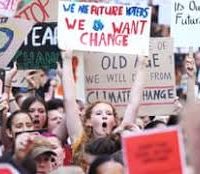
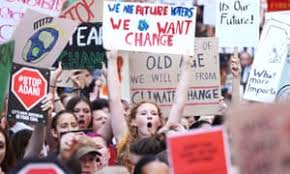
From September 20th-27th, over 7.6 million people across the planet joined together and marched in protest against rising greenhouse gas emissions, in the largest global warming protest in history. It was extremely inspiring to watch people, especially young people, from different countries, cultures, religions, and socioeconomic backgrounds protest a common problem that puts everyone’s future in jeopardy. In ten years, climate change could be irreversible. Although alarming statistics are constantly being revealed, government leaders have failed to take action. Climate strike participants are trying to change the government’s response and ultimately the future of our planet.
“There’s power in just being in a group of people who are passionate about the same thing as you. Just being with people who share your passions and are committed to do the work, there’s good that comes from that,” explained Ms. Duzak. Power is manifested in numbers. In order to mitigate the effects of climate change, people in power need to get involved. Striking is a constant reminder that if we don’t do anything, change will not happen.
Organizing a strike about the environment does not directly impact it. However, it does spark conversation, which is a valuable contribution. The recent climate strikes have gained lots of attention from the media. Celebrities including Gisele Bündchen, Leonardo DiCaprio, Mick Jagger, and Chris Hemsworth have supported the movement on social media, reaching millions of people through their followers. The strikes beg people to get involved, get others involved, and push leaders to get involved as well.
While the climate strikes have raised lots of attention, many government leaders still refuse to take action. In fact, about two and a half years ago, President Trump removed the United States from the Paris Accord, an agreement within the United Nations Framework Convention addressing greenhouse gas emissions and other issues relating to climate change. The strikes have highlighted the controversial decision. Trump believes that “The Paris accord will undermine U.S. economy” and that it will put it at a “permanent disadvantage.” However, the effects of climate change should not be underestimated. Although participation in the agreement could negatively affect the economy, pulling out of it will negatively affect the world on a greater scale. To help climate change, all countries, states, cities, and people must be willing to do their part. As one of the three leading producers of greenhouse gasses, the United States making the decision to withdraw from the Paris Accord is inexcusable. The effectiveness of the agreement is drastically reduced without participation of the United States.
Molly Breckman explains, “This generation takes climate change seriously. We have the materials and resources to bond together and use the media for good to show people that this is a huge deal and we know it’s a huge deal.” We have the power to change things. As chanted through the streets of New York on September 20th, “We vote next.”
Leave a Reply
You must be logged in to post a comment.