By Yasmeena Sharif ’23 News Writer
The goal of Newark Academy’s 2019-2020 community service program is to encourage and develop a history with the city of its origin, Newark, New Jersey. According to Lilly Rosenberg ‘20, who is now serving her third year on the Community Service Council, “It’s so important that this school recognizes and celebrates the foundation that started us. I think a common misconception about Newark is how dire their need is for our help and funds and this really isn’t the case at all. This is why this year we’ve chosen to focus on exploring the mutually beneficial relationships we can have with the city in hopes that it’ll lead to a better understanding of the incredibly diverse and culture filled city.” These thoughts and intentions really do shine a light on the initiative, and help our school community understand the goal of this year’s theme.
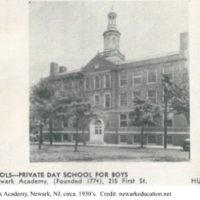
In 1774, Newark Academy opened its doors in the modern-day downtown area of Newark. Throughout the Revolutionary War, Newark Academy kept its doors open until the school was burned down during a raid by the British in 1781. Newark Academy rebuilt and opened in a new location at the corner of Broad Street and Academy Street in 1792. In 1929, the Academy relocated before moving in 1964 to its current location in Livingston, New Jersey. Today, Newark Academy reflects a diverse student body spanning the whole of northern New Jersey.
Newark, New Jersey is one of the oldest cities in the United States. The city was settled in 1666 by Puritans, a group of Protestants from Connecticut, who had recently hailed from England. Present-day cities including the Oranges, Maplewood, Bloomfield, Montclair, Verona, Caldwell, Millburn, Springfield, Irvington, and Livingston were all a part of Newark in its early days. Throughout the late nineteenth and early twentieth centuries, these cities eventually broke apart from Newark and became independent. The city also went through a series of major growth during this time, with many major companies including retail, fashion, water, and breweries making Newark their home. Newark’s twenty-six or so acres are divvied up into five wards (North, East, South, West, and Central), each with their own separate neighborhoods (Lincoln Park, Ivy Hill, etc.). The city is the second most racially diverse group of communities in the state, after Jersey City. Newark continued to rise during this time, becoming a popular place for movies and television shows to shoot various scenes. Superstores such as Bambergers (which eventually merged with Macy’s) occupied several floors of the buildings downtown. Many companies held headquarters in Newark and the city flourished.
Newark experienced a shift in the socioeconomic makeup of the city, with many middle to upper class residents relocating to nearby suburban areas. With poverty levels increasing, and communities experiencing what could be considered disenfranchisement, the wrongful attack on a city cab driver sparked the Newark riots of 1967. The riots resulted in twenty-six deaths and hundreds of injuries, leaving the residents of the city devastated and traumatised– causing a racial divide in Newark.
After the riots, Newark faced over $10 million in damages from the destruction of homes and businesses. In recent years, Newark has been on the rise, since the construction of the New Jersey Performing Arts Center (NJPAC) and the renovation of the Hahne’s building, a process of gentrification that Newark is undergoing.
Gentrification is defined by Merriam Webster as “the process of repairing and rebuilding homes and businesses in a deteriorating area (such as an urban neighborhood) accompanied by an influx of middle-class or affluent people and that often results in the displacement of earlier, usually poorer residents.” The people in these lower-income communities find themselves displaced as their cost of living exceeds their earnings, making it unaffordable to stay in these areas.
Newark has multiple stigmas and is often called “the hood” or “the ghetto” based on people’s inaccurate perceptions of what the city is or represents. When one takes a closer look, they’ll see that like every other city, Newark has sections that are thriving and sections that aren’t. This is why giving back to Newark is so important for Newark Academy. Helping families that are in need, such as donating to food banks in the area, and tutoring young children are so important for families throughout the city. These small acts of kindness can make a difference in the lives of so many people.
Newark is the city of Newark Academy’s origin, and therefore, we the student body should aim to make our connection to the city stronger than ever.
Leave a Reply
You must be logged in to post a comment.