
By Jeffery Keys ‘21, Feature Writer
https://abcnews.go.com/US/young-activists-descend-washington-tomorrow-march-lives/story?id=53850670
Students have rarely hesitated to gather and fight for what they believe in, regardless of the potential consequences. Activism of young individuals has truly changed the world, from marching the streets of Birmingham or in campuses nationwide acting against the Vietnam War. But now we enter a new age — an age in which sit-ins, marches, and protests are becoming replaced with hashtags, reposts, views. And as social media seeps into every aspect of our lives, the dominance of infectious internet culture has already affected student activism. So is this shift to a digital age productive in advocacy? With the entire world now available at one’s fingertips, will student activism thrive due to increased accessibility to both crucial information and other motivated teens? Or will the desire to construct a generous and passionate facade dilute the gravity of young voices?
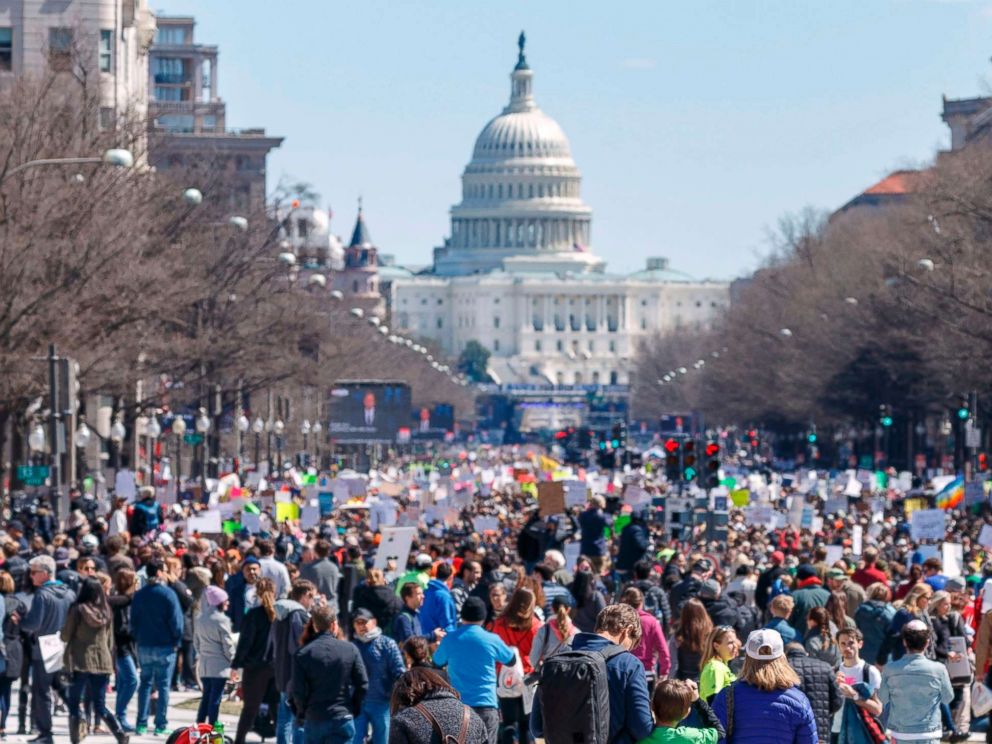
The technological advancements made in recent years have allowed information to spread at an impressive rate. Thus, social media has granted more students opportunities to gather and share support within a brief timeframe than any other point in human history. We have seen many movements rise from the internet, with students utilizing retweets and hashtags to form a common voice. A recent example of this increased ability to rally around an online call to action emerged from the Marjory Stoneman Douglas High School Shooting in 2018. Led by students, the Never Again MSD organization sought to address gun violence and promote awareness of school shootings and other genocides, sparking countless conversations on the topic of gun regulations. The movement employed the use of the hashtags “#NeverAgain” and “#MarchForOurLives” to serve as online battle cries. Tweets brandishing these hashtags flooded social media, calling upon youth everywhere to speak out and take action. Hosted in Washington, D.C. on March 24, 2018, the March For Our Lives translated virtual hashtags into physical participation. CBS News estimated that anywhere from 200,000 to 800,000 attendees marched in the Washington, D.C. event alone, not accounting for the 800 plus sister marches.
Many other protests arose from a need to address gun violence but were small and deteriorated briefly after conception. What pushed the threshold of participants into the hundreds of thousands for this march in particular? Look no further than the gargantuan social media presence of the movement. The official Twitter page for the March For Our Lives movement has 465K followers to date, their official Facebook page has 308,202 followers to date, #MarchForOurLives was used in close to four million tweets on the day of the march, and Snapchat created an official sticker to be used by participants. There was also the aspect of celebrity interaction and influence, including the Instagram post made by Selena Gomez, who boasts 158.9 million followers on the platform, which garnered close to two million likes. Evidently, the extensive use of social media utilized by the March For Our Lives elevated the movement to new heights, becoming a perfect example of the benefits that come with the expansive nature of the Internet.
Social media’s ability to both swiftly accumulate support and raise awareness undoubtedly bolsters student activism, but there are some negative aspects that come with online interactions. A major, often acknowledged point of contention regarding social media is that one’s online presence tends to be more about glorifying an elaborate mask of one’s ideal self rather than a genuine presentation of their true self. This unfortunate truth of social media extends to online student activism as well; teenagers desiring a generous and socially conscious image might disingenuously support causes they might not be committed to. An overwhelming amount of dishonest virtual student activism might negatively impact how seriously powerful figures regard student movements. When the passion of a project and its backers are called into question, the integrity of the entire organization might crumble, discrediting those who are actually committed to the cause. It’s so convenient for teenagers to tap a few buttons and appear to be better individuals than they actually are, feeding into social media’s negative stereotype as a purely fantastical world and undermining the foundation of student movements.
As we walk further into the future, social media and student activism will naturally become more intertwined. And while there are negatives in relying too heavily on the internet for social movements, the positives that can be achieved through passionately led movements on social media present an exciting potential for opportunities. After all, whoever has a connection to the internet can now become a catalyst for change. Next time you feel the urge to broadcast your support for a cause, it may be valuable to consider whether you’re posting for the movement’s sake or for your own — before you inevitably choose to post it anyway.
Leave a Reply
You must be logged in to post a comment.