
By Navyaa Jain ‘23, Commentary Writer
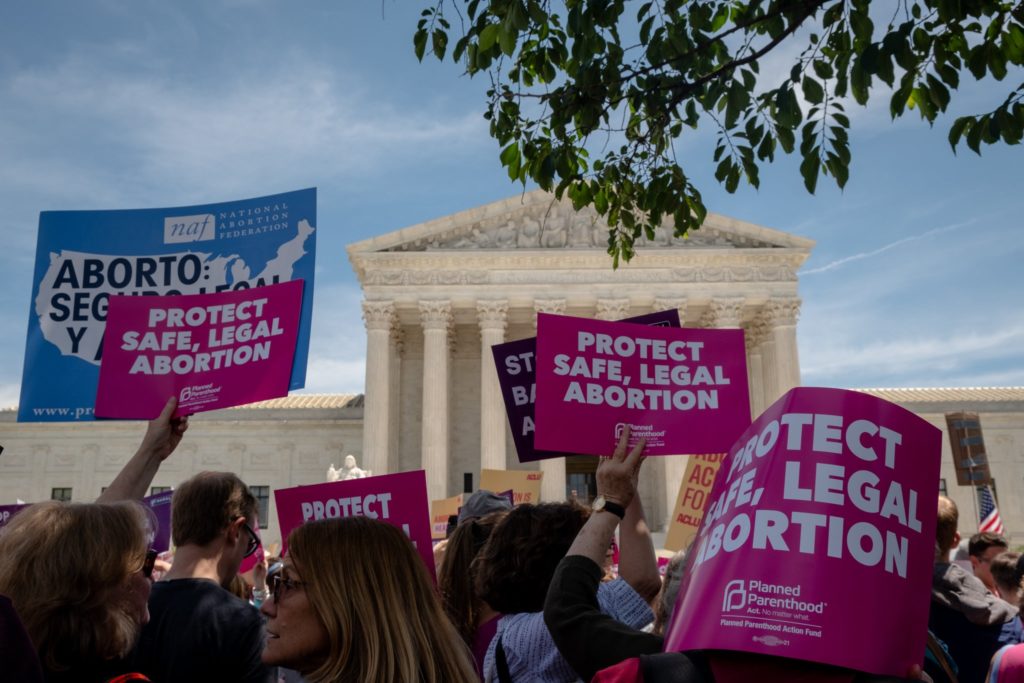
On May 15, 2019, the Republican-led legislature of Alabama passed the Alabama Human Life Protection Act, which makes it a Class A felony for a doctor to perform an abortion at any stage in a pregnancy. The only exceptions are instances where the pregnancy could cause death or serious injury to the mother, or where the fetus has an anomaly that will lead to its death shortly after birth. In a case like that, a second physician needs to confirm, in writing, that the doctor’s conclusion is valid. The act claims that at any stage of a pregnancy, the unborn child is considered to be a person; therefore, because abortion ends that “person’s” life, it is equivalent to murder and punishable by life in prison.
The decision to have an abortion is very personal and should be entirely up to women. There could be a myriad of reasons why a woman would want to receive an abortion, including medical reasons, rape, or unreadiness to have a child. According to a 2004 study by the Guttmacher Institute, these reasons account for 74.5% of abortions. What a woman chooses to do with her body should not be judged or prevented by anybody, especially not by the government.
The Alabama Human Life Protection Act attempts to eliminate that choice and take away a woman’s freedom. Other groups and organizations including Planned Parenthood and the American Civil Liberties Union (ACLU) had a similar viewpoint, which is why the law was challenged multiple times, including a bill that attempted to add to the circumstances allowing abortion. Unfortunately it was denied but if accepted, the amendment would have allowed abortion in times of rape or incest. Not allowing women to receive an abortion after rape or incest could make them feel powerless in an already troubling situation.
The law was scheduled to go into effect on November 15, but a temporary block has put that on hold. On October 29, 2019, United States District Judge Myron H. Thompson blocked it, preventing the law from going into effect until a final decision is made by several other courts. He agreed that the law was violating women’s rights and also brought up the Supreme Court precedent Roe v. Wade. This was the groundbreaking decision made in 1973 that legalized abortion up to 24 weeks into a pregnancy.
The Republican Governor of Alabama, Kay Ivey, explained that when she signed the bill, she was aware that it was “unenforceable.” Ivey claims that the law was designed to bring Roe v. Wade to the attention of the Supreme Court. Her goal is to reverse Roe v. Wade and “protect all life.” This goal is not unfamiliar, as many other states are making their own effort to overturn Roe v. Wade. A reversal will affect the whole country, allowing any state to create anti-abortion laws, giving them to power to take contol of a women’s body and decided what she can and cannot do.
On the other side of the argument, Democratic Presidential candidate Senator Kamala Harris (Calif.) has said, “We will not stand for [anti-abortion laws],” and argued that laws such as Alabama’s are simply an “attack on women”. These arguments are crucial to the blocking of anti-abortions laws because as a country that preaches freedom, it is important that all citizens receive those rights, including women.
Ultimately a case like this will pass on to the Supreme Court, who will have the final decision. It is unclear how they will decide, especially considering how they have ruled on recent cases involving politics, race, and religion. Their rulings prove that currently the Supreme court has more conservative members and less liberal ones, making the outcome of this case unpredictable. One of the key factors of the constitution is that government is designed to protect its citizens. While one side argues that “all citizens” includes the unborn fetus, the other side claims that the law hurts the lives of female citizens in need of abortions. No matter how the Supreme Court decides, neither side can be fully satisfied because both will believe that the government has violated its responsibilities.
The women’s rights movement is constantly growing and changing. As we continue to take steps forward, allowing anti-abortion laws would be taking two steps back. This law should be permanently blocked because of the choice it takes away from women. It goes against the Constitution and the human rights given to all citizens. No law should be able to dictate how women deal with their own bodies, and thankfully the federal courts agree, at least for now.
Leave a Reply
You must be logged in to post a comment.