By Dafne Hernandez ’20, Arts and Entertainment Writer
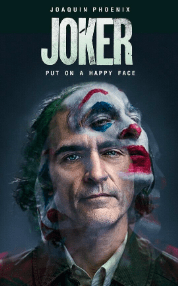
Superheroes make people believe in the impossible and become invested in a world that makes them think in a new way. Movie industries portray superheroes as almighty beings that people can depend on and aspire to become. The Joker suggests that there is more character and story to the villain that should be shown, rather than the sense of mystique he is given on the big screen. Sometimes, directors choose to value the stories of superheroes above those of the villain, because they believe stories of good can teach people rather than stories of evil. But the 2019 movie, Joker, proved that stories of evil can also teach the audience.
Joker is the first film in the Batman movie series to revolve around an anti-hero. But the movie raises the question of why anti-heroes, in particular anti-heroes that are villains, exist in the movie industry. Before villains existed simply to fulfill the typical superhero movie algorithm: a villain who the superhero fights and destroys to save the day. Now, directors and screenwriters aim to prove that villains also have a story by innovating superhero plot stories. The villains can be real people with struggles similar to the real people watching the movie. The movie industry wants us to realize that we cannot simply fight villains off as done by superheroes, but instead must understand them.
There are people, like Arthur (aka the Joker), who experience forms of suffering that range from violence to mental disabilities that must be discussed and shown on the big screen. Rather than sugar-coating the struggles that Arthur faces in his life, the directors choose to showcase those struggles realistically, having the movie rated R by critics, unlike the other typical superhero storylines that have been released in the past as PG or PG-13. The directors no longer want to idealize life in superhero storylines, but portray life as it is: unpredictable.
Throughout the movie, the audience sees Arthur enter a life of crime and psychological torture. He cannot maintain a stable lifestyle, as he battles poverty, unemployment, and a disorder that causes him to laugh at inappropriate times. These factors are what people use to victimize him. Arthur is bullied physically and verbally by Wayne Enterprises businessmen, the Gotham City Police Department, and his own mother. Due to this, Arthur turns to crime to fight for his voice, justice, and an end to his suffering, leading to the birth of a villain. The movie explains how quickly life can change when living in an environment in which struggles are mocked. This is what happens in real life and what can happen to real people, not just Arthur. Thus, the Joker can be anyone and everyone if left alone to suffer, with no help or guidance from others.
The movie received mixed reviews by movie critics. Most saw the movie as being a threat to society, by giving people “phony philosophy, the emptiness of our culture, and potentially toxic material,” stated by Stephanie Zacharek from Time magazine. Movie critics, like Stephanie, believe that the movie can inspire real-world violence and cause people to sympathize with those responsible for mass shootings, with the exaggerated and dark portrayal of the Joker. Other movie critics praised the acting and storyline, as portraying real-world troubles, that can be used to show the impact of society on the mind and body and mental illnesses. Perhaps we should learn to understand and love villains, such as the Joker.
Joaquin Phoenix portrayed the role of the Joker with commitment and raw feeling. You could see his character slowly derail into madness as the movie progressed. But there was a lack of racial representation and discussion in the movie, as Lawrence Ware from the New York Times states: the movie is “essentially a depiction of what happens when white supremacy is left unchecked.” The movie centers around a white man who aims to gain control of his life, despite the struggles he faces. But would a black man be given the same right to seek control in a predominantly white society? No, he would not be given that right. Joker could have discussed the racial issues occuring in the 1980s at the time Arthur was becoming a villain. If a black man had the same mental illness as the Joker, he would not have become the center of a public riot against the wealthy in the movie as Arthur, but would have instead experienced more isolation and victimization than Arthur.
Throughout the movie, we can see the struggles that shape the violence Arthur shows and what could have been done by him and others around him to help overcome those struggles. Joker has allowed us to turn our perception about villains as being nothing but a menace to society, into an effort to understand the root of their actions and identity.
Leave a Reply
You must be logged in to post a comment.