By Andrew Zhang ‘22, Feature Writer
https://www.britannica.com/event/Greensboro-sit-in/images-videos
In recent history, activism across the world has been rising constantly. With controversial political and social topics, citizens desiring change have resorted to strength in numbers. However, of those people taking the initiative, what have they accomplished?
There are numerous examples of student activism in the past. Much like activism created by adults, student activism in high schools and colleges gain recognition when they are at least relatively successful.
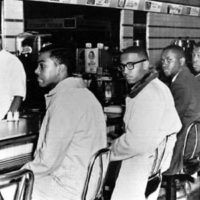
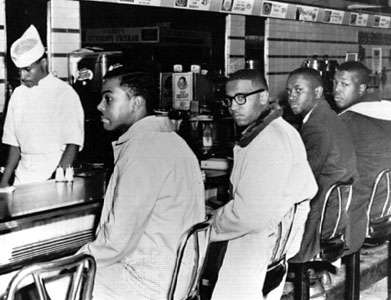
An early historical example of non-violent student activism was the Greensboro Sit-In. On February 1st, 1960 four black students attending the North Carolina Agricultural and Technical College chose to civilly sit in a “whites only” lunch counter. The students named Ezell Blair Jr., David Richmond, Franklin McCain, and Joseph McNeil remained firm in not leaving the area, even though they were refused any service. With this act of non-violent protest, the sit-in movement sparked many other students in southern U.S. colleges to protest racial segregation. The same year as the sit-in movement, college students now involved in the civil rights movement created the Student Nonviolent Coordinating Committee (SNCC). The participation of diligent college students across the south and eventually the entire U.S. ignited an era of peaceful, student-led demonstrations. Without the input of the four students in this situation, students facing racial segregation would remain in an atmosphere of inaction.
Perhaps one of the most successful student-led movements of the current decade is the Never Again MSD movement, more commonly known as the #NeverAgain Movement. Co-founded by Cameron Kasky, Alex Wind, and Sofie Whitney after a shooting at their high school in 2018, the movement aims to promote stricter regulations on gun violence. The Never Again MSD movement is widely regarded as unique in its use of social media, having gained 80k followers on Twitter within a week, while also contacting important political figures, such as President Trump, in order to gain national recognition. Today, a year after its creation, people involved with the movement have written a book, coordinated several school walkouts, and accumulated $400 million in donations.
Lastly, although the Never Again MSD movement was a massive American advancement, there are other successful examples of student activism from the 2010s. one of the most well-known movements of the current generation is the Black Lives Matter (BLM) movement. While it was created by adults—Patrisse Cullors, Alicia Garza, and Opal Tometi— according to the New York Times, the majority of the current protesters are college and high school students, especially when a student victim is involved. In the past five years, students have raised awareness of police brutality against African-Americans. Furthermore, the movement is credited for an undeniable influence on today’s activism and the racial dialogue arising in schools across the country.
So, looking at these examples of student activism, what’s the main takeaway? The most evident theme from the movements above was their focus on large topics that were not necessarily school-specific. Only student-led acts that advocated for the entirety of society gained traction in mainstream media, which is to be expected from a national perspective: national media sources select national issues. It was a struggle to find notable student protests on the policies of their school or any topic pertaining to local affairs. As time progresses, I look forward to seeing how student activism continues to impact the dialogue of today’s generation, and where Newark Academy will fall into that discussion. Mason Kung ‘22 comments: “Students at Newark Academy need to truly care about things they want to change, and only then will they have an actual impact.” Through the historical examples of student activism making an impact, it is apparent that demonstrations led by students are fully capable of creating change in society.
Leave a Reply
You must be logged in to post a comment.