By Sophia Chen ‘20, Arts and Entertainment Editor

https://www.imdb.com/title/tt3281548/
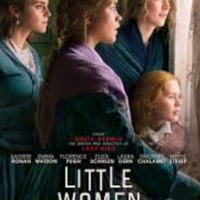
It is fitting that the end of the decade is marked by a new version of a classic story: Little Women, directed and written by Greta Gerwig. The novel, Little Women, was written by Louisa May Alcott in 1868, almost more than a century ago, but its timeless story remains relevant. Many versions of the novel have been made, specifically six major feature films, each revealing a new aspect of the novel. Greta Gerwig’s version of Little Women was faithful to Alcott’s book, but also provided a fresh new perspective on the story. A female-centered novel, Little Women is about four sisters living in Massachusetts in the 1860s. The oldest sister is Meg (played by Emma Watson). She is beautiful, kind-hearted and the most mature of the sisters. The main character, Jo March (played by Saoirse Ronan) acts as Meg’s foil. She is opinionated, wild, and fiercely independent. The third sister, Beth (played by Eliza Scanlen) is kind, very musical, and shy. The fourth sister, Amy (played by Florence Pugh) is the youngest and most “selfish” of the sisters. Their mother (played by Laura Dern), whose nickname is Marmee, takes care of them while their father is serving in the Civil War.
One aspect of the movie that I felt Greta Gerwig handled particularly well was the movie’s portrayal of Amy. When I read the book, I felt it was easy to resent Amy for her selfishness by stealing Jo’s ideal future through burning Jo’s book, going to Europe with their rich Aunt March, played by Meryl Streep, and finally marrying Laurie. However, in the movie, we see that Amy is portrayed as confident, charming, and practical. Amy and Laurie’s growing relationship felt natural to me and I could sympathize with Amy’s character. On the other hand, when I was reading the book, it was easy to expect Jo and Laurie to end up together and it made me confused why Amy ended up with Laurie instead, especially since Laurie and Amy’s wedding in the book felt glossed over. However, the movie shows how Laurie and Amy’s relationship developed and I felt more satisfied with the ending.
Perhaps Greta Gerwig’s movie seemed to offer a fresh new perspective on the book because of the way she structured the movie. She tells the story through a non linear timeline – jumping back and forth between the “past” and “present.” The “past” is full of vibrant, warm colors, where all of the girls are together, enjoying their youth. On the other hand, the “present” is full of dull, pale colors as the sisters have gone their separate ways. I liked how Gerwig pieced the novel together, illuminating some new dimensions of Amy March that made her a more redeemable character, and carefully crafting a happy ending that would be satisfying to viewers. Overall, I thought the acting was terrific and the story was beautifully retold. I whole-heartedly recommend this movie to everyone regardless if you have or have not read the book.
Leave a Reply
You must be logged in to post a comment.