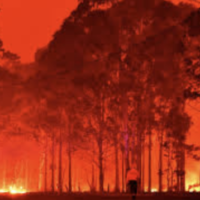
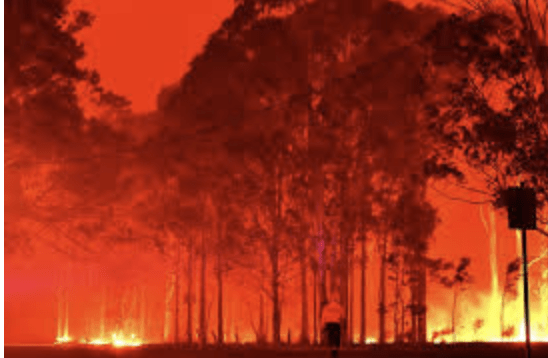
An image of Australia’s recent wildfires (ctv news)
By Ben Chaddha ’21, News Editor
Over the past month, fires have been ravaging the Australian outback. With a death toll of at least 24 people, and homes and communities being completely destroyed, these fires are having a massive impact on Australia. Overall, they’ve burned over nine times the amount of land as the California wildfires from last year, with a total of 25 million acres burned to date. These fires have also affected the environment; wildfires release fumes that contribute to climate change. In addition, they cause certain species of animals to die out. In fact, experts estimate that over one billion animals have been killed as a result of the fires so far. Recently, there have been many forest fires in other areas of the world as well, raising the question about whether or not climate change will cause forest fires such as the Australian ones to become more common in the future.
Wildfires are caused by a combination of different factors. Prolonged drought, record high temperatures, and a lack of moisture in both the air and soil, cause forest fires to occur. Another contributing factor to wildfires like these is the el Niño climate phenomenon that affects the climate in the regions surrounding the Pacific Ocean. This pattern can cause dry conditions in these areas when the el Niño is in its positive phase. The dry conditions caused by el Niño often contribute to some of Australia’s worst wildfires. New research has shown that climate change makes the positive phase of el Niño more likely to occur, which in turn makes wildfires in Australia more severe and more commonplace.
The wildfires in Australia have caused over 30% of koalas in Australia to die. This is primarily a result of the burning of koalas’ habitats. Australia’s ecosystem is extremely unique as it developed completely separately from that of Europe, Asia, and Africa. Consequently, if the ecosystems in Australia are destroyed, the species that live there cannot survive elsewhere. Furthermore, these species do not exist outside of Australia, so if their Australian habitats are destroyed, the animals could become endangered or even go extinct.
The wildfires themselves are also contributing to climate change, having released over 400 million metric tons of carbon dioxide. This amount is higher than the annual emissions of the 116 lowest emitting countries in the world last year. Since the fires were to some extent caused by climate change, this reveals that climate change is actually contributing to climate change, further demonstrating its severity. The wildfires have released so much carbon dioxide that it has reached other countries, such as New Zealand and even the United States in the form of smoke.
The wildfires are so widespread that authorities have given up trying to put out the fires and are instead trying to contain them. Generally, wildfires are very difficult to put out, and firefighters often need to use special planes and helicopters in order to fight the fire. The Australian government has enlisted thousands of volunteers to help fight the fires, and has received help from the United States, Canada, and New Zealand. Government officials want to extinguish the fires in order to save Australian infrastructure, but also to stop the fire’s contribution to climate change.
Overall, the negative effects of wildfires are extremely detrimental to people, animals, and the environment. As climate change worsens, wildfires will become more severe and more commonplace, causing more destruction in the future. One anonymous Newark Academy student says, “I think the only way to stop wildfires is not to fight them when they’re occurring, that would just cause more death, but to try to stop them at their source by fighting climate change.” Climate change experts predict that wildfires will be three times as common by the end of the century if nothing is done to reverse climate change. If that occurs, wildfires may start in places that had previously never experienced them, which would only lead to more suffering and destruction.
Leave a Reply
You must be logged in to post a comment.