By Kylie Bill ‘21, Feature Writer
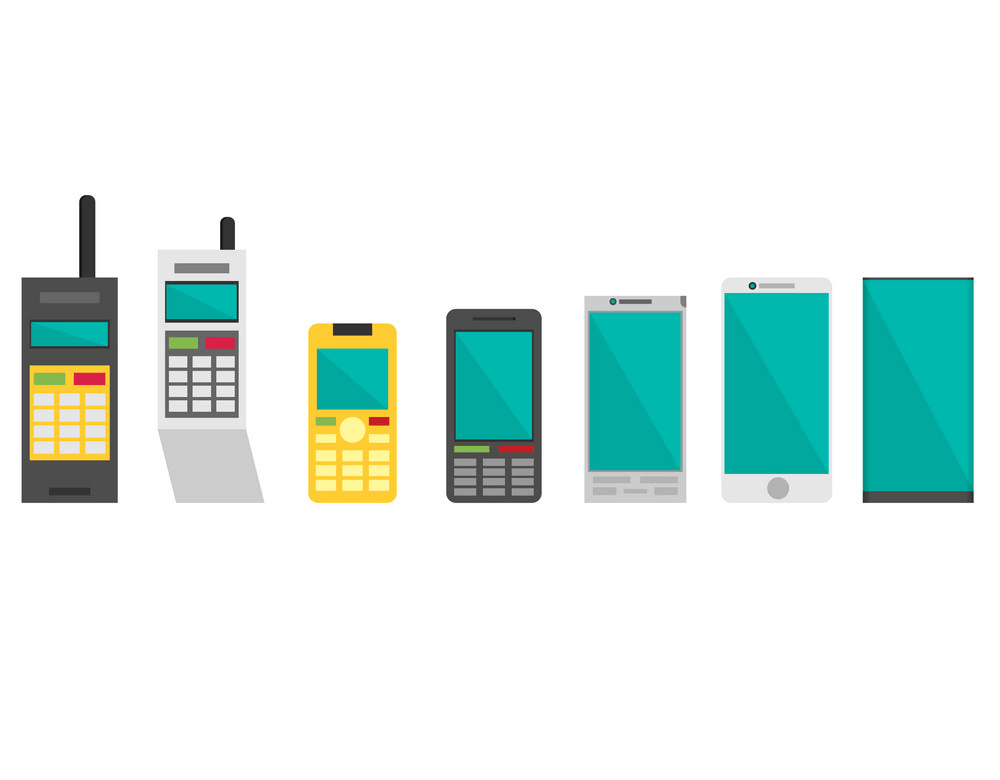
https://www.vectorstock.com/royalty-free-vector/cell-phone-evolution-flat-vector-15200167
A popular feud between Generation Z and Baby Boomers has swept the internet with the meme “OK boomer.” Teenagers say this phrase to dismiss people in the Baby Boomer generation, and this trend exemplifies the growing tension between the two generations. But where did this tension come from?
Looking back on the previous two decades, society as a whole has become increasingly influenced by the normalization of phones, making them almost a necessity for some people. These past two decades also represent the years in which people from Generation Z, also called Gen Z, were born. People born from about 1995 to 2015 are considered a part of Gen Z, and as technology started to define society during that time, it also started to define this new generation.
Echoing the Millennial generation, Gen Z has matured with technology. The rate that new technology was being produced heavily increased toward the end of the 20th century. The first phone was created in 1876, and it took 106 years for the first mobile phone to be invented in 1973. However, from that milestone it only took thirty-four years for the iPhone to be invented in 2007. But why are phones so important to defining certain generations?
Communication is what drives society. Exchanging news and ideas is important, and the development of phones rapidly accelerated this process. This new plethora of information can now be accessed by just the touch of a screen, and this instant access to information has always been possible for Gen Z. Through social media, which was first recognized in 1997, young people became able to participate in discussions they were previously left out of. This can be seen on instagram as teenagers have voiced their opinions about the 2020 election, and some political candidates have even publicized endorsements from members of Gen Z.
However, now that Gen Z has more of a voice and presence in society, older generations have more opinions on Gen Z. While some Baby Boomers are glad that young adults are able to gain a broader perspective on the world and become more involved in society, most members of the older generations worry too much screen time will lead to a decline in the quality and frequency of face to face communication. These opinions translated into stereotypes others use to define Gen Z. These stereotypes are shown through the names other generations have created for Gen Z: iGen, Gen Tech, Gen Wii, Net Gen, Digital Natives, and Zoomers.
Millennials have experienced similar stereotyping in the past decade as well. Baby Boomers would complain that Millennials were ruining certain industries because of evolving economic choices and priorities. Gen Z recognized these overgeneralizations made by older generations so they argued back when older generations complained, showing how social media has allowed generations to interact with each other, and usually in a negative way. The problem is that since most of Gen Z was born with the privilege of access to the internet and media, Gen Z can easily be portrayed as entitled and unaware of current events.
However, is this stereotype fully accurate? Many teenagers have become heavily involved in activism and different movements, and the Baby boomer generation was heavily involved in the Civil Rights Movement and Vietnam War protests. But even though both generations have a history with activism, now that the presence of social media and phones have become much more frequent and normalized in society, technology is creating more negative stereotypes about both generations and making cross-generational dialogue much more harsh.
Leave a Reply
You must be logged in to post a comment.