By Max Gorbaty ’22, News Section Writer
Note: This article was written in early February of 2020.
The Democratic Primary so far:
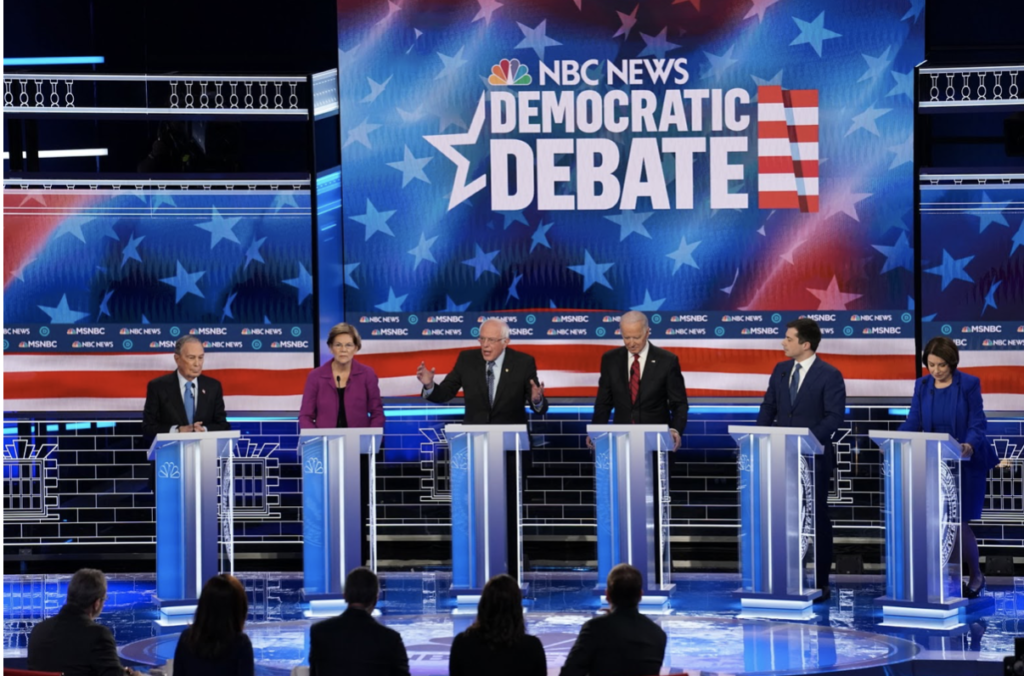
The race for the Democratic nomination has begun. After two unexpected results in the Iowa Caucus and New Hampshire, Democrats have still not chosen the clear nominee.
Due to a chaotic Iowa Caucus, both Senator Bernie Sanders of Vermont and former South Bend mayor Pete Buttigieg of Indiana were able to declare victory despite concrete results. The results were so controversial due to tech issues with the mobile app created by Shadow Inc. used to report voting totals. Sanders has won the popular vote while Buttigeig is in the lead with delegates. Original frontrunners Senator Elizabeth Warren of Massachusetts and former Vice President Joe Biden acquired around 18% and 16% of the vote respectively. Senator Amy Kloubchar of Minnesota won 12% of the vote.
One debate and a week later, Bernie Sanders earned a victory in the New Hampshire primary while Butiggieg won a solid second place. After a strong performance in the Democratic debate days before voters cast their ballot, Klobuchar secured third place in New Hampshire, notably the peak of her campaign for presidency. Again, Biden and Warren turned in stunningly poor performances relative to high polling numbers from a RealClearPolitics poll tracking a nationwide average prior to the primary. Biden and Warren fell short of the 15% to win any delegates in New Hampshire and placed fourth and fifth respectively.
In addition, the pool of candidates began to narrow as results from the primaries came in. Within twenty-four hours of the polls closing in New Hampshire, entrepreneur Andrew Yang, Senator Michael Bennet of Colorado, and former Massachusetts governor Deval Patrick ended their campaigns. In addition to the five frontrunners, Hawaiann Congresswoman Tulsi Gabbard, hedge fund manager Tom Steyer, and former New York City Mayor and businessman Michael Bloomberg remain in the race.
Bloomberg, worth $64 billion, has already spent nearly $350 million of his own money on the campaign. Bloomberg’s unprecedented campaign spending goes towards TV, Facebook, and Google ads according to Advertising Analytics in addition to contracting some of the biggest meme-makers on Instagram to post sponsored content. Due to his late entrance into the race, Bloomberg forgoed campaigning in Iowa and New Hampshire and other early primaries, instead heading straight for more populous states that host primaries on Super Tuesday. Despite his unconventional strategies, Bloomberg has started to gain traction in the race, participating in his first debate and significantly rising in recent national polls.
Can anyone beat Trump in November?
The Democratic Primary received a note of urgency to unite behind a single candidate when Trump received a Gallup poll approval rating high of nearly 50%. Trump’s polling heights can be attested to the strong economy, now approved by 6 in 10 Americans (Gallup poll), as well as the recent impeachment trial and acquittal that has driven Republican support for Trump to 94% according to Gallup. Sen. John Thune (R-S.D.), the Number 2 Republican in the Senate, claims: “The confusion they’re experiencing on their side … the perception of chaos, I think that absolutely works to the president’s benefit,” (Politico.com).
In response to the Iowa primary, Trump tweeted, “The Democrat Caucus is an unmitigated disaster. Nothing works, just like they ran the Country. Remember the 5 Billion Dollar Obamacare Website, that should have cost 2% of that. The only person that can claim a very big victory in Iowa last night is ‘Trump.’” Former President Barack Obama had a 46% approval rating according to the same Gallup poll conducted just over three years into the first term of his presidency.
Although Bloomberg is yet to compete nationally, RealClearPolitics polls have the former mayor ahead of Trump by 6 percentage points in a general election, the largest margin of all the Democratic candidates. Frontrunner Sanders is projected to beat the incumbent by 3.7 percentage points in a general election. Trump told reporters he’d rather run against Bloomberg than Bernie due to the self-avowed democratic socialist’s followers: “Sanders has real followers, whether you like them or not, whether you agree with them or not — I happen to think it’s terrible what he says — but he has followers.”
Timeline for the rest of the primary
The remaining events in February include the Nevada caucus on February 22 and the South Carolina primary on February 29. 40% of the United States population will have a primary on Super Tuesday, the day that the largest number of states hold a primary. Following Super Tuesday on March 3 and several other primaries through April and May, the Democratic National Committee will convene in its convention from July 13-16 in Milwaukee, Wisconsin to select its presidential nominee and outline the party’s policy priorities and vision. The New Jersey Democratic primary will be held on Tuesday, June 2.
On the other side of the aisle, the Republican National Committee voted to provide unanimous support for Trump as the presidential nominee. Subsequently, several states have decided to cancel their caucuses and primaries. The Republican National Convention will be held from August 24-27 in Charlotte, North Carolina.
Leave a Reply
You must be logged in to post a comment.