By Juliet Bu ’23, News Section Writer
The Olympics are one of the biggest sporting events in the world, featuring the top athletes of a variety of sports. An Olympic win is the gold standard in any sport, and is a testament to all the hard work and determination that athletes put in. With billions of people watching, the Olympic games always feature lavish stadiums and gorgeous landscapes. Many iconic Olympic stadiums still stand, such as the Bird’s Nest stadium in Beijing. However, these sophisticated buildings come at a cost. The event is a monumental international publicity stunt for the host country, incentivizing nations to pour money into portraying an image of prosperity and wealth—even if it at the expense of the country’s financial stability. Each sport requires a plethora of stadiums and fields, and as countries try to develop both aesthetic and technologically advanced venues, the price of hosting the Olympics is only rising. With the Tokyo Olympics right around the corner, it is important that people understand the cost of hosting the Olympics to better appreciate the technology and infrastructure featured during the event.
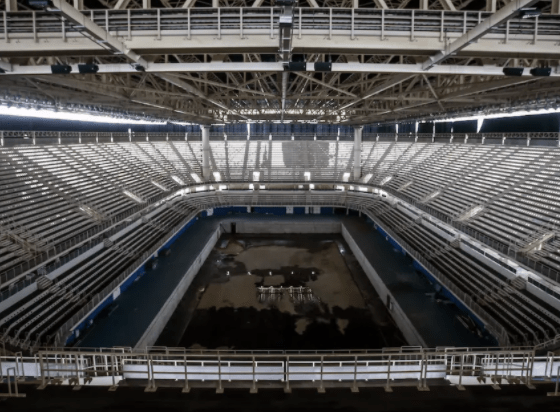
The Tokyo 2020 Summer Olympics will have 33 sports, and a large majority of these sports will require their own facilities. In fact, Tokyo plans to have 43 different venues for all the sporting events: 8 new and permanent venues, 25 existing sites, and 10 temporary venues. When Tokyo first bid to host the Olympics and Paralympics, the calculated cost was 7.3 billion USD. However, in December 2018, the predicted cost surged up to 12.5 billion USD. In December 2019, sources predicted that Japan could end up spending more than 26 billion USD due to expenditures by municipal and national governments that were not included in the original Tokyo 2020 budget plan. These drastic changes in budgets for the Olympics are not uncommon. During the 2016 Rio Olympics and Paralympics, the predicted cost was 12 billion USD. However, the actual amount that Rio spent was about 20 billion USD. The major expenses came from a new subway line, as well as building the venues. Reports show that the subway line cost 2.9 billion USD to build and was overcharged by 25% due to the many delays during its construction. In addition to this, Rio built 32 competition venues, costing 2.06 billion USD. A mere 6 months after the games, many of these once-flourishing stadiums sit abandoned and unused. In fact, only 15 of the 27 venues were used after the Olympics. The Maracana Stadium, used for the opening ceremony, was abandoned and looted. Chairs have been pried from their stands and the grass is brown and missing in large patches. The golf course has been deserted, and the Aquatic Center pool has been drained, leaving only shallow puddles of water. A year after the Olympics, only 7% of the apartments in the Olympic village were sold. The Olympics took a huge toll on Rio and they are now 113 million USD in debt. The Rio organizing committee still exists today and is facing almost 600 lawsuits due to the lack of payment to suppliers and workers.
Rio is not the only city that has been negatively impacted by the Olympics. Every Olympic games since 1960 has had major cost overruns. The average cost overrun for the Summer Olympics was 252% and 135% for the Winter Olympics. In Montreal, the projected cost of the 1976 Summer Olympics was 124 million USD, but in reality, the cost was billions more. This fluctuation of cost left the city’s taxpayers with 1.5 billion USD of debt that took almost 3 decades to pay off. In the 2004 Summer Olympics, Athens’s original budget was $1.6 billion. However, the Olympics actually cost the public about $16 billion, contributing heavily to the Greek financial crisis. Moreover, cities pour in major amounts of money to maintain lavish stadiums that are rarely used after the Olympics. Beijing’s “Bird’s Nest” Stadium costs 10 million USD a year to maintain. Sydney spends 30 million USD a year to maintain its Olympic stadium. Olympic facilities are hard to make use of because they are massive and not very versatile. Despite the lack of sporting events, some post-Olympic stadiums attract a lot of tourists. For example, Beijing’s “Bird’s Nest” Stadium earns about 30 million USD a year from tourism. For more developed countries, investing in the building of Olympic facilities can bring a stable income from tourism for future years. For less developed countries, hosting the Olympics can take a huge toll on the country’s economy if spending is not carefully calculated. As the cost for hosting the Olympics rises, some countries are being deterred from hosting. Stockholm dropped out of the bidding for the 2022 Winter Olympics and Toronto dropped out of the bidding for the 2024 games, both for reasons relating to the cost of bidding and hosting. Countries are enticed to host the Olympics because of the alleged economic boost it provides the country. The reality is, these economic boosts are very short term and they usually are not enough to cover the long-term costs of the Olympics.
The precedent set for the 2020 Tokyo Olympics does not show a lot of promise for post-Olympic Tokyo. This is especially true because the Tokyo Organizing Committee plans to utilize a variety of cutting-edge technology such as autonomous taxis, a hydrogen-powered Olympic village, and an artificial meteor shower for the opening ceremony. Tokyo’s use of advanced technology to impress viewers has a potential to backfire because of its high costs and unpredictability. The Tokyo Olympic budget is already over the original predicted amount, and a large part of this is because of their ambitious goals for their facilities. On the other hand, the Tokyo Olympic committee plans to use some pre-existing facilities which will reduce the number of new buildings needed. This will allow Tokyo to earn more money from the Olympics, reducing the possibility of falling into debt. Additionally, due to the size of Tokyo’s population, there are already many facilities and systems that can accommodate many people. If the Japanese government chooses to renovate the city’s facilities, they will benefit both the short-term audience of the Olympics and the long-term Japanese citizens. Only time will tell how successful the Tokyo 2020 Olympics will be, but there is one thing for sure: they will be filled with excitement and incredible athletic achievements.
Leave a Reply
You must be logged in to post a comment.